Jamestown autopsy finds no trauma in historic fetal remains discovery
Jamestown police announced forensic results Jan. 9 for fetal remains found by construction workers in southeast Jamestown in November, concluding the male fetus died of intrauterine fetal demise associated with a double nuchal cord and showing no evidence of inflicted antemortem trauma. The findings, which characterize the remains as historic, prompted suspension of the criminal investigation while authorities continue to seek information from the public.
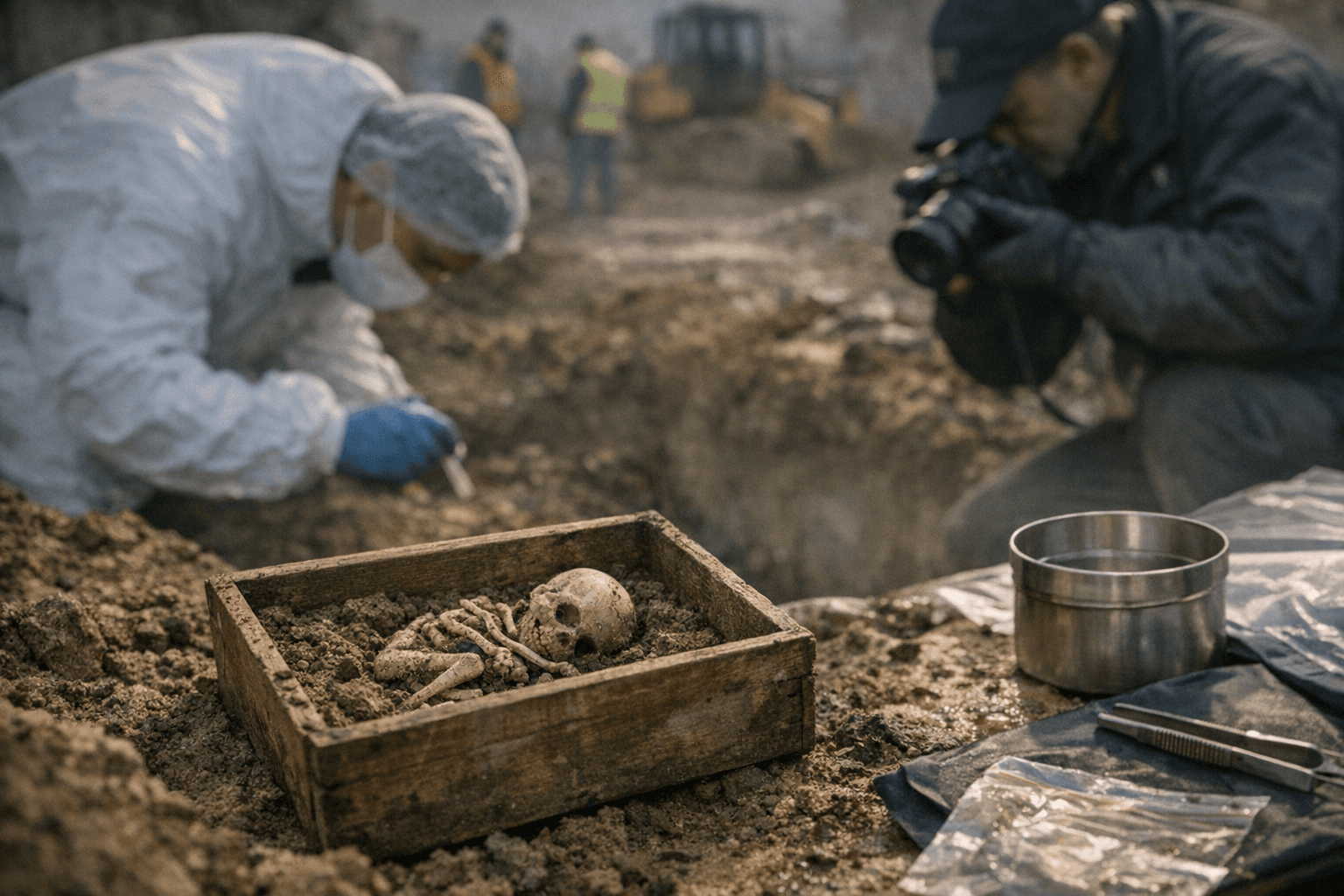
Jamestown authorities disclosed Friday that the State Forensic Examiner’s Office determined a male fetus recovered in November died of natural causes related to intrauterine fetal demise associated with a double nuchal cord, meaning the umbilical cord was wrapped twice around the neck. Examiners reported no evidence of inflicted antemortem trauma or injury, and their assessment placed the fetus at approximately 34 weeks of gestation.
The remains were found by construction workers in southeast Jamestown and had been preserved in a glass jar containing preservative fluid. Markings on the jar indicate manufacture roughly between the 1930s and 1940s, and investigators have characterized the remains as historic rather than recent. Those findings guided Jamestown police to shift the focus away from criminal charges.
In December the community held a Mass of Christian Burial for the fetus, who was given the name Trinity St. James. The funeral reflected local efforts to address grief, questions and the need for respect following the unusual discovery on a work site. Police said the criminal investigation has been suspended; they nevertheless continue to ask anyone with relevant information to contact the Jamestown Police Department.
For residents of Stutsman County, the case underscored how routine construction and development can intersect with history, human remains and community memory. A jar that likely dates to the mid-20th century raises questions about past medical and mortuary practices, shifts in recordkeeping, and how families and institutions handled loss at different points in local history. Those questions are not forensically dispositive in this matter, but they inform public interest and the desire for closure among neighbors and workers affected by the discovery.
The handling of the remains followed established forensic and pastoral steps: medical examination to determine cause of death, archival and material analysis to place artifacts in historical context, and local religious rites to provide mourning and recognition. Jamestown’s response illustrates a balance between scientific inquiry, legal prudence and cultural sensitivity when human remains surface in a community setting.
Authorities encourage anyone with information that could clarify provenance or circumstances to contact the Jamestown Police Department. As the investigation remains suspended rather than closed, new information could still inform historical context or aid families seeking answers.
Sources:
Know something we missed? Have a correction or additional information?
Submit a Tip