Jamshedpur Forest Officers Seize Over 100 Live Parrots Packed Into Small Box
Jamshedpur forest officers seized a parcel containing more than 100 live parrots crammed into a small box, highlighting public-health and welfare risks from illegal bird trade.

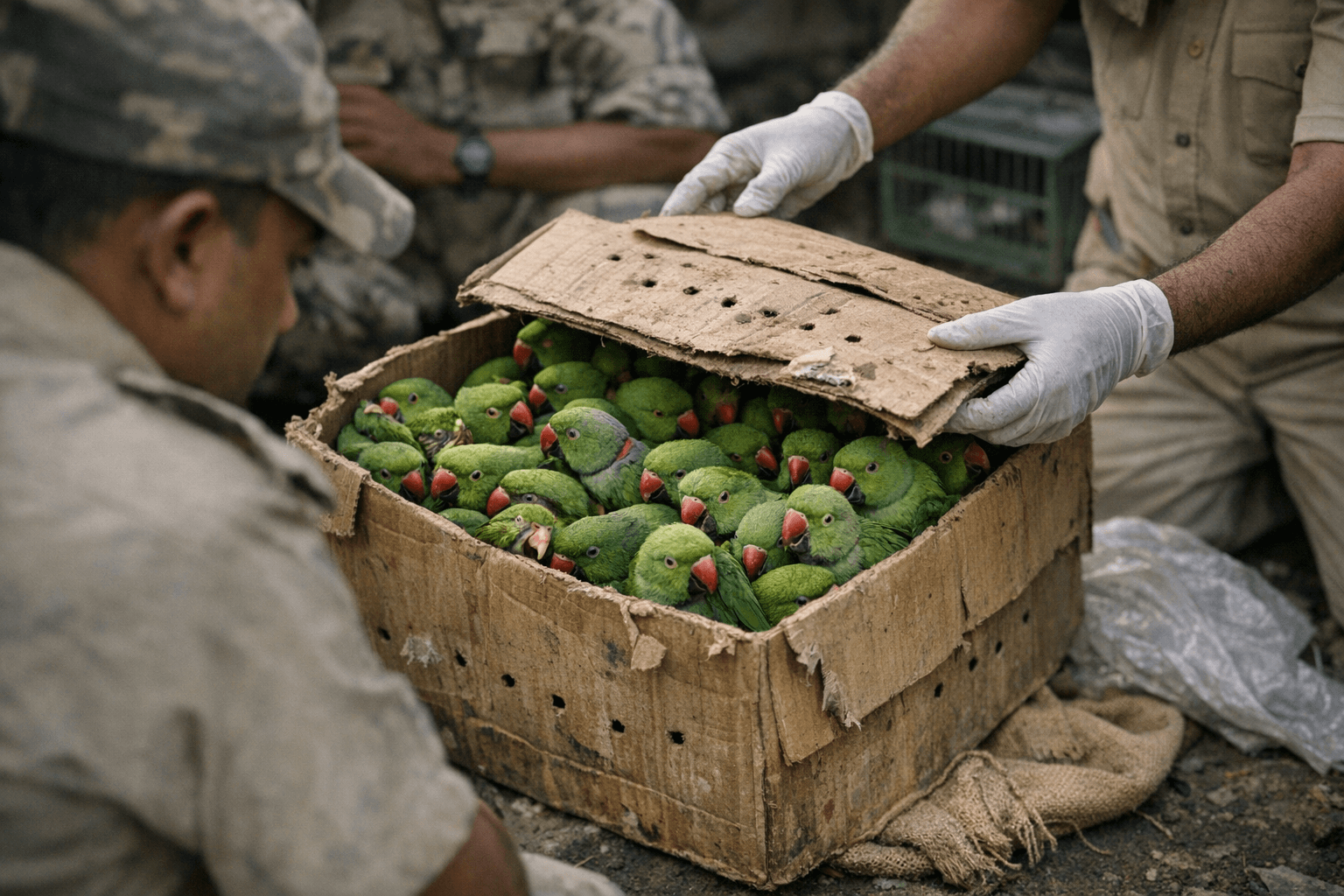
Forest officers in Jamshedpur seized a parcel containing more than 100 live parrots that had been tightly packed into a small box, a seizure that spotlights the welfare and public-health dangers of the local illegal bird trade. Photographs from the scene showed birds crowded with little room to move, a condition that raises immediate concern for suffocation, dehydration, and the spread of disease among psittacines.
The seizure occurred on February 5, 2026, when officers intercepted the parcel that was reportedly destined for local markets. Officials recovered over 100 individual birds, many appearing stressed and trembling from confinement. The size of the shipment and the method of transport suggest an organized attempt to move wild or illegally captured parrots into urban sale channels.
For parrot owners and community caretakers, this incident matters in three practical ways. First, it is a reminder that buying birds without clear provenance can perpetuate cruel supply chains and expose households to animals that may carry pathogens such as psittacosis or other avian illnesses. Second, confiscated birds typically require quarantine and veterinary screening; sudden additions to local rescue capacity can strain shelters and volunteer networks. Third, visible enforcement actions like this change market dynamics: demand may shift to more covert routes, making suspicious transactions harder to spot.
Community response is already a key next step. Local avian vets and rescue groups will likely be called on to assess the seized birds for injuries, parasites, and contagious disease, and to begin a period of medically supervised quarantine. Anyone offered parrots at unusually low prices, presented in cramped containers, or without documentation should halt the purchase and report the seller to local forest or wildlife authorities. Reported sightings of suspected trafficking activity help officers trace supply chains and protect both birds and people.
This seizure also underscores the role of everyday parrot keepers in prevention. Maintain records of your birds’ origins, insist on vet checks when acquiring new birds, and educate friends and family about the signs of stressed or illegally traded parrots—fluffed feathers, labored breathing, stress bars on tail or wing feathers, and lack of proper perching or food. Those signs can justify contacting authorities rather than completing a purchase.
As officers investigate origins and intended buyers, the situation will test local rescue capacity and enforcement resolve. For readers, the immediate takeaway is practical: do not buy suspicious birds, support quarantine and vet care for rescued parrots, and report trafficking so authorities can disrupt the market and protect psittacine welfare.
Know something we missed? Have a correction or additional information?
Submit a Tip