Jane Pauley Spotlights Cuba, Kacey Musgraves, Jim Clyburn on CBS Sunday Morning
From Cuba to South Carolina history, Jane Pauley’s lineup traced how America preserves power, memory and place when those things are under pressure.
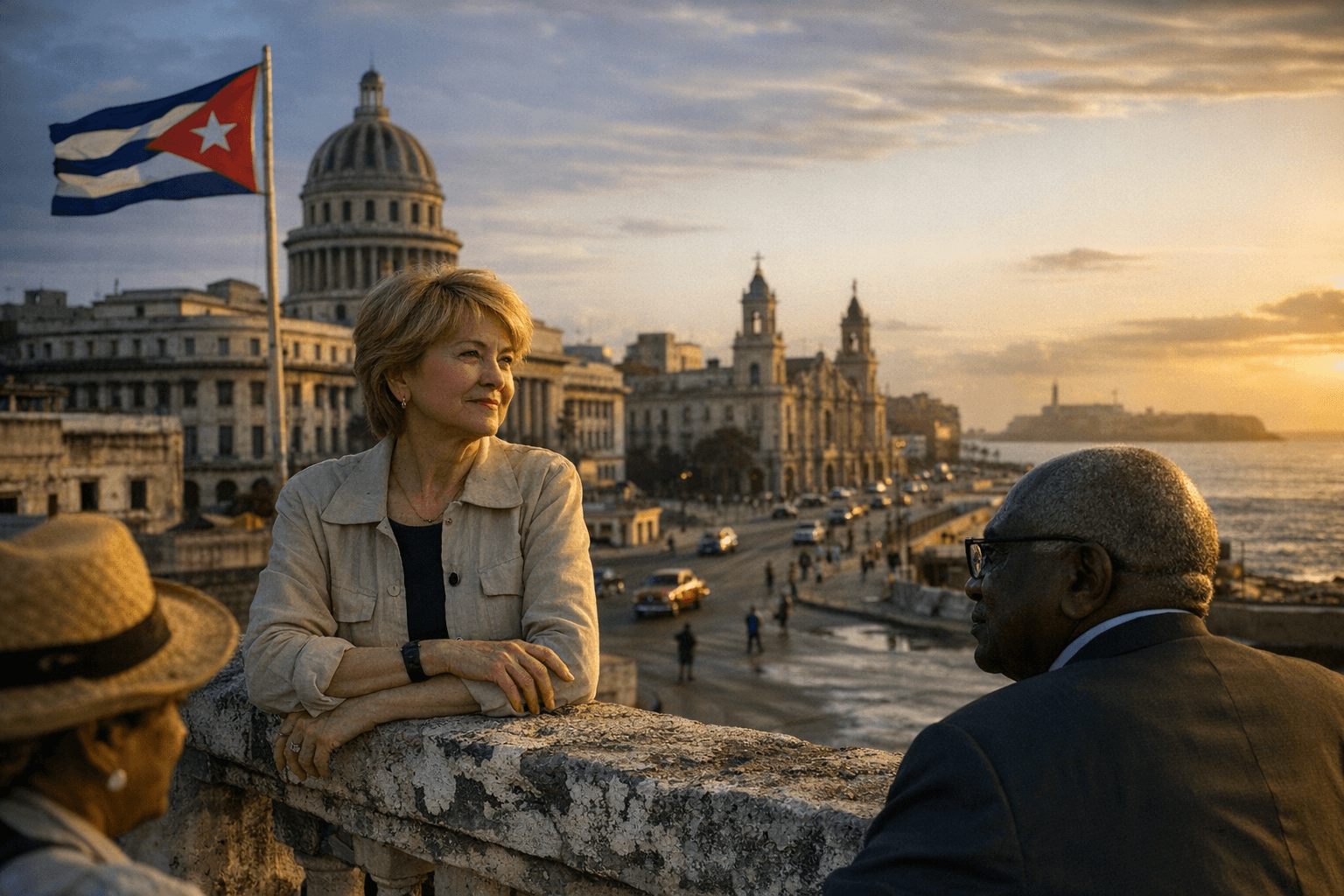
Jane Pauley’s April 26 broadcast used Cuba as its sharpest lens on a bigger national question: what the United States chooses to confront, contain, and remember. The island sits 90 miles from Florida, yet it has shaped U.S. foreign policy for close to 70 years. That tension sharpened again as the Trump administration blocked nearly all oil shipments to Cuba, worsening a humanitarian crisis. On April 13, President Trump said, “We may stop by Cuba after we’re finished with this,” and he has also said, “I do believe I’ll be the honor, having the honor of taking Cuba.” Miami Dade College history professor Jorge Malagon-Marquez placed that conflict in a longer frame, noting that the United States could intervene in Cuba whenever its interests were at stake until the 1930s, and that the antagonism endured long after Fidel Castro.
The hour then turned inward, to Kacey Musgraves and the way personal upheaval can become craft. Musgraves said she returned to East Texas to heal from a breakup, then saw a sign in Golden, Texas that helped inspire the title Middle of Nowhere. She said the song “Dry Spell” came from a title she had already saved on her phone. The segment also revisited the sweep of her recent success, including the 2019 Grammy for best country song for “Space Cowboy” and album of the year for Golden Hour.
Rep. Jim Clyburn’s segment widened the focus from private recovery to public representation. His book, The First Eight: A Personal History of the Pioneering Black Congressmen Who Shaped a Nation, tells the stories of the first eight Black men elected to Congress from South Carolina. Clyburn is the ninth Black man to represent South Carolina in the House, and he requested portraits of those first eight be hung in his office in 2007, when he became House majority whip. Nearly 100 years separated the service of George Washington Murray and Clyburn’s election in 1992.
The broadcast’s arts and nature pieces carried the same thread of preservation. Jenny Saville, one of the most celebrated modern British portrait painters, had work on view at Ca’ Pesaro in Venice through Nov. 22, with CBS describing her figurative painting as “communication of the unspoken.” Another segment followed the Venus flytrap, native to the Carolinas and dwindling because of habitat loss. Botanist Julie Moore has spent much of her life helping save it, while Damon Waitt of the North Carolina Botanical Garden explained why Charles Darwin called it “the most interesting plant in the world.”
The program also paused for a Washington headline: shots were heard outside the White House Correspondents’ Association dinner Saturday night, and law enforcement identified the alleged gunman as 31-year-old Cole Allen of Torrance, California. With a farewell for correspondent Elizabeth Palmer in the mix, the broadcast linked diplomacy, representation, art, and conservation to a single idea that mattered across every segment: what a nation protects says as much about it as what it projects.
This article was produced by Prism’s automated news system from verified source data, official records, and press releases, then run through automated quality and moderation checks before publishing. The system is built and supervised by the people who set the standards it runs under. Read our full AI policy.
Did this article answer your question?