Japan banks battle for deposits as savers chase stock gains
Japan’s savers are moving cash into stocks as inflation tops 3%, forcing banks to raise deposit rates and rethink lending.
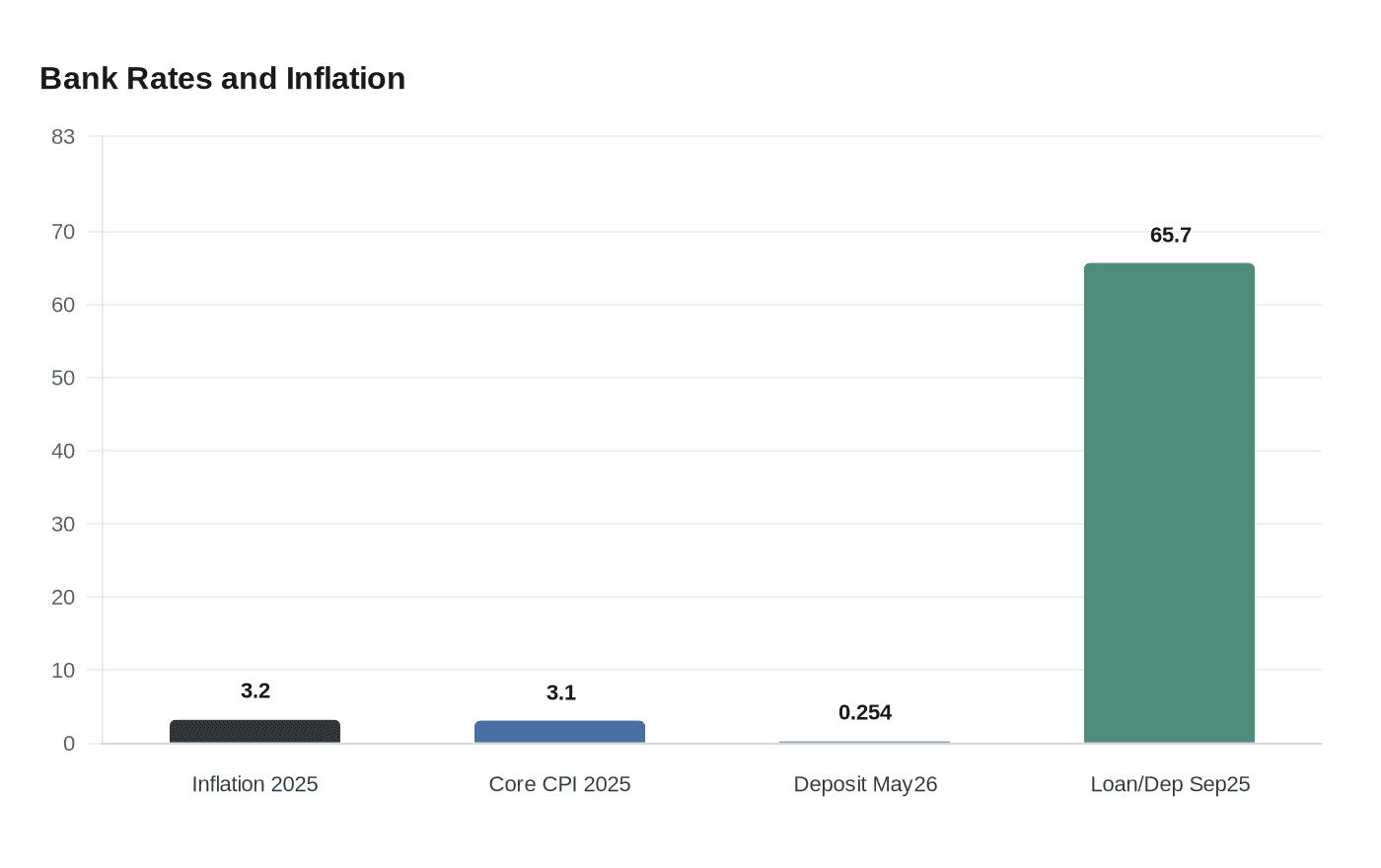
Japanese banks are fighting for deposits in a shift that would have seemed unlikely only a few years ago. With consumer prices up 3.2% in 2025 and core CPI rising 3.1%, households have become more willing to look beyond low-yield savings accounts, while the Bank of Japan’s average rate on ordinary deposits stood at just 0.254% in May 2026.
For decades, Japan’s lenders could rely on abundant household cash. That balance is changing as investors chase record highs in the stock market and as the government pushes savers into markets through NISA, the tax-free stock-investing program. The latest version, launched in January 2024, made the tax-free holding period indefinite and raised annual and lifetime limits, turning a once-niche program into a mainstream savings tool.

The numbers show how quickly that shift has taken hold. Official data put NISA accounts at 26.96 million by the end of June 2025, with cumulative purchases reaching 63 trillion yen. By the end of 2025, money invested through NISA had more than doubled over two years to 71 trillion yen, or about $445 billion. The Japan Securities Dealers Association has described NISA as part of a broader shift from savings to investment, and that policy push is now reshaping household behavior in real time.
Banks are feeling the squeeze just as lending opportunities are improving. The loan-to-deposit ratio at Japanese banks climbed to 65.7% at the end of September 2025, the highest level since March 2020, signaling that deposits are no longer growing as comfortably as they once did. In October 2025, the Bank of Japan said households’ holdings of stocks and stock investment trusts had increased while the pace of deposit growth had slowed. Sumitomo Mitsui Financial Group CEO Toru Nakashima has said banks will need to be more selective about lending, a sign that funding discipline is returning to a system long accustomed to easy liquidity.
The pressure is not just financial but cultural. One airline worker described NISA investing as a natural extension of savings, while a hairdresser said he started investing about a year ago to build retirement savings and put a recent raise to use. That kind of behavior matters because Japan’s long deflationary era trained households to treat cash as safe. Now inflation, higher rates and a stronger market are nudging them toward assets that can grow, and banks are being forced to compete for the money they once took for granted.
This article was produced by Prism’s automated news system from verified source data, official records, and press releases, then run through automated quality and moderation checks before publishing. The system is built and supervised by the people who set the standards it runs under. Read our full AI policy.
Did this article answer your question?

