Japan plans $19 billion budget to ease inflation and fuel costs
Tokyo is preparing more than 3 trillion yen in relief as subsidies mask inflation pain and expose Japan’s deeper energy and wage strain.

Japan’s government is preparing an extra budget of more than 3 trillion yen, about $19 billion, to subsidize fuel costs and blunt the squeeze from inflation, a move that puts Sanae Takaichi’s growth-and-relief agenda at the center of fiscal policy. The package is designed to help households and drivers absorb higher prices tied to prolonged Middle East tensions, while also softening pressure from a weak yen and rising energy bills.
Takaichi said the draft fiscal 2026 supplementary budget will be submitted to the Diet next week. The timing matters: the plan comes after she had earlier said extra spending would not be necessary, a reversal that shows how quickly fiscal priorities have shifted as energy markets tightened and public discomfort with prices deepened. The government is now trying to present the new spending as a temporary cushion, not the start of an open-ended expansion.
Bond investors are watching the financing closely. Reuters had previously reported that fresh debt was likely to help pay for the package, but finance minister Satsuki Katayama said on May 22 that the government would avoid overly relying on new debt issuance. That message is aimed at calming market concerns that more borrowing could push long-term rates higher and add to Japan’s already heavy public-debt burden.
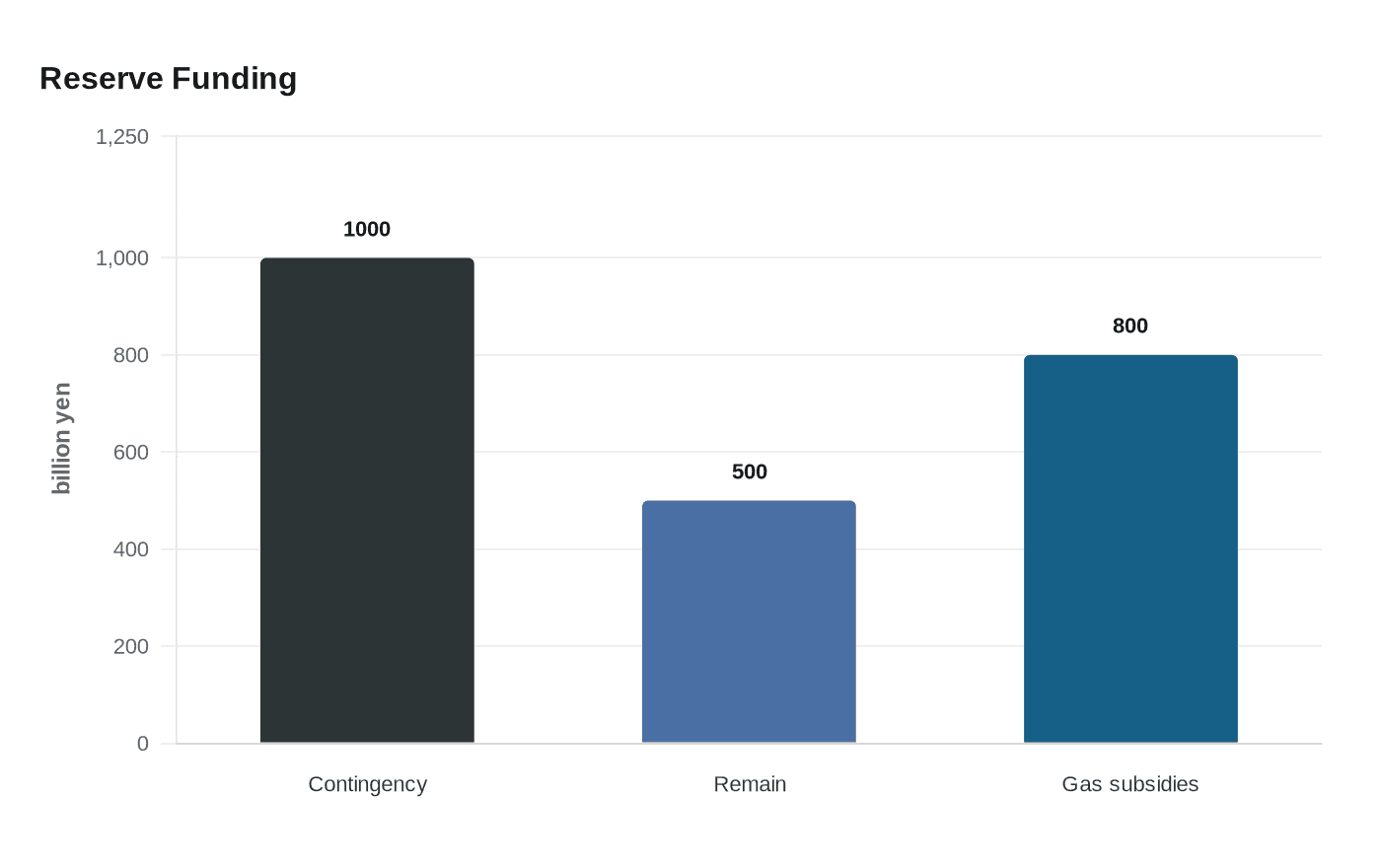
The budget also has to replenish reserves already used for relief. Japan’s fiscal 2026 budget included 1 trillion yen in contingency reserves, and if about half is used for subsidies, about 500 billion yen would remain. Tokyo has already been drawing on reserve funds for gasoline and utility subsidies, including a reported plan to spend nearly 800 billion yen from reserves on gas subsidies. The direct winners are households facing utility bills and motorists paying at the pump, but businesses also gain indirect relief through lower energy costs.
The wider economic picture shows why the government is leaning on subsidies. Japan’s core inflation slowed to a four-year low in April, in part because fuel subsidies reduced price pressure, but wholesale inflation accelerated at the fastest pace in three years as the Iran war pushed up oil and chemical prices. That split underscores the limits of the current approach: subsidies can cushion the shock, but they do not resolve the wage and price imbalances underneath it.
Know something we missed? Have a correction or additional information?
Submit a Tip