Japan signals push to steer pension giant toward domestic assets
Japan’s pension giant jolted the yen and bonds after officials signaled more domestic buying, reviving bets that state capital may be steered home.
Finance Minister Satsuki Katayama said Japan wants its giant state pension funds to direct more money into domestic assets, a signal that put the Government Pension Investment Fund back at the center of market attention. GPIF managed 293.6 trillion yen, about $1.8 trillion, at the end of March, making even a modest change in its strategy capable of moving billions of dollars.
The reaction was immediate. The yen rose as much as 0.6% and briefly touched 161.285 per dollar before easing, while benchmark 10-year Japanese government bond yields fell 11.5 basis points to 2.760%, their sharpest drop in more than a year. In the same market cycle, the 10-year yield later traded 10 basis points lower at 2.775%, underscoring how sensitive traders remain to any hint that pension money could be pulled back home.
That sensitivity reflects GPIF’s global footprint. Its holdings included about $931 billion in foreign assets at the end of March, including about $232.1 billion in U.S. Treasuries. A shift in allocation would therefore not just affect Tokyo; it could alter cross-border capital flows that have long supported foreign bond markets, overseas equities and the yen’s role in global portfolios.
The policy discussion also comes against a backdrop of domestic strain. The yen had hit 40-year lows the previous week, adding to import costs and pressure on households and businesses already dealing with higher energy prices. IG analyst Fabien Yip said the government may be running out of ideas to support the currency, and that more flows into yen-denominated assets could help over the longer term. OCBC’s Sim Moh Siong said the market treated the move as a positive sign that could stabilize sentiment, although he doubted it was a “silver bullet.”
Inside GPIF, the room for change is narrower than the market reaction suggests. Its alternative-investment allocation was only 1.7% in March, below the 5% ceiling allowed under current rules. GPIF’s 2025 policy portfolio, which took effect on April 1, 2025, kept the target allocation unchanged, with the fund’s own framework emphasizing the need to secure pension returns with minimum risk over the long run. The fifth medium-term policy asset mix was decided after six rounds of board discussions and twenty rounds of expert deliberations.
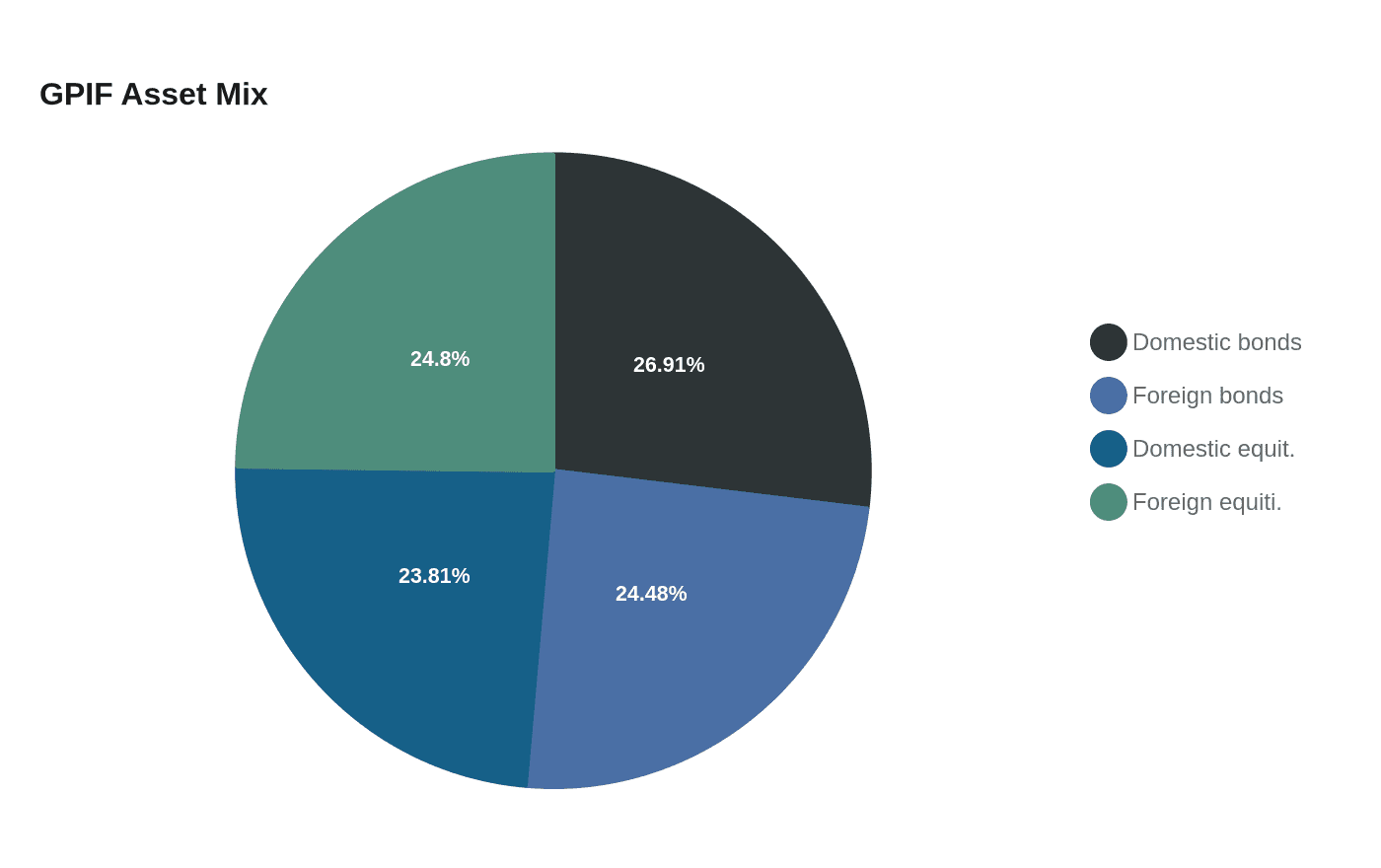
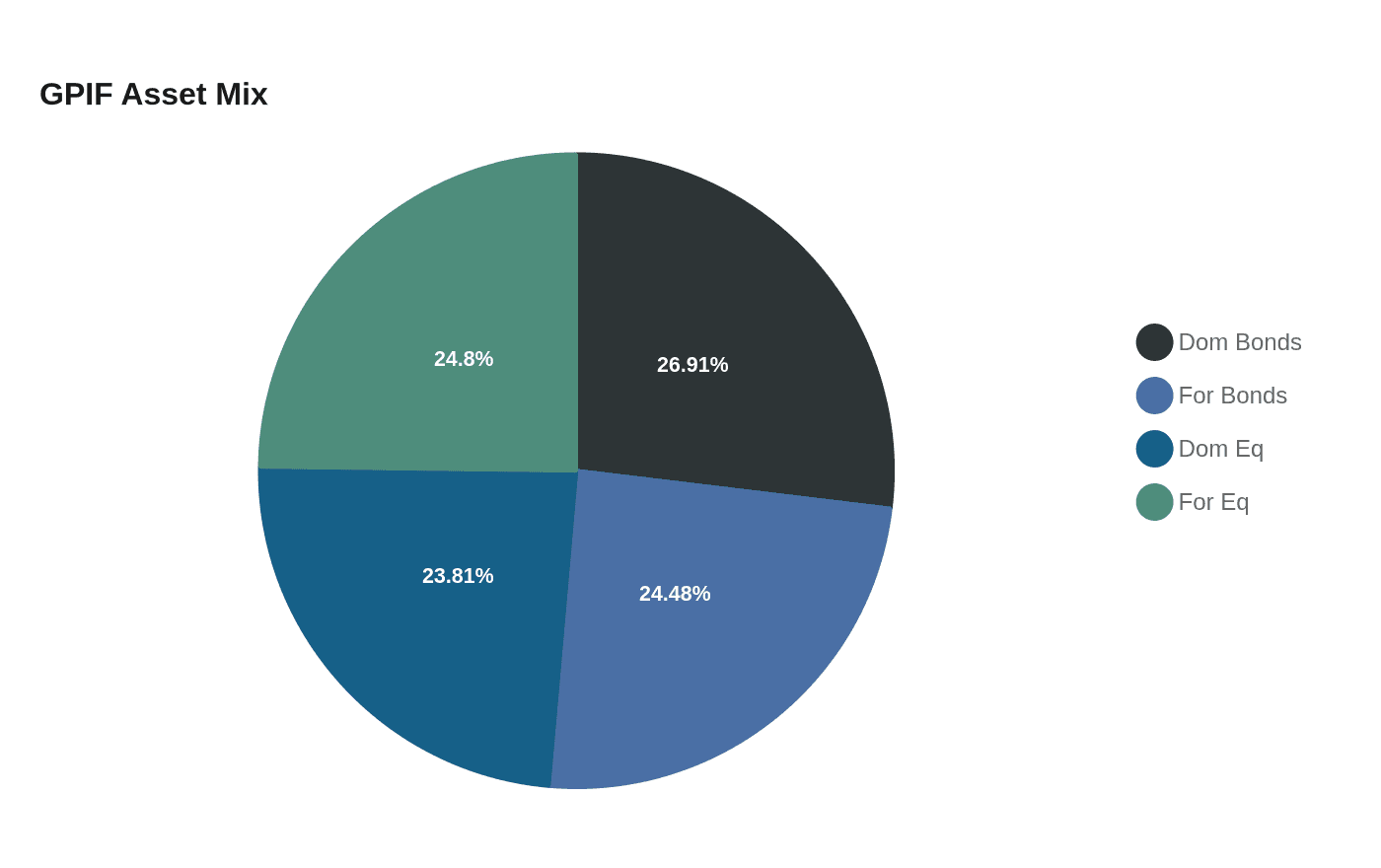
GPIF’s asset mix at the end of March 2025 showed how balanced, and how globally spread, the fund remained: 26.91% in domestic bonds, 24.48% in foreign bonds, 23.81% in domestic equities and 24.8% in foreign equities. That structure is why a push toward domestic assets matters far beyond Japan. Any change in how the world’s largest pension fund allocates retirement savings could reach bond yields, the currency and the global investors who have long counted on Japanese capital flowing abroad.
This article was produced by Prism’s automated news system from verified source data, official records, and press releases, then run through automated quality and moderation checks before publishing. The system is built and supervised by the people who set the standards it runs under. Read our full AI policy.
Did this article answer your question?