Japan turns to household cooking oil to fuel greener flights
Japan hopes leftover frying oil can help decarbonize aviation, but 40 liters a year from one Tokyo home barely dents a 1.7 million-kiloliter SAF gap.

A Tokyo homemaker pours leftover oil from deep-fried aubergines into a plastic bottle, then hands it over for collection. Maki Watanabe’s contribution is only about 40 liters a year, but Japan is betting that millions of similar small acts can help close a huge gap in cleaner aviation fuel.
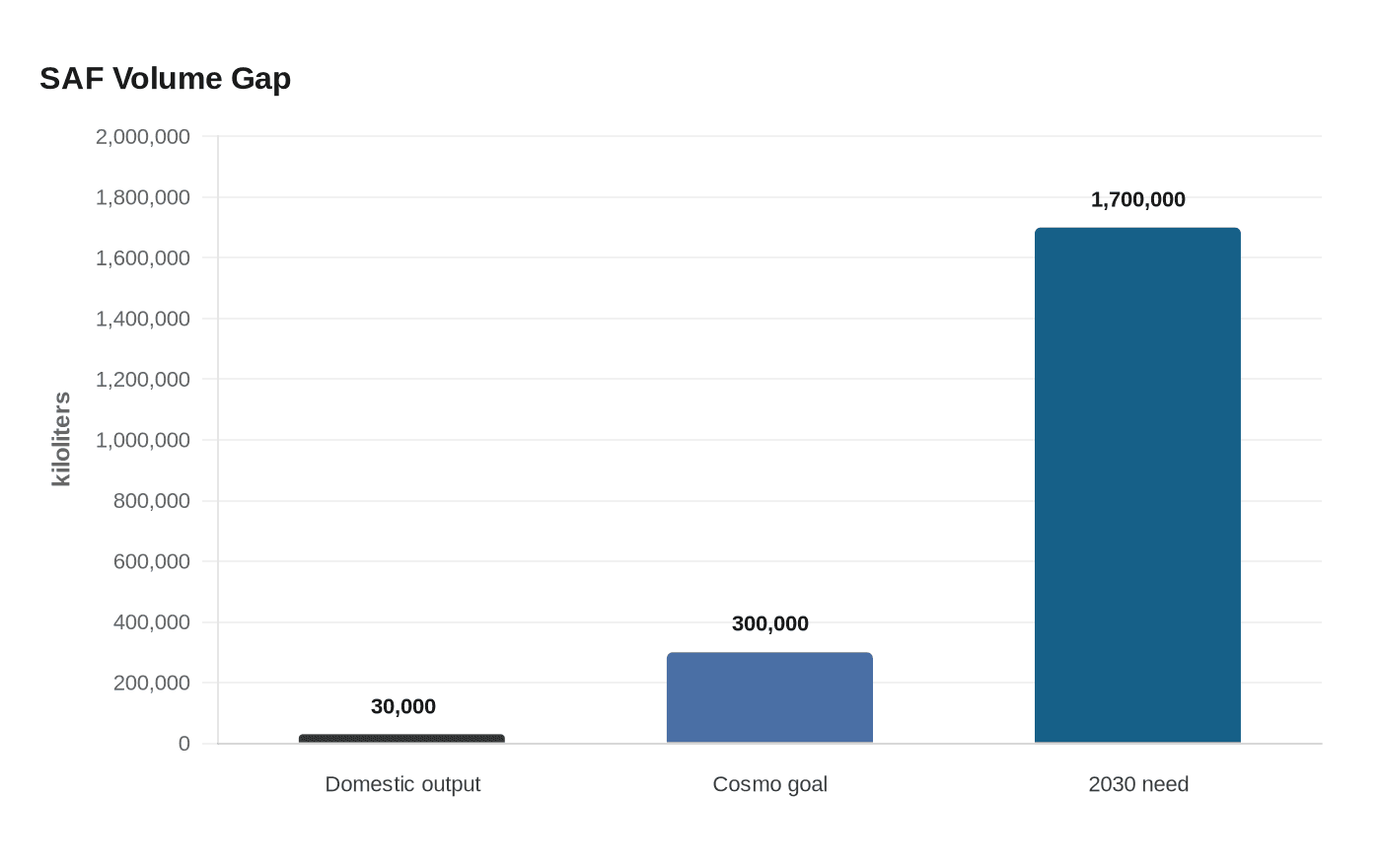
The country wants sustainable aviation fuel to cover roughly 10% of airline fuel use by 2030, a target tied to both climate policy and energy security. Government estimates put the 2030 need at about 1.7 million kiloliters of SAF, yet domestic output is still only about 30,000 kiloliters, or 0.3% of total jet fuel use. That gap shows why household oil is attractive and why it is nowhere near enough on its own.
Used cooking oil is cheap, easy to find in homes and restaurants, and already moving through urban and suburban neighborhoods. Watanabe’s oil is collected through Fry to Fly, a public-private effort with about 300 participants that turns ordinary kitchen waste into a feedstock for jet fuel. The Tokyo Metropolitan Government has promoted the collection drive as part of its carbon-neutrality push and as a way to build awareness around recycling.
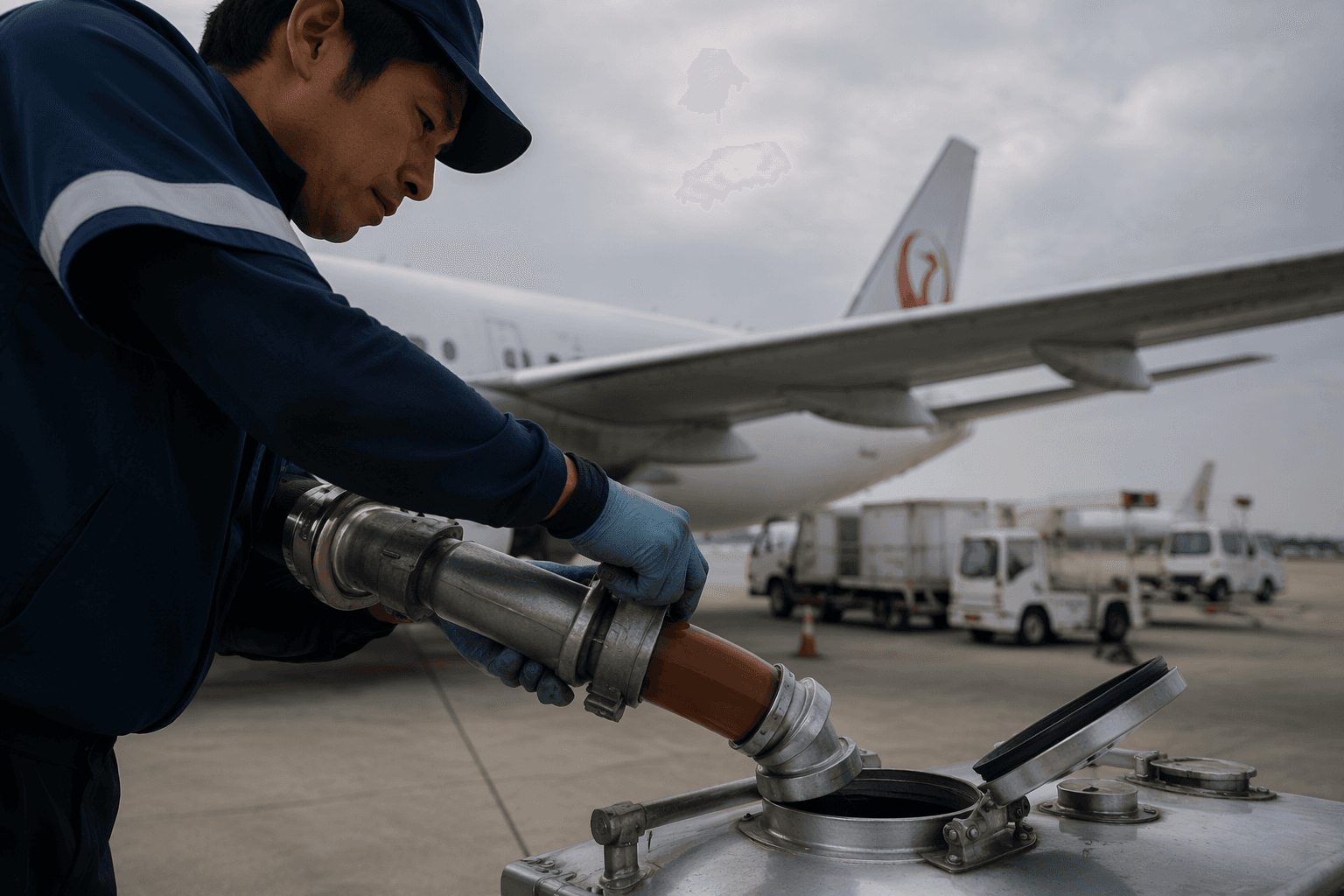
Japan’s government has tried to build the market architecture around that effort. The Ministry of Economy, Trade and Industry and the Ministry of Land, Infrastructure, Transport and Tourism launched a Public-Private Council for the Promotion of Sustainable Aviation Fuel in April 2022, aiming to accelerate adoption and build a competitive supply chain. Airlines have also been pulled into the search for feedstock: Japan Airlines said on February 28, 2024, that it had joined the Fry to Fly Project to support SAF production from used cooking oil.
Private-sector plans are growing, but they remain far short of national demand. Cosmo Oil, JGC Holdings Corporation, Revo International Inc. and Tokyo launched a pilot on June 24, 2024, to collect household cooking oil at service stations for Japan’s first SAF production, with a broader expansion across Tokyo planned from September 2024. Cosmo Oil has said it aims to supply 300,000 kiloliters of SAF annually by 2030, a major volume in company terms but still well below the country’s estimated need.
The urgency is not only environmental. Japan imports much of its energy, and leaders have been under pressure to diversify supply after disruption in Middle East markets pushed up costs. That makes SAF a climate project and an industrial policy test at the same time. For now, the lesson is clear: household participation can help build the system, but it cannot carry the scale of aviation decarbonization alone.
This article was produced by Prism’s automated news system from verified source data, official records, and press releases, then run through automated quality and moderation checks before publishing. The system is built and supervised by the people who set the standards it runs under. Read our full AI policy.
Did this article answer your question?

