Japan, US agree to intensify exchange-rate communication amid yen pressure
Washington and Tokyo moved to calm yen volatility as the currency hovered near 160 per dollar, a level that has forced Japan into intervention before.
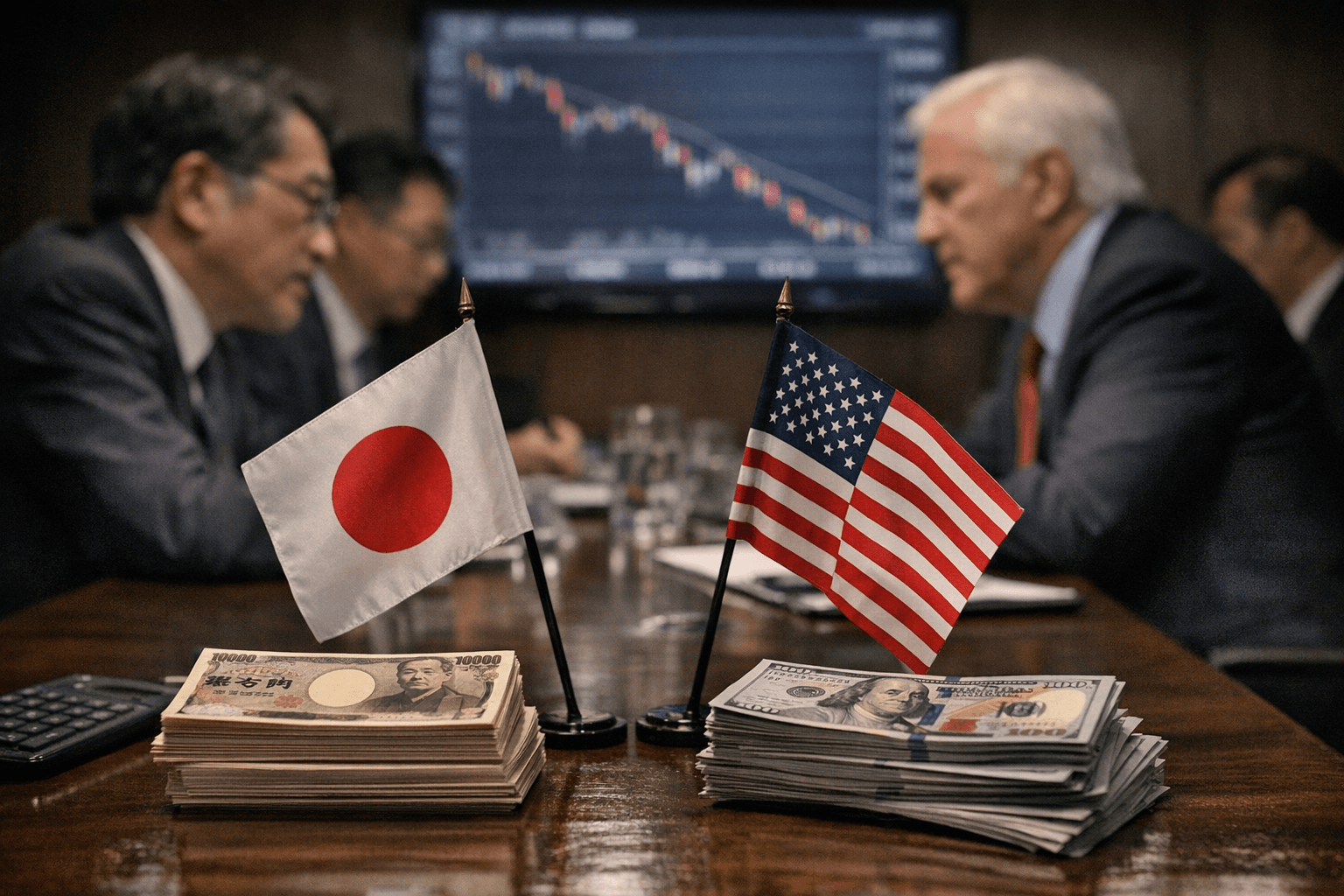
Japan and the United States have chosen their words carefully because the yen is again brushing up against a line that traders know can trigger action. After a Washington meeting with U.S. Treasury Secretary Scott Bessent, Japanese Finance Minister Satsuki Katayama said the two sides agreed to intensify communication on exchange rates, a signal meant to steady markets before a one-way move hardens into something more damaging.
The setting mattered as much as the statement. Katayama and Bessent met in Washington during the annual gatherings of the International Monetary Fund, the G7 and the G20, when finance officials are already trying to coordinate their messages on growth, inflation and financial stability. Katayama posted the announcement on X after the meeting, underscoring that the purpose was not policy theater but market management.
The yen has been under pressure for months, and that pressure carries real economic costs. A weaker currency makes Japan’s imports more expensive, especially energy, and that feeds directly into household prices and corporate input costs. With global markets still sensitive to the fallout from Middle East tensions and higher oil prices, a softer yen can magnify inflationary pressure in an energy-importing economy and complicate the Bank of Japan’s effort to normalize policy.
That is why the 160-per-dollar level matters so much. The yen briefly slipped beyond that mark in late March, its weakest point since July 2024, reviving memories of the last time Japanese authorities stepped into the market. Japan intervened in July 2024 when the currency was around 161.9 per dollar. Katayama also said Japan would take “decisive” action against excessive yen moves, a warning aimed at traders testing official tolerance.
Washington’s message has been just as deliberate. Treasury’s January foreign-exchange report said the United States had released joint statements on macroeconomic and foreign-exchange matters with six major trading partners since spring 2025, including Japan, and said those statements reaffirm commitments to avoid manipulating exchange rates for unfair competitive advantage. Treasury’s readout of an earlier Bessent-Katayama meeting said Bessent emphasized sound monetary policy formulation and communication and warned against excessive exchange-rate volatility.
The diplomatic choreography suggests neither side is preparing to intervene immediately. Instead, both governments appear intent on preventing surprise, speculation and disorderly trading from becoming a larger policy problem. Bloomberg reported that Bessent is expected to visit Japan in May, giving the two sides another chance to reinforce the same message.
The broader backdrop is more inflationary than in past yen cycles. An IMF commentary on April 15 said Japan’s inflation shock from the Iran war may prove temporary, but still matters for policy, while a Reuters poll on April 16 showed many economists now expect the Bank of Japan to raise its benchmark rate further by mid-2026. For markets, the message is clear: exchange-rate coordination is back at the center of global macro policy because the alternative is a weaker yen, higher import costs and a sharper test of how much stress Japan can absorb.
This article was produced by Prism’s automated news system from verified source data, official records, and press releases, then run through automated quality and moderation checks before publishing. The system is built and supervised by the people who set the standards it runs under. Read our full AI policy.
Did this article answer your question?

