Japan's Prime Minister Vows Five More Years of Fukushima Recovery and Reactor Cleanup
PM Sanae Takaichi marked 15 years since Japan's deadliest postwar disaster with pledges to complete Fukushima's decommissioning and rebuild shattered communities.

Fifteen years after the earth cracked open beneath the Pacific, Prime Minister Sanae Takaichi stood before survivors in Fukushima City on Tuesday and promised the work of rebuilding was not finished.
Speaking at a memorial ceremony held by Fukushima Prefecture, Takaichi acknowledged the scale of loss that still shapes everyday life across the Tohoku region. The March 11, 2011 earthquake, a magnitude 9.0 that struck at 2:46 p.m. off the northeastern coast, triggered a tsunami that left 22,230 people dead or missing, including disaster-related deaths. The waves also overwhelmed the Fukushima Daiichi nuclear power plant, triggering a meltdown that forced mass evacuations and contaminated surrounding communities for years.
"The massive earthquake and tsunami, along with the accident at the Fukushima No. 1 nuclear power plant, deprived many residents of this prefecture of their everyday lives," Takaichi said. "I am overcome with profound sorrow when I think of the feelings of those who lost their beloved family members, relatives and friends."
At exactly 2:46 p.m., attendees at the Fukushima City ceremony bowed their heads in silence, joined by people across the nation at memorial events from Miyagi to Iwate. Along the Tohoku coastline, residents were seen from early morning facing the sea with hands clasped in prayer.
Takaichi framed the occasion as the launch of a new phase of national commitment. The government's Third Reconstruction and Revitalization Period begins in April, and she pledged to deliver results across a five-year horizon. "With a strong determination to resolve various challenges over the next five years, we will devote our full efforts to the reconstruction of the disaster-affected areas," she said.
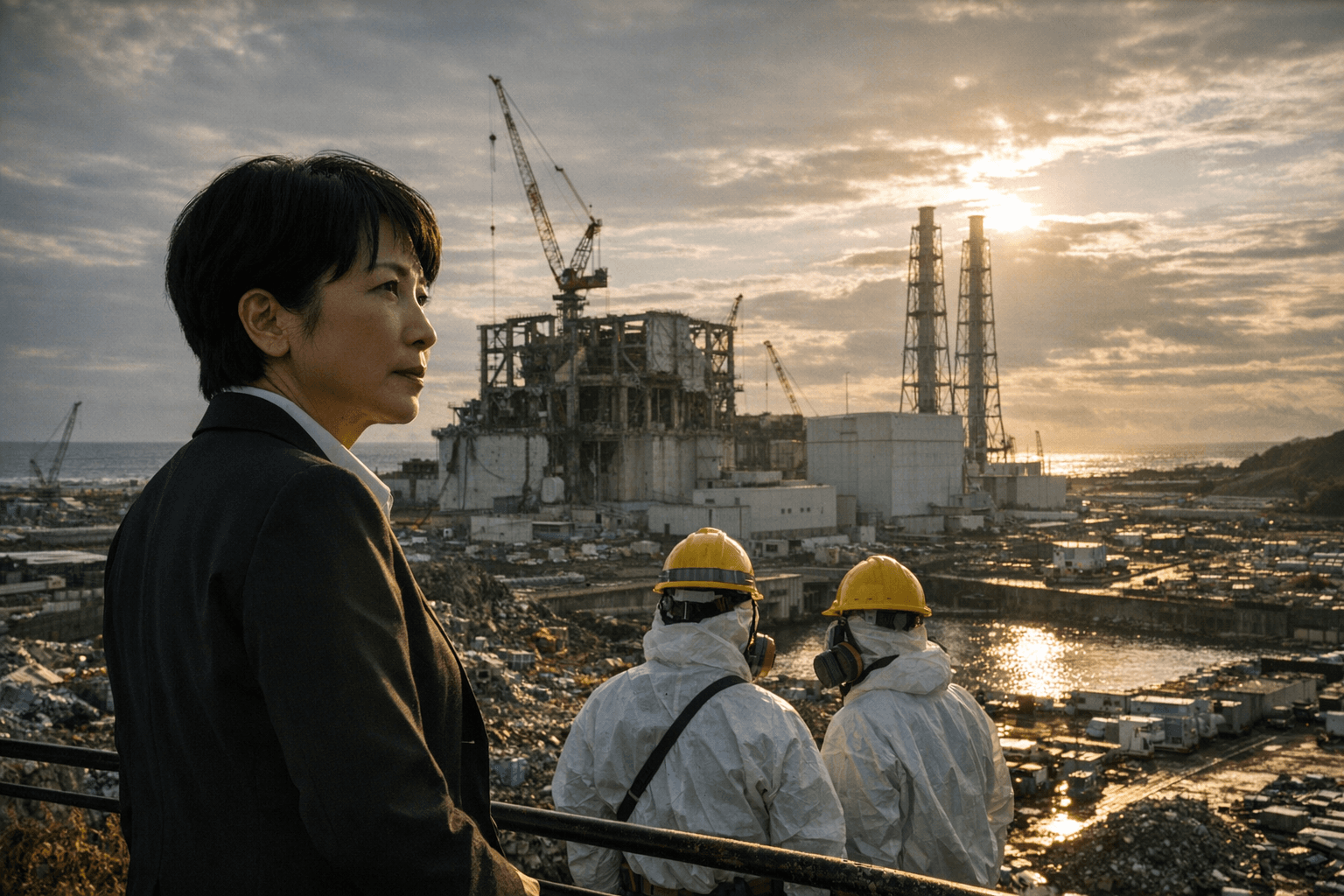
On Fukushima, Takaichi said the national government would take the lead in recovery, "advancing the safe and steady decommissioning of the nuclear reactors at the Fukushima No. 1 plant and by improving living conditions to enable the return of residents that wish to return to the area." The decommissioning of Fukushima Daiichi remains one of the most complex nuclear engineering challenges in history, with the full process expected to take decades.
Takaichi also announced plans to accelerate the establishment of a national disaster management agency this year. The agency is intended to serve as a unified command center for responding to large-scale natural disasters, a gap exposed by the chaotic early response in 2011. Japan sits on the Pacific Ring of Fire, and polling data suggests more than 80 percent of the public believes a major disaster is coming in the near future.
Postdisaster reconstruction minister Takao Makino traveled to Iwate and Miyagi prefectures to mark the anniversary, while Chief Cabinet Secretary Kihara Minoru had called on the public in the days before to observe the 2:46 p.m. moment of silence.
In the Suginoshita district of Kesennuma, Miyagi Prefecture, where roughly 60 people died after evacuating to what they believed was higher ground, 75-year-old farmer Nobuyuki Sato laid flowers at a memorial monument shortly after dawn. Sato lost both his mother and wife in the tsunami. "Looking back, the 15 years have flown by in a flash," he said, speaking quietly toward the monument. "Please watch over the children and the road ahead of them."
Nearby, 79-year-old Hisao Idobata, who ran a tofu shop for 50 years before the disaster forced him to close it, pressed his palms together in prayer and chanted Buddhist sutras. He had come, he said, to tell those he lost through his delivery routes that he is still doing his best.
For Japan, the 15th anniversary lands not as closure, but as a checkpoint on a recovery that remains incomplete in both steel and spirit.
This article was produced by Prism’s automated news system from verified source data, official records, and press releases, then run through automated quality and moderation checks before publishing. The system is built and supervised by the people who set the standards it runs under. Read our full AI policy.
Did this article answer your question?


