JD Vance says 2028 run decision will come after midterms
Vance put off any 2028 decision until after the midterms, keeping his loyalty to Trump intact as CPAC already signals him as the party’s leading heir.

JD Vance kept the 2028 question open on Sunday, but only barely. The vice president said he and Usha Vance would talk later this year, after the 2026 midterm elections, about whether he should seek the Republican nomination, a timing that leaves his ambitions visible while putting off any direct challenge to Donald Trump’s political orbit.
In the interview with CBS News national correspondent and chief Washington analyst Robert Costa, Vance said he had not decided whether to enter the race. He also said he had no doubt Trump would be "very supportive" of whatever he ultimately chose, a carefully chosen answer that underscored the central tension around his rise: Vance is already being measured as a possible successor, but he remains tied to a president who still dominates the party’s future.
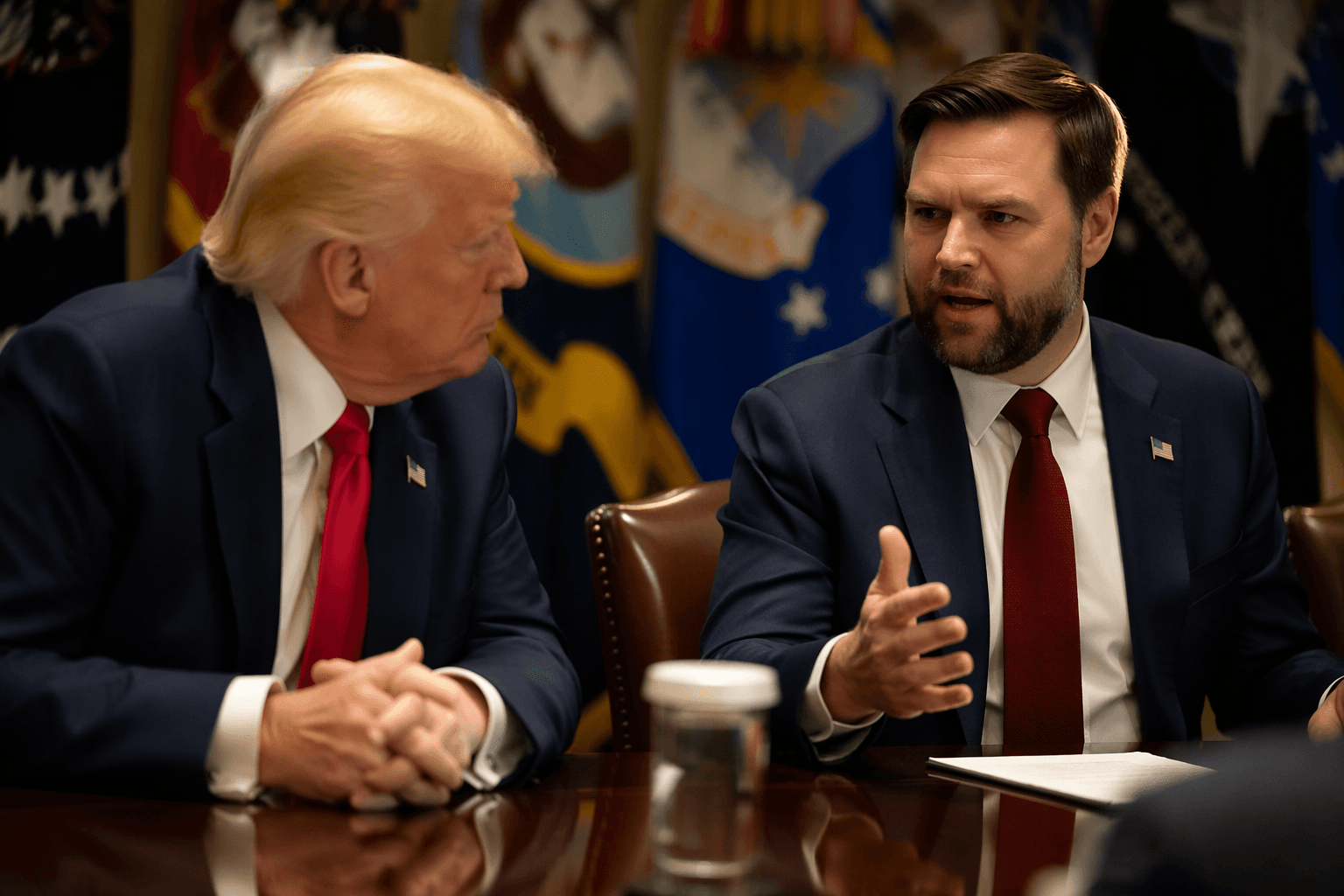
The signal matters because succession politics are already taking shape inside the Republican Party. At the Conservative Political Action Conference’s 2026 straw poll, Vance won the informal contest for the party’s next presidential nominee with 53% support, while Secretary of State Marco Rubio finished second with 35%. That kind of showing turns every public comment about 2028 into more than a hypothetical. It is now part of an early test of how Vance balances personal ambition, loyalty to Trump and the constraints of being vice president.
CBS Sunday Morning framed the conversation around faith and family as much as politics, with Vance promoting his new book, Communion: Finding My Way Back to Faith, which HarperCollins is scheduled to publish on June 16, 2026. The Vances are expecting their fourth child in a few weeks, and their three children are ages 4, 6 and 9. Usha Vance also spoke about how the assassination of Charlie Kirk influenced the couple’s decision to have another child, adding a personal and political layer to a family already living under intense public scrutiny.

For Vance, the refusal to decide now is as revealing as any declaration of interest. He is not closing the door on 2028, and he is not stepping through it either. By saying the conversation will come after the midterms, he has signaled that the next phase of Republican succession politics is already underway, even if he is not yet ready to claim it.
This article was produced by Prism’s automated news system from verified source data, official records, and press releases, then run through automated quality and moderation checks before publishing. The system is built and supervised by the people who set the standards it runs under. Read our full AI policy.
Know something we missed? Have a correction or additional information?
Submit a Tip