Jefferson Lab Wins $8.17M ARPA‑E NEWTON Grants for Accelerator-Based Nuclear Waste Transmutation
Jefferson Lab won two ARPA-E NEWTON grants totaling $8.17 million on February 25, 2026, to develop SRF cavity materials and magnetron power systems for accelerator-driven nuclear waste transmutation.
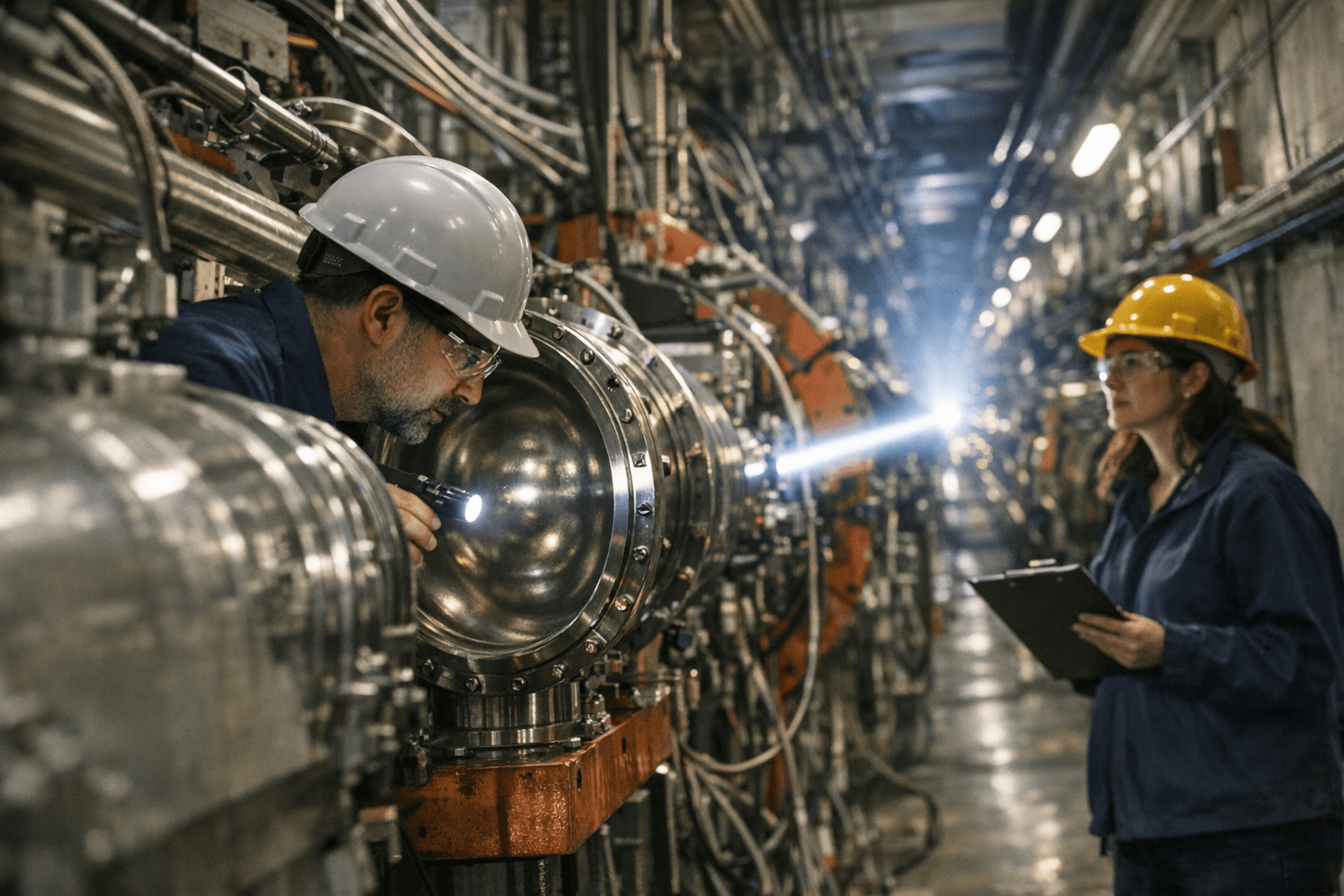
Jefferson Lab won two Advanced Research Projects Agency-Energy NEWTON grants totaling $8.17 million on February 25, 2026, to advance accelerator technologies aimed at transmuting long-lived nuclear waste and recovering electricity from spallation heat. The awards fund two distinct projects focused on superconducting radiofrequency cavities and RF power sources for accelerator-driven systems that use neutron spallation.
Rongli Geng is principal investigator on both grants and heads the SRF Science & Technology Department in Jefferson Lab’s Accelerator Operations, Research, and Development Division. Jefferson Lab’s organizational post on LinkedIn summarized the work: “We have been selected by Advanced Research Projects Agency-Energy (ARPA-E) to lead the development of technologies that could transform how nuclear waste is managed. Through two Nuclear Energy Waste Transmutation Optimized Now (NEWTON) grants totaling $8.17 million, we will improve and repurpose particle accelerator technologies to reduce the radioactivity of nuclear waste while generating additional electricity.”
The first project will redesign superconducting radiofrequency cavities. The work centers on niobium SRF cavities with a planned thin tin coating to create a niobium-tin superconducting surface that can operate at higher temperatures and permit standard commercial cooling equipment. Geng described the hardware basis for this work: “Those are based on the mature Spallation Neutron Source cavity design, but we will add the new tin material on this existing design.” The team will also explore alternate cavity geometry, including a spoke cavity, and Jefferson Lab said tin-coated cavity tests will be run together with Oak Ridge National Laboratory.
The second project targets RF power: Jefferson Lab will design magnetrons as power sources for the SRF cavities. The research notes list the magnetron effort separately from the cavity materials work; the available material does not provide power ratings, frequencies, or allocation of the $8.17 million between the two grants.
Both projects feed accelerator-driven system concepts that use a high-energy proton beam striking a target to produce neutrons via spallation. The subcritical ADS relies on the external accelerator “spark” to sustain reactions; example target materials cited include liquid mercury. The process produces substantial heat that project materials say engineers hope can be converted into usable electricity while the neutrons transmute long-lived isotopes in spent fuel.
On outcomes, Geng framed the transmutation goal in stark terms: “These neutrons will interact with these unwanted isotopes and convert them into more manageable isotopes that you can either try out for some beneficial use or bury underground. Instead of having a lifetime of 100,000 years in storage, for example, you can shorten the storage years down to 300.” ARPA-E’s NEWTON program mission is stated as an effort to “enable the transmutation of used nuclear fuel to reduce the impact of storage in permanent disposal facilities.” A Jefferson Lab social post also promoted a 99.7% reduction figure in radioactivity as a headline-style claim; that percentage appears in the LinkedIn snippet and is not broken out in the grant materials supplied.
The announcement positions Jefferson Lab’s SRF and magnetron development as early-stage R&D under NEWTON; the award package does not specify a per-grant funding split, period of performance, or detailed technical milestones. Jefferson Lab has committed Oak Ridge National Laboratory to tin-coated cavity testing and has framed the work as leveraging decades of accelerator development experience. In related sector news that appeared alongside the coverage, Newcleo secured $88 million to develop small modular reactors that could use recycled fuel streams, underscoring growing commercial interest in waste-to-power pathways.
Know something we missed? Have a correction or additional information?
Submit a Tip

_82415.jpg&w=1920&q=75)