Jihadists kill 17 police officers in attack on Nigeria training school
Jihadists struck a police training site in Yobe State, killing 17 officers and exposing how deeply Nigeria’s northeast insurgency still cuts into state security.
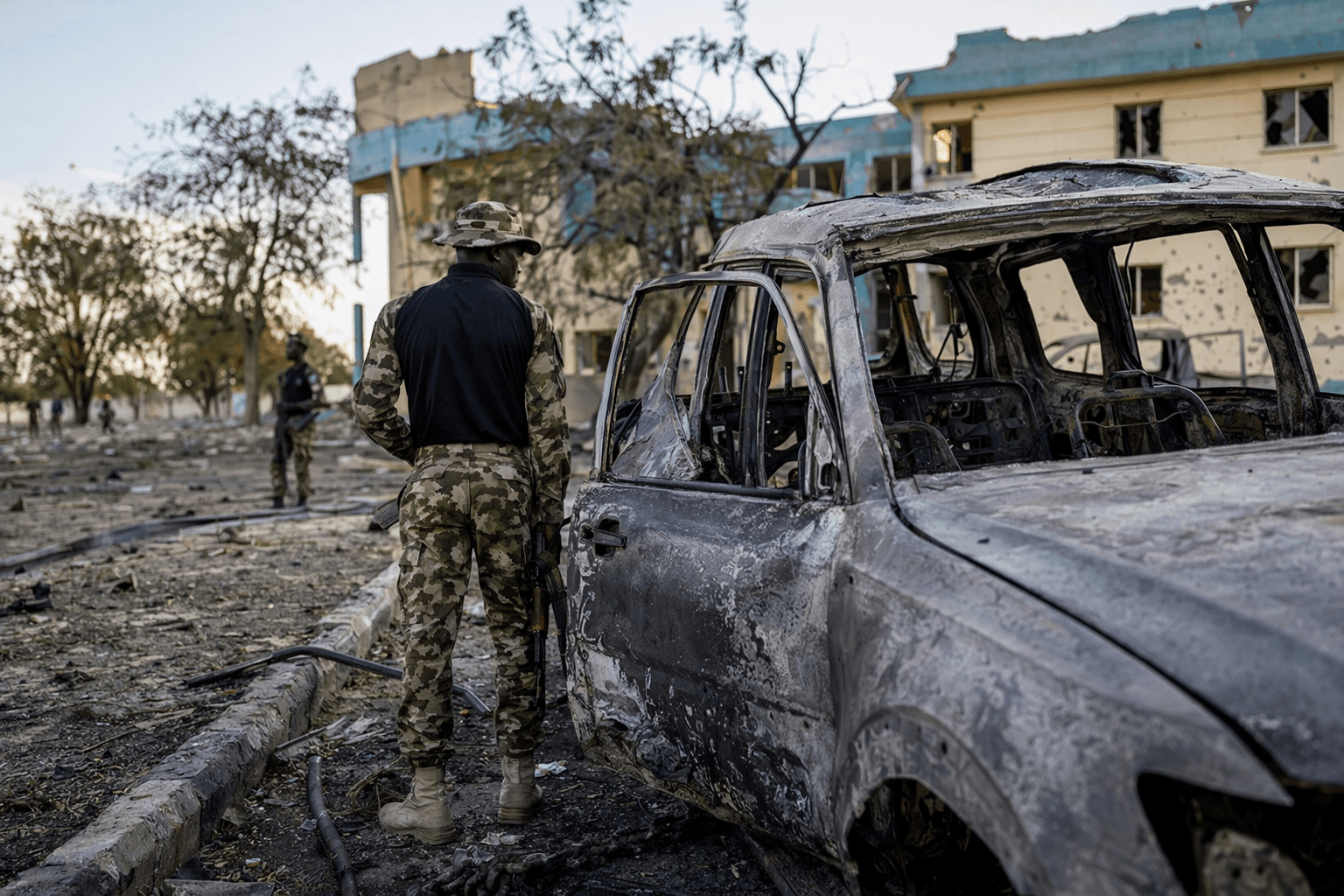
Jihadists killed 17 police officers in an early-morning raid on the Nigerian Army Special Forces School in Buni Yadi, turning a training site meant to harden the state’s defenses into the latest casualty of Nigeria’s northeast war.
The attack hit Gujba Local Government Area of Yobe State in the early hours of May 8, 2026, and the dead were police officers undergoing counter-terrorism training. That detail matters. The target was not a remote village or an unguarded road, but a security facility where officers were supposed to prepare for exactly this kind of violence. The fact that militants reached the school and inflicted heavy losses underscores a persistent weakness in Nigeria’s ability to secure its own institutions in the northeast.
Police said they were working with the armed forces and other security agencies to identify and prosecute those responsible. The delayed announcement, delivered days after the raid, also points to a chaotic scene and the likelihood that investigators are still piecing together the attack’s full sequence. Even so, the scale of the deaths leaves little doubt about the message the attackers intended to send: state security sites remain within reach.
The assault also fits a broader pattern that has defined the region since 2009, when Boko Haram’s insurgency took root and later splintered, with the Islamic State West Africa Province becoming another major force. Together, the groups have kept pressure on northeastern Nigeria despite years of military operations and repeated government claims of progress. United Nations and AFP-linked reporting says the conflict has killed more than 40,000 people and displaced about two million, a toll that helps explain why a single strike on a training school carries such weight.
By choosing a special training center, the militants appeared to be aiming at symbolism as much as body count. The attack suggests jihadist groups are not only surviving but adapting, continuing to target security infrastructure and test the readiness of local forces. It also raises fresh questions about how exposed such facilities remain in a region where attacks on schools and kidnappings continue, including new abductions reported in Borno State around the same period.
For northeastern Nigeria, the raid was a blunt reminder that the insurgency is not a fading emergency. It is still capable of reaching into the institutions that are meant to contain it.
This article was produced by Prism’s automated news system from verified source data, official records, and press releases, then run through automated quality and moderation checks before publishing. The system is built and supervised by the people who set the standards it runs under. Read our full AI policy.
Did this article answer your question?