Jihadists nearly triple urban attacks as Mali violence escalates
Coordinated attacks hit Bamako, Kati and other cities on April 25-26, killing and displacing civilians as Mali’s urban security unraveled.
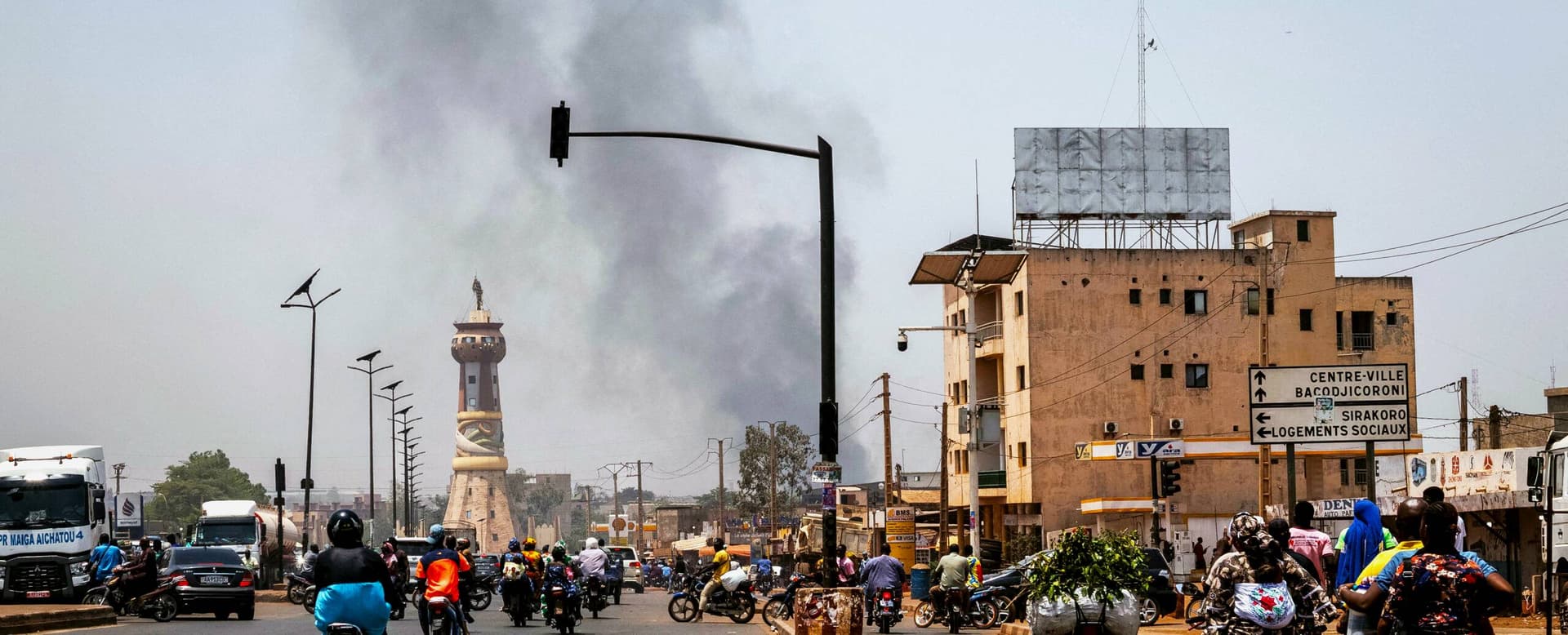
Armed groups struck deep into Mali’s urban core on April 25 and 26, hitting Bamako, Kati, Sévaré, Gao, Mopti and Kidal in a coordinated assault that targeted military sites and civilian infrastructure and left civilians dead, injured and on the move. The violence marked a sharp turn from scattered insurgency to pressure on cities that are meant to anchor state authority.
The UN human rights office said the attacks forced many people to flee their homes, while humanitarian agencies reported damage across several civilian sites. OCHA said at least five schools in the Mopti region were damaged, along with a community health centre in Gao and the regional health directorate offices in Kidal. The agency also reported 600 newly registered refugees in Niger and more than 100 internally displaced households after the offensive, a reminder that the shock waves extended well beyond the attacked towns.

The assault underscored how far Mali’s security crisis has widened under military rule. The Africa Center for Strategic Studies said annual fatalities linked to militant Islamist groups in Mali have tripled under the junta, as Jama’at Nusrat al-Islam wal-Muslimin, known as JNIM, expanded its geographic reach, improved coordination and increased pressure on key military, political and economic centers. The April attacks also stood out for the alliance between JNIM and the Tuareg-led Azawad Liberation Front, or FLA, which moved in parallel against state positions in one of the boldest insurgent operations in years.
That convergence matters because it attacks the junta’s central promise: that force and military consolidation could restore sovereignty. Mali, along with Burkina Faso and Niger, formed the Alliance of Sahel States and broke away from ECOWAS in January 2025, presenting the split as a break with outside influence and a path to greater control over security. The latest urban assaults instead exposed the fragility of that claim, with the state struggling to protect administrative centers, hospitals and schools.
OHCHR warned that the worsening fighting has raised fears of civilians being trapped between Islamist armed groups and government counteroffensives. Humanitarian operations were still only gradually resuming in mid-May, and the pattern now visible across Mali is no longer a distant campaign in rural zones but a contest for control of cities, where every new attack carries a higher toll for civilians and a larger risk to regional stability.
This article was produced by Prism’s automated news system from verified source data, official records, and press releases, then run through automated quality and moderation checks before publishing. The system is built and supervised by the people who set the standards it runs under. Read our full AI policy.
Did this article answer your question?


