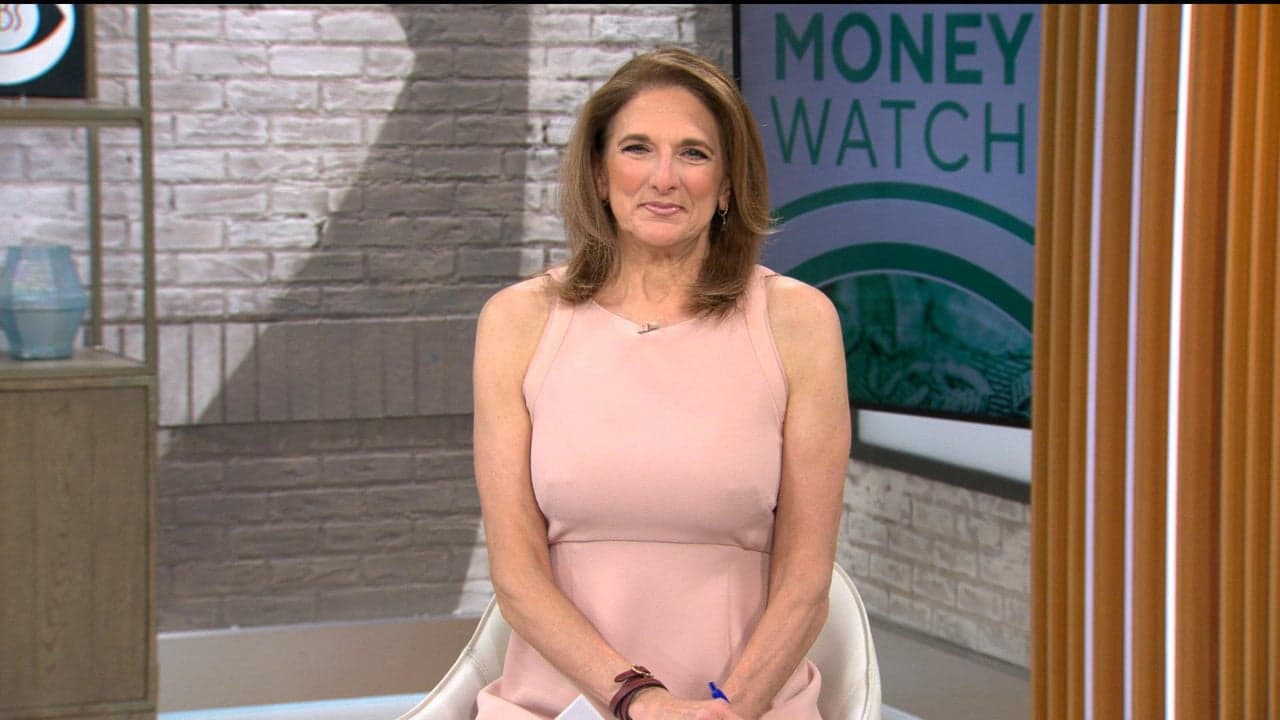
Jill Schlesinger answers burning money questions on CBS Saturday Morning
Jill Schlesinger’s latest CBS Saturday Morning Q&A shows the biggest money mistake: treating investing, mortgages and household finance as separate problems.
The questions keep pointing to the same mistake
CBS News has put Jill Schlesinger back in front of viewers with a new “CBS Saturday Morning” segment that tackles money questions ranging from investments to home loans. That mix is the clue: most people are not really asking for more financial trivia, they are trying to avoid expensive errors in the places where household budgets feel most exposed.

Schlesinger has become a familiar guide for that kind of pressure. CBS describes her as a certified financial planner and an Emmy and Gracie Award-winning business analyst who covers the economy, markets, investing and related topics. She also hosts the nationally syndicated “Jill on Money” radio show and podcast, which makes her one of CBS’s most visible voices on practical personal finance.
Investing is not the same as guessing
One of the most common misconceptions behind investing questions is that the main job is to find the next winning trade. CBS’s repeated decision to air Schlesinger’s Q&A segments suggests something else: viewers want help separating strategy from noise. That matters because investing decisions are usually less about one perfect pick and more about whether a household is building a plan that matches its time horizon, cash needs and risk tolerance.
The latest CBS segment, “Money expert answers top finance questions,” folds investments into the same conversation as home loans, which is telling. It reflects how many investors still treat market moves as a stand-alone issue when, in reality, portfolio choices compete with day-to-day obligations like debt payments, housing costs and emergency savings. Schlesinger’s role is valuable precisely because she frames investing as one part of a broader balance sheet, not a contest to outsmart the market.
Home loans are still where the bad assumptions get expensive
Mortgages remain one of the easiest places for people to misread the numbers. CBS previously described a Schlesinger housing-market update when mortgage rates had hit a 20-year high, a reminder that buyers often anchor on a single rate headline instead of the total cost of ownership. When borrowing costs jump, the real issue is not just whether the rate feels high. It is whether the monthly payment fits the rest of the household budget without forcing compromises elsewhere.
That is why a question about home loans is rarely just a question about interest rates. It is usually a question about timing, affordability and the risk of stretching too far in a tight market. Schlesinger’s appearance on CBS Saturday Morning places that caution front and center, and it fits a moment when many viewers are still trying to figure out whether to buy, refinance, wait or simply rethink what they can comfortably afford.
Credit cards, savings and 401(k)s are one problem, not three
CBS has also been returning to the same set of concerns in earlier Q&A segments. On Sept. 4, 2025, the network ran a Schlesinger segment on credit cards, savings and 401(k) plans. About eight months ago, CBS published another on insurance, mortgages and credit cards. That pattern shows how closely households link borrowing, saving and retirement planning, even if the questions arrive under different labels.
The misconception here is that each topic can be solved in isolation. People ask whether to cancel a card, how much to keep in savings, or what to do about a 401(k), but those decisions are usually connected. A household that strips too much cash from savings to invest may end up vulnerable to a surprise bill. A person who ignores a retirement plan because a credit-card balance feels urgent may lose the long-term compounding that makes 401(k) contributions so important. Schlesinger’s repeated role on CBS is to make that interdependence visible.
Insurance is not just another bill to trim
Insurance questions often arrive with a cost-cutting mindset, but that can be a costly mistake in itself. CBS’s earlier segment on insurance, mortgages and credit cards shows that viewers are not only looking for cheaper premiums, they are trying to understand what happens when coverage is reduced or a payment structure changes. In personal finance, the lowest monthly bill is not always the safest outcome.
That is especially true when insurance overlaps with housing and debt. A mortgage puts a roof over the budget, credit cards can add flexibility or stress, and insurance is often the backstop when something goes wrong. The wrong assumption is that cutting one line item automatically strengthens the rest of the balance sheet. Often, it just moves risk somewhere less obvious.
Why Schlesinger keeps drawing viewers back
The reason Schlesinger keeps appearing in CBS’s money coverage is straightforward: she translates a complicated financial environment into choices regular households can actually act on. As CBS’s business analyst, and as the host of “Jill on Money,” she brings the same practical lens to markets, investing, retirement and debt that viewers are asking for in the most basic terms.
That is the larger lesson in the latest CBS Saturday Morning segment. People are not just looking for answers about stocks, mortgages or credit cards. They are looking for a way to stop making the same expensive assumptions. Schlesinger’s recurring role on CBS suggests those mistakes are common enough, and costly enough, to keep revisiting until households start seeing their finances as one connected system instead of a stack of separate bills and decisions.
This article was produced by Prism’s automated news system from verified source data, official records, and press releases, then run through automated quality and moderation checks before publishing. The system is built and supervised by the people who set the standards it runs under. Read our full AI policy.
Did this article answer your question?

