Job postings, not the market, may be costing employers applicants
Many vacancies are real, but many applications never start. Salary opacity, clunky forms and vague ads are pushing qualified workers away before they click apply.
The hiring problem many employers blame on a tight labor market is often hiding in plain sight: the posting itself. With 7,618,000 job openings in April 2026, the labor market still has plenty of demand, but candidate behavior shows that workers are screening employers just as hard as employers screen them. If a listing is vague, low-trust, or too time-consuming, qualified applicants are walking away before the application even begins.
The mismatch starts with the first impression
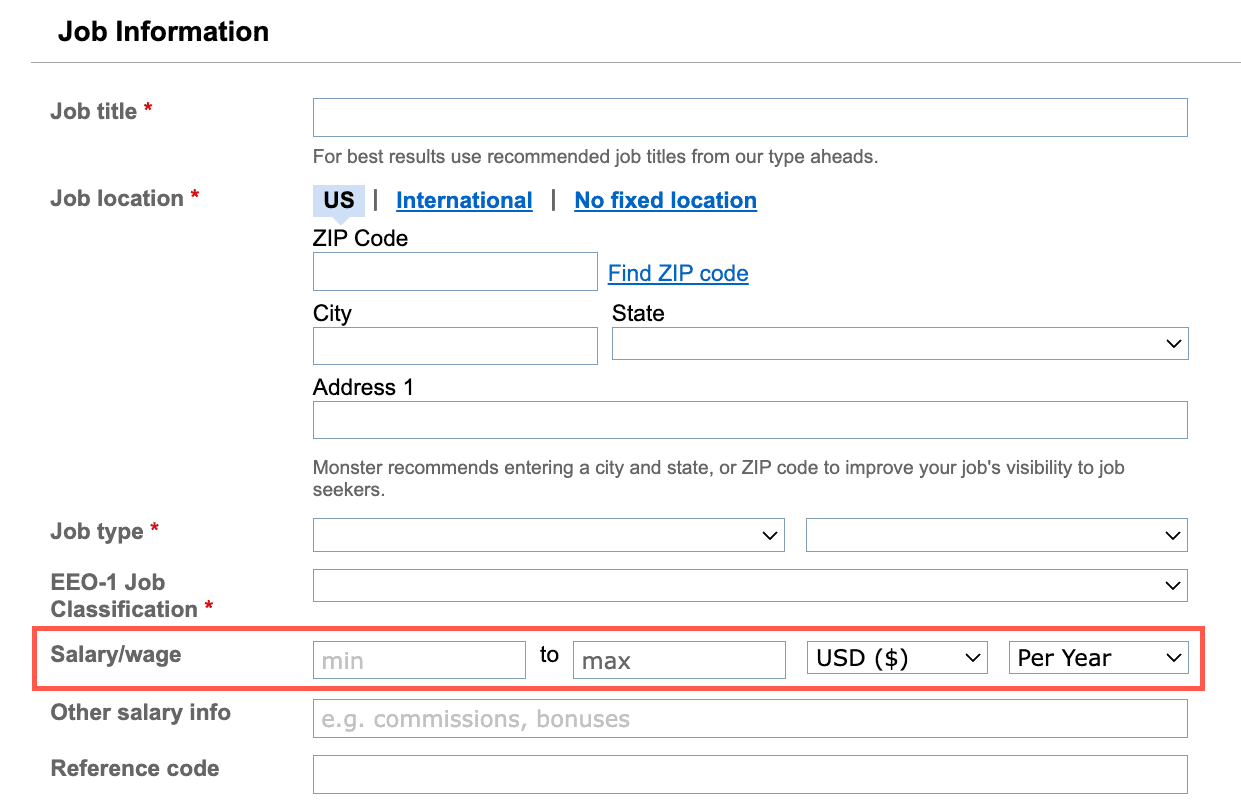
Job seekers are not treating every opening as worth their time. Monster’s 2026 Job Search Deal-Breakers report says 60% of U.S. workers will not apply to a job that does not include a salary range, a stark sign that pay transparency is no longer a nice-to-have. The same report flags unclear job descriptions and overly complex hiring processes as red flags that can stop applications before they start.
That matters because a posting is not just an announcement, it is a filter. A candidate reading a muddy description may assume the employer is hiding something, while a posting packed with vague requirements can signal a drawn-out process or an unrealistic manager. In a market where applicants can compare openings quickly, that friction is enough to drive them elsewhere.
Speed has changed the way candidates search
The modern application process is increasingly a high-volume, low-patience environment. Monster’s 2026 Job Application Behavior Report says 48% of job seekers frequently or regularly apply to many roles quickly, which means listings are often judged in seconds, not minutes. That makes clarity and credibility just as important as compensation.
The challenge for employers is that rapid browsing compresses the decision window. If the title is confusing, the responsibilities are inflated, or the pay range looks arbitrary, candidates may move on before they have absorbed the rest of the posting. In that sense, the competition is not just for labor, it is for attention.
Pay transparency is becoming the baseline
Policy is pushing employers in the same direction as worker expectations. The National Conference of State Legislatures says California, Colorado, Illinois, New York and Washington now mandate salary ranges in job postings. Connecticut, Maryland, Nevada and Rhode Island require salary disclosure by default or upon request during the hiring process, even when not all of them require the range inside the ad itself.
The shift is not abstract. New York City’s pay transparency law took effect in November 2022, and Colorado passed one of the country’s sweeping pay transparency measures in 2019. Those rules have helped normalize a simple expectation: if employers want serious applicants, they need to show the pay upfront.
This is where vague ranges can backfire. Glassdoor says about two-thirds of employer-provided pay ranges in online job ads are accurate, which implies that roughly one-third are not. When candidates see broad or unrealistic ranges, they may interpret them as a sign that the employer is not serious, or that the real wage will land near the bottom of the band. Trust erodes quickly when pay is presented as a moving target.
Application design can be a deal-breaker
Even a strong posting can lose candidates if the application funnel is too cumbersome. Indeed says half of candidates abandon applications that take more than 10 minutes, a powerful reminder that process design is part of recruiting strategy. A long form, repetitive fields, or a forced account creation step can turn a promising applicant into a lost one.
That is why clunky application design belongs in the same conversation as pay and job language. Employers often assume that more screening produces better hires, but the first result is often fewer completions. When the process is cumbersome, the people most likely to leave are often the ones with the strongest outside options.
What employers should diagnose first
The fastest way to stop blaming the market is to audit the posting from the candidate’s point of view. Employers should look for three pressure points:
- Salary visibility: Is there a range, and does it look believable compared with the actual role?
- Job clarity: Does the description explain the work in plain language, or does it bury the role under jargon and wish-list requirements?
- Application burden: Can a candidate finish in a reasonable amount of time, or does the process feel like unpaid administrative labor?
That diagnostic matters because the same employer can attract one candidate pool with a clean, transparent posting and repel another with a needlessly opaque one. The difference is often not labor scarcity, but credibility. A strong market for workers means applicants have more leverage to be selective about which employers earn a response.
The bigger economic signal
The broader labor-market lesson is that openings alone do not guarantee matches. The BLS figure of 7,618,000 openings shows demand remains elevated, but vacancies are only useful if the search process converts interest into applications and applications into hires. When a posting lacks pay information, asks too much too soon, or makes candidates jump through too many hoops, it creates its own shortage.
That is why employers who say they cannot find workers should start by testing their own funnel. The market may be tight, but the sharper constraint is often self-inflicted: a posting that looks opaque, a process that feels too long, and a candidate who decides the job is not worth the hassle.
This article was produced by Prism’s automated news system from verified source data, official records, and press releases, then run through automated quality and moderation checks before publishing. The system is built and supervised by the people who set the standards it runs under. Read our full AI policy.
Did this article answer your question?
%3Amax_bytes(150000)%3Astrip_icc()%2FCertificate-of-deposit-2301f2164ceb4e91b100cb92aa6f868a.jpg&w=1920&q=75)