John Mulaney reflects on sobriety, fatherhood and his Netflix show
John Mulaney’s new public chapter ties recovery, fatherhood and late-night reinvention into one story. His Netflix role now reflects the same discipline that shaped his life after rehab.
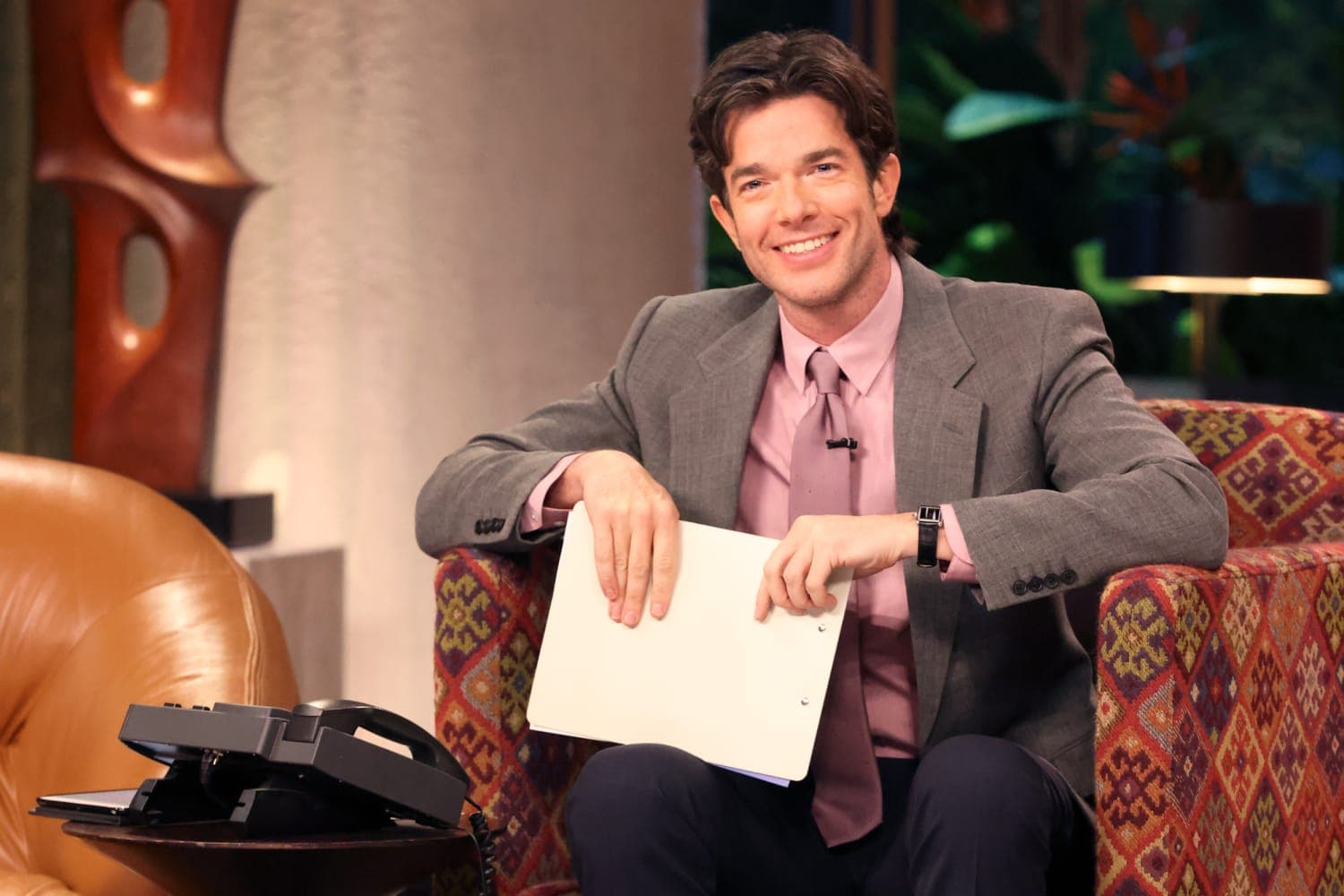
John Mulaney is using his latest career turn to talk about something bigger than comedy: the way sobriety and fatherhood have rewritten his life. In his conversation with Tracy Smith, the Emmy Award-winning standup and former “Saturday Night Live” writer looks back on the intervention that pushed him into rehab, then connects that reset to the person he is now, as a father of two and the host of a live Netflix talk show.
A career that keeps changing shape
Mulaney has spent years moving between versions of himself that once seemed separate: writer, standup, recovery story, husband, father and television host. His newer role as the face of Netflix’s live Wednesday-night talk show, “Everybody’s Live with John Mulaney,” marks another reinvention, one that grew out of a Netflix Comedy Festival experiment called “Everybody’s in L.A.” CBS says the live show launched its Wednesday-night run in March 2025, turning an offbeat trial into a regular weekly platform.
That progression matters because it frames Mulaney less as a celebrity figure than as a performer still rebuilding his public identity. The former “SNL” writer became a star through standup, but the new talk-show format places him in a different register: more conversational, more reactive and more visibly himself. For a comedian whose work has often depended on control and timing, the live setting suggests confidence in a more open-ended version of his persona.
Sobriety remains part of the story, not a footnote
The interview does not treat recovery as a solved chapter. Mulaney talks about how he handles sobriety today, and he returns to a 2020 intervention he describes as “star-studded.” That phrasing captures both the scale of the moment and the unusual public pressure around it: the intervention became part of his mythology, but it also marked a real turning point that led to rehab.
CBS notes that Mulaney went through rehab and that his approach to sobriety remains active rather than symbolic. That detail is reinforced by later reporting about the couple’s household safeguards. In November 2024, separate coverage said Olivia Munn sometimes gives him random drug tests, a reminder that recovery is still being managed day to day, not simply remembered in retrospect. The practical reality of sobriety gives his public remarks a different weight from the polished self-mythology that often surrounds famous men in comedy.
Fatherhood changes the emotional center of the material
If recovery altered Mulaney’s discipline, fatherhood appears to have altered his perspective. CBS says he discusses how becoming a parent has changed his outlook, and that shift is now impossible to separate from his public image. He is the father of two children: son Malcolm, born in November 2021, and daughter Méi June Mulaney, born via surrogate in September 2024.
That timeline matters because it places family life in direct conversation with his recovery. In a 2024 interview, Mulaney said of Olivia Munn, “I went to Los Angeles and met and started to date a wonderful woman named Olivia.” He added, “She got to date me right out of recovery ... it is a very, very lucky thing to have met this woman.” Those remarks show how he has chosen to describe the relationship: not as a celebrity romance, but as part of the architecture that helped stabilize his life after rehab.
Munn’s role in that story has also been made public in practical terms. CBS reported that she helped support his recovery, and later coverage of the family’s sobriety safeguards showed that support continuing in ordinary, domestic ways. For Mulaney, fatherhood is not a separate sentimental subplot. It is now part of how he explains the structure of his life, his schedule and the boundaries around his addiction recovery.
What the Netflix show says about his public persona
“Everybody’s Live with John Mulaney” fits neatly into this reinvention because it depends on the same attributes that recovery and fatherhood have demanded from him: steadiness, flexibility and a willingness to speak plainly. CBS News described him as sitting down as host of a Netflix talk show after becoming a superstar as a standup, which suggests a shift from tightly scripted performance to a more open public rhythm. The show’s origin in the “Everybody’s in L.A.” experiment also points to a willingness to test formats before committing to them.
That matters in a broader cultural sense. Male performers often face pressure to present recovery as a redemption arc and family life as proof of maturity. Mulaney’s recent appearances do something more specific: they make recovery and fatherhood part of the operating system of his career rather than a separate moral lesson. The result is a public persona that feels less like reinvention for its own sake and more like an adjustment to what his life now requires.
The arc is especially notable because it blends private and professional change without pretending they are unrelated. Mulaney’s comedy, his schedule, his marriage, his recovery and his children now sit in the same story. That is what gives this phase of his career its force: not the headline of a comeback, but the quieter evidence of a man organizing his work around the life he has built after rehab.
This article was produced by Prism’s automated news system from verified source data, official records, and press releases, then run through automated quality and moderation checks before publishing. The system is built and supervised by the people who set the standards it runs under. Read our full AI policy.
Did this article answer your question?