Johnson presses London on Chinese embassy plans ahead of parliamentary address
U.S. House Speaker Mike Johnson visits Downing Street and warns of security risks tied to a proposed Chinese diplomatic site, drawing rebukes from Chinese commentators. His speech to Parliament will be closely watched for bilateral and alliance implications.
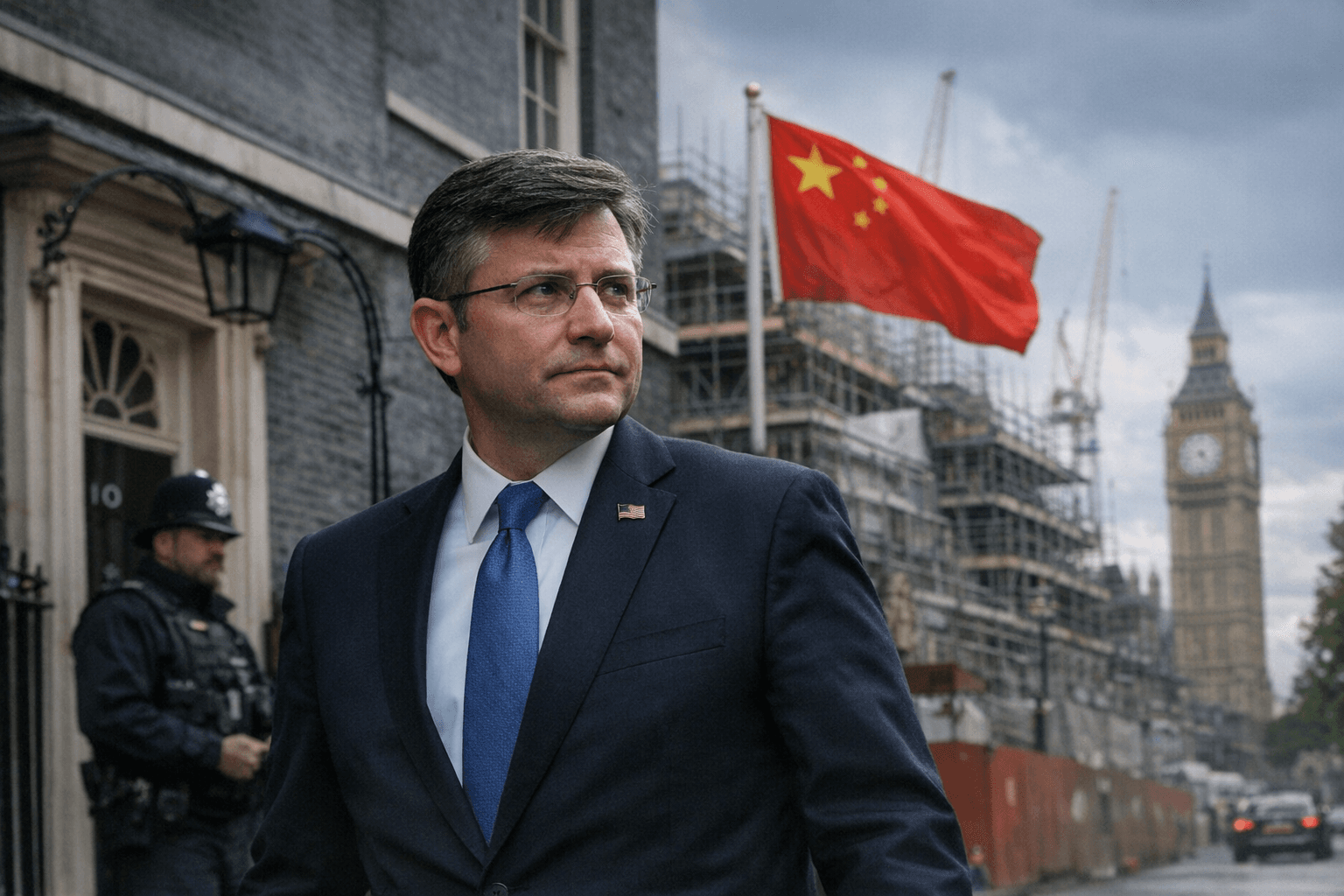
Mike Johnson is in front of 10 Downing Street today, pressing British officials to consider potential security risks tied to a proposed expanded Chinese diplomatic compound in London as he prepares to address the U.K. Parliament. The visit, part of Semiquincentennial commemorations marking 250 years since American independence, saw Prime Minister Keir Starmer formally welcome the U.S. House speaker outside the prime minister’s residence amid photo and video coverage.
Speaking to UK media ahead of a scheduled address to Parliament on Jan. 20, Johnson said the security concerns around the diplomatic project "seem real" and urged caution, warning, "We have to let our friends here make their decision. But if it were me, I would be very cautious about that." He also clarified that he was not speaking for the White House or the administration, framing his remarks as personal judgment rather than official U.S. policy.
Johnson’s parliamentary appearance will make him the first sitting U.S. House speaker to address the U.K. legislature, a symbolic moment intended to underscore the historic ties between the two countries during a year of U.S. national commemoration. The Chinese diplomatic plan, however, has become an unexpected focal point of the trip and a flashpoint for broader anxieties about great power competition, technological security and the strains in transatlantic relations.
Chinese commentators publicly rebutted Johnson’s warnings, with Li Haidong, a professor at China Foreign Affairs University, calling the allegations "baseless" and describing the stance as "a very outdated, Cold War-style mindset." Li added that framing the issue as a security threat "turns allies into strategic pawns or expendable consumables," and dismissed the characterization of the embassy plans as a genuine threat. Those rebuttals reflect a broader pattern of swift responses from Beijing-aligned voices when Western officials raise concerns about Chinese diplomatic or technological footprints abroad.
British officials have been weighing the project amid competing pressures: security agencies pressing for rigorous scrutiny and business and diplomatic interests arguing for pragmatic engagement. The timing of Johnson’s comments, days before a potential domestic decision, has intensified scrutiny in Westminster and among Britain’s allies. His forthcoming address is expected to touch not only on the specific embassy issue but also on the health of the U.S.-U.K. partnership at a time when observers say the special relationship has been tested by recent U.S. policies and rhetoric.
Diplomats and analysts in London say the episode highlights the triangular dynamics among Washington, London and Beijing: when a senior U.S. legislator publicly questions a host government’s foreign policy choices, it complicates bilateral decision-making and fuels media and political debate. For Starmer, the optics of greeting the speaker while managing an impending decision on a contentious diplomatic project underscores the domestic balancing act between national security, economic ties and alliance solidarity.
As Johnson prepares to make history in Parliament, members of both houses and international observers will be watching for how his remarks frame the limits of American influence, the responsibilities of allies and the contours of 21st century diplomacy in an era of strategic rivalry.
This article was produced by Prism’s automated news system from verified source data, official records, and press releases, then run through automated quality and moderation checks before publishing. The system is built and supervised by the people who set the standards it runs under. Read our full AI policy.
Did this article answer your question?

