J.P. Morgan raises 2026 S&P 500 target to 7,800
J.P. Morgan’s new 7,800 S&P 500 target assumes stronger profits, AI spending and a still-solid economy, even after a sharp market pullback.
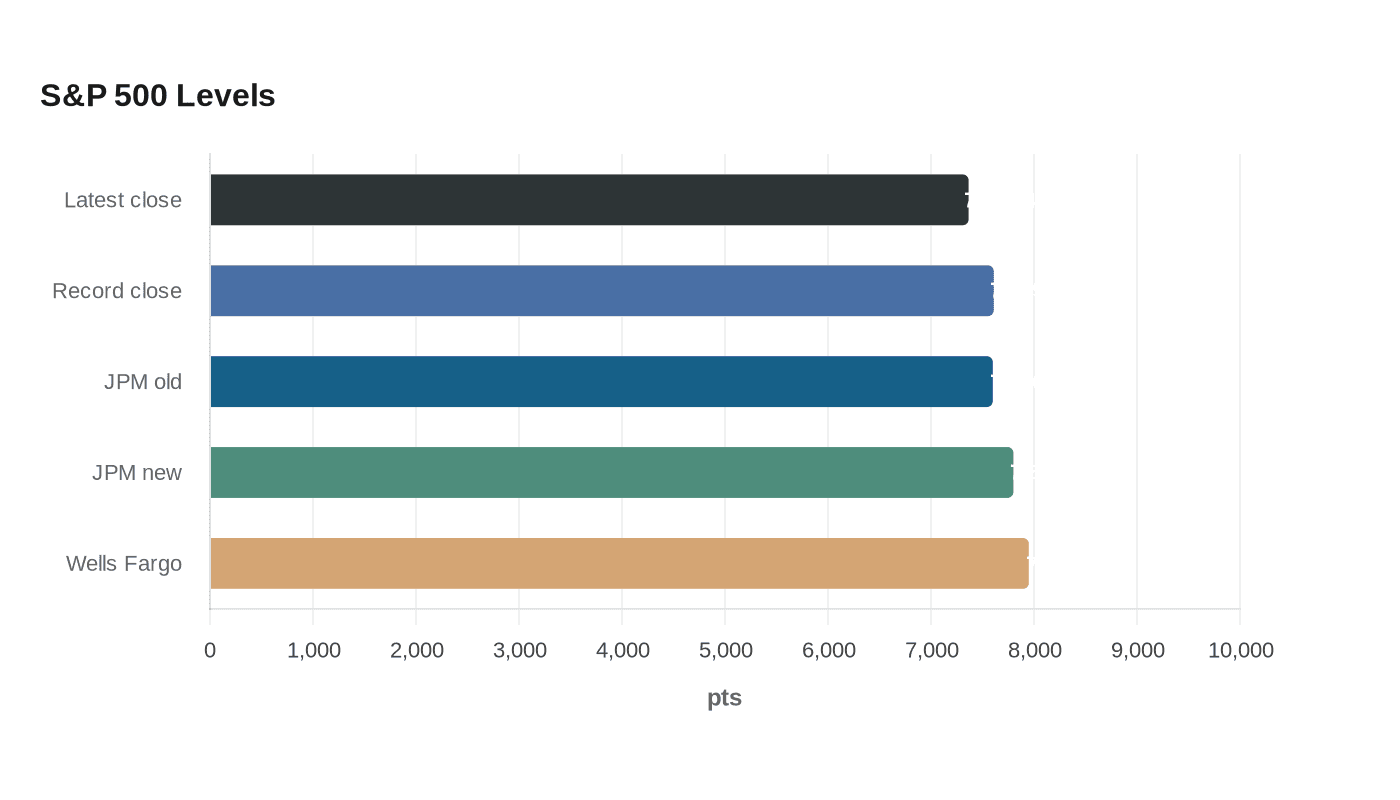
J.P. Morgan raised its 2026 year-end target for the S&P 500 to 7,800, joining a growing group of Wall Street firms turning more upbeat on U.S. stocks. The new call is about 6% above the index’s latest close of 7,365.46 and tops the bank’s prior forecast of 7,600.
The move rests on a more aggressive earnings view. J.P. Morgan now expects S&P 500 companies to earn $350 a share in 2026 and $390 in 2027, a sign that strategists still think profit growth can outrun the market’s already rich valuation. The bank pointed to strong earnings momentum, an AI-led investment boom and resilient economic conditions as the core supports for the revised target.

That optimism comes with explicit caveats. J.P. Morgan warned that the path higher may not be smooth, citing expensive capital spending, the risk of a tighter monetary policy backdrop and the chance that rising equity issuance could pressure valuations. In other words, the bank’s forecast assumes the AI buildout keeps feeding revenue and earnings, while rates and financing conditions stay manageable enough to avoid choking off that spending.
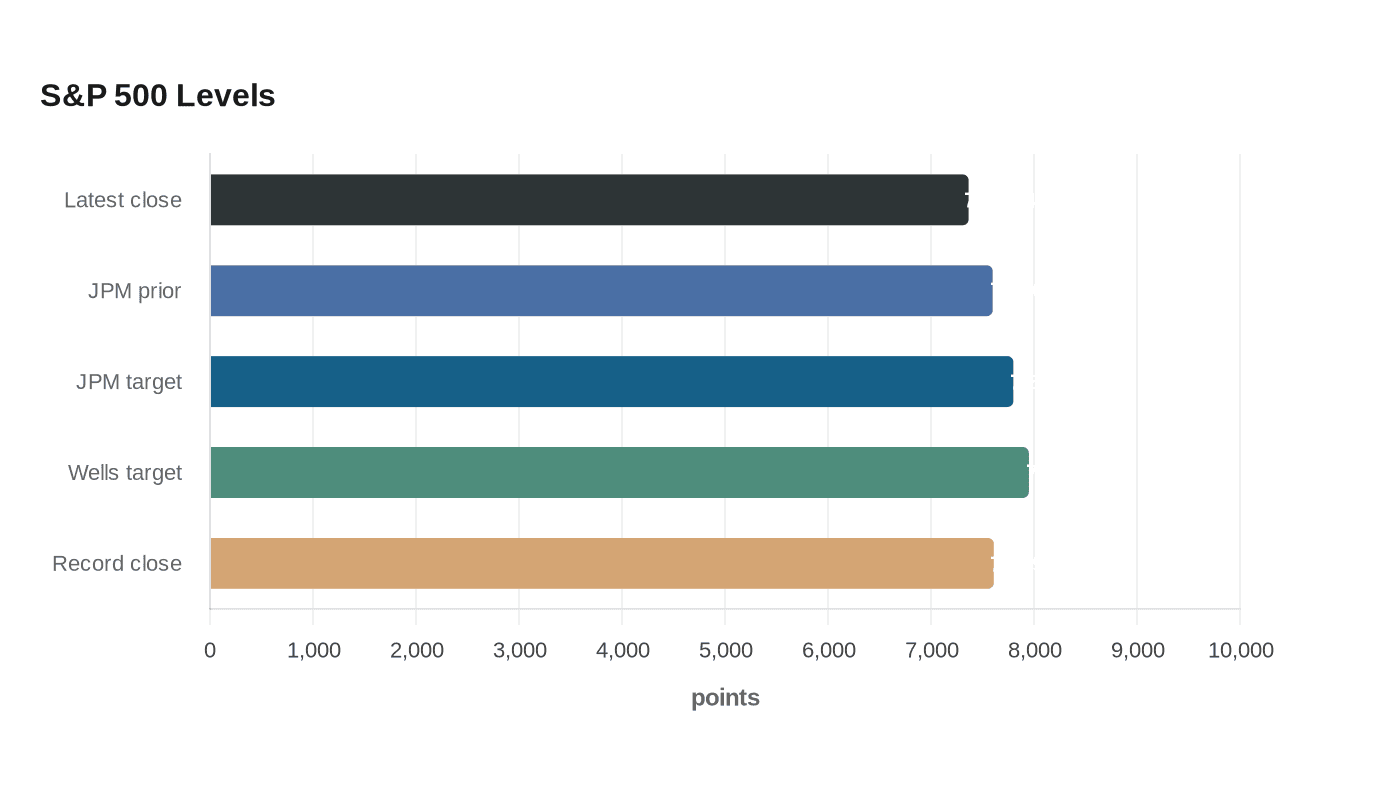
The upgrade was not isolated. Reuters said at least seven research firms raised their S&P 500 targets in June, underscoring a broader reset in market expectations rather than a single bullish outlier. Wells Fargo lifted its 2026 target to 7,950 on June 16, pointing to stronger corporate earnings, easing macroeconomic risks after the U.S.-Iran interim deal and a recent market pullback. BCA Research also raised its own target, adding to the sense that strategists are recalibrating higher as earnings forecasts improve.
The market backdrop makes the new calls look both timely and precarious. The S&P 500 fell 1.44% to 7,365.46 on June 23, its biggest one-day percentage drop since June 10, and ended the session 3.21% below its record close of 7,609.78 set on June 2. That decline followed weeks of anxiety over AI spending, debt-backed growth and the possibility that technology valuations had run too far ahead of fundamentals.
J.P. Morgan had already framed 2026 around the same fault lines in its December 2025 market outlook, which emphasized AI expansion, uneven monetary policy and market polarization. The bank’s mid-year outlook materials on June 22 suggest its strategists have been revising those assumptions as the year unfolded, but the new target still depends on the same central bet: earnings keep rising fast enough to justify a more expensive market.
This article was produced by Prism’s automated news system from verified source data, official records, and press releases, then run through automated quality and moderation checks before publishing. The system is built and supervised by the people who set the standards it runs under. Read our full AI policy.
Know something we missed? Have a correction or additional information?
Submit a Tip