Judge blocks California mask ban for federal agents, upholds ID rule
A federal judge enjoined California’s ban on federal agents wearing masks, finding it likely discriminates by exempting state police; identification requirement remains in force.
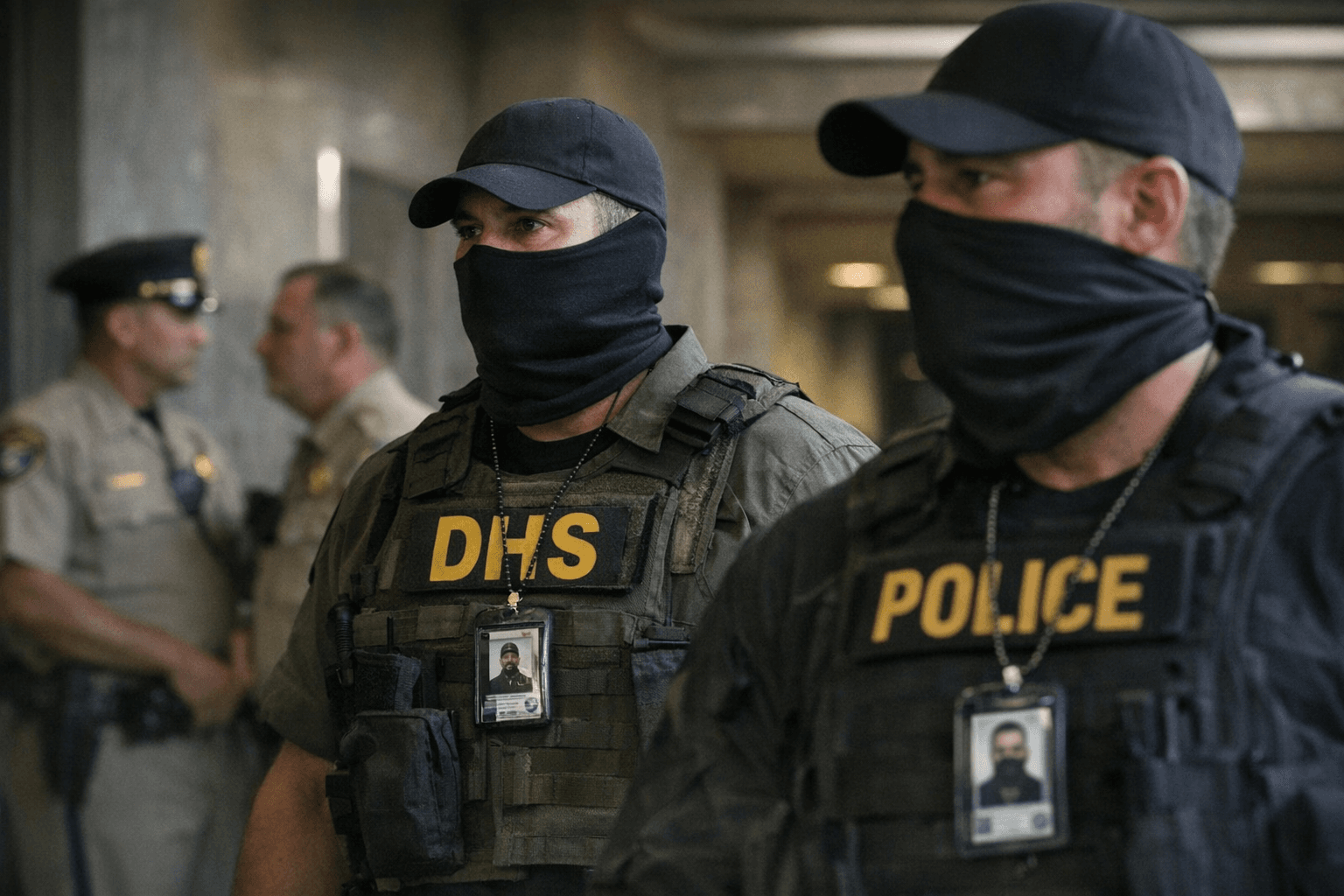
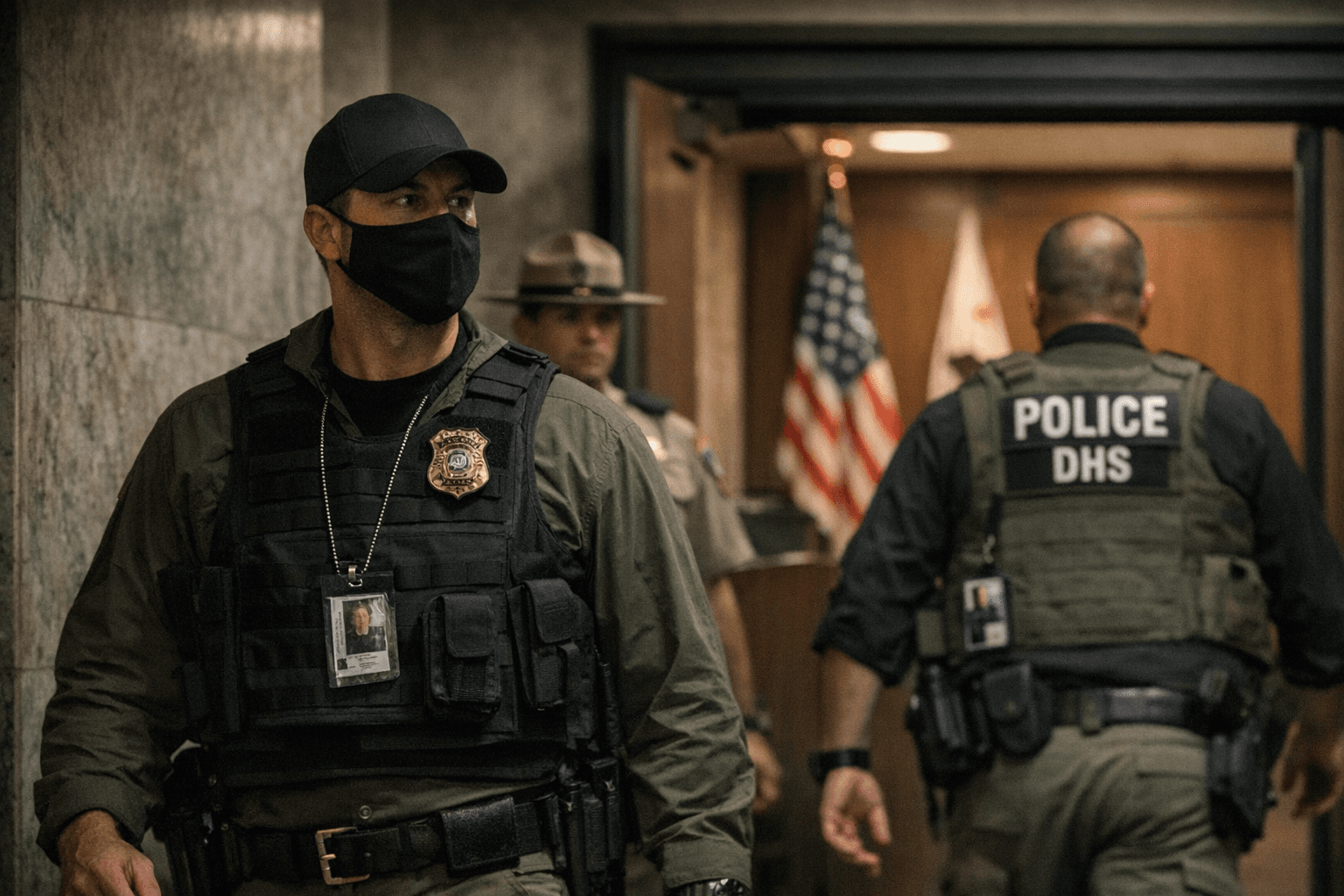
A federal judge has issued a preliminary order blocking enforcement of California’s law that would have prohibited federal immigration and other federal agents from covering their faces while on duty, while leaving intact a companion statute that requires officers to display visible identification. U.S. District Judge Christina Snyder found the masking provision likely discriminates against the federal government because it exempted state law enforcement from the ban.
The provision, enacted as part of SB 627 and frequently referred to as the “No Secret Police Act,” was signed by Gov. Gavin Newsom in September 2025 after public outrage over high-profile Immigration and Customs Enforcement raids. The law barred most law enforcement officers from wearing facial coverings with a few exceptions, including SWAT team duties and undercover operations. In a separate measure known as the “No Vigilantes Act,” the Legislature required any law enforcement officer operating in California to visibly display identification that includes their agency and either their name or badge number; Judge Snyder left that identification requirement in effect.
Judge Snyder’s preliminary injunction rested on what she described as a federal preemption concern: by excluding California law enforcement officers while covering federal officers, the statute “likely violates a federal doctrine that prohibits state laws from discriminating against the federal government.” The Guardian reported the judge as writing that “the court finds that federal officers can perform their federal functions without wearing masks.” The Trump administration’s Justice Department filed suit in November challenging the laws, arguing they would endanger officers who face harassment, doxxing, and violence and that the state was improperly regulating federal functions.
The ruling preserves an immediate operational pathway for federal agents in California who have sought anonymity for safety in certain enforcement contexts. California had agreed not to enforce the measures against federal agents while the Justice Department’s challenge proceeded in court. The judge’s order, issued on Monday, was reported with a Feb. 9, 2026 dateline; one account said the ruling will go into effect on Feb. 19.
Political reaction was swift. Sen. Scott Wiener, the Democratic sponsor of SB 627, announced plans to introduce legislation that would add state law enforcement officers to the masking ban, reversing an earlier removal of state officers that he attributed to a request from Gov. Newsom. It is unclear whether Newsom would sign a revised bill. Former Florida Attorney General Pam Bondi, who was reported to have sued California to block the law from taking effect, praised the decision on X, writing, “ANOTHER key court victory thanks to our outstanding [Justice Department] attorneys,” and “Following our arguments, a district court in California BLOCKED the enforcement of a law that would have banned federal agents from wearing masks to protect their identities.”
Beyond the immediate dispute, the ruling highlights a recurring legal and policy fault line between state efforts to police law enforcement transparency and federal claims of operational prerogative. The decision could shape how other states confront federal immigration enforcement and may prompt lawmakers to weigh statutory design choices that avoid creating exemptions that trigger federal-preemption challenges. Practically, a redrafted law that treats state and federal officers alike would remove the discrimination rationale identified by the court, but whether California’s political leadership will embrace such a change remains an open question.
This article was produced by Prism’s automated news system from verified source data, official records, and press releases, then run through automated quality and moderation checks before publishing. The system is built and supervised by the people who set the standards it runs under. Read our full AI policy.
Did this article answer your question?

