Judge clears killer of criminal responsibility in Royce Mallett stabbing case
A judge found the man accused of stabbing Royce Mallett could not be held criminally responsible after psychosis was raised in court.
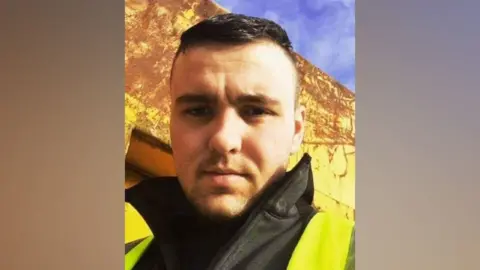
A judge found the man accused of stabbing Royce Mallett could not be held criminally responsible after evidence that he was showing symptoms of psychosis at the time of the attack.
Mallett, 30, a father of two from Haswell, County Durham, had moved to New South Wales in March 2024 to lay asphalt and earn money for his partner, Caitlin O'Keefe, and their children, Rose and Roman. He was stabbed in the chest at about 6pm on 8 July 2024 while sitting in a car in the car park of the Hume Inn Motel on Wodonga Place in South Albury. He died later at Albury Base Hospital.
David Summers-Smith was arrested nearby and charged with murder. Court reporting said he pleaded not guilty, and the case was committed to the Supreme Court of New South Wales. The court has now found that, because of his mental state, he could not be held criminally responsible for the killing.
That outcome is often misunderstood. In New South Wales, a person can be found not criminally responsible if a mental health impairment meant that, at the time of the act, they did not know the nature and quality of what they were doing or did not know it was wrong. That is a legal threshold, not a moral judgment that no harm was done. The state’s Mental Health and Cognitive Impairment Forensic Provisions Act 2020, which began on 27 March 2021, also allows special hearings to end with a finding that the act was proven but the accused was not criminally responsible.

The difference matters because criminal responsibility and custody are not the same thing. If a court finds someone permanently unfit for trial, the proceedings can be discontinued. If a person is temporarily unfit, a forensic order and continuing review can follow, keeping the case within a secure treatment and supervision framework rather than the ordinary criminal sentencing track.
Mallett’s family has lived with the uncertainty for months. In April 2025, his mother, Felicity Mallett, said the family feared they might never know why he died. The family also raised about £20,000 to bring his body back to the United Kingdom for burial and funeral arrangements in County Durham. By April 2026, his parents were travelling to Australia for the trial, which was expected to last around three weeks.
For Royce Mallett’s family, the legal finding does not lessen the loss. It marks the point at which the court drew a hard line between criminal guilt and psychiatric incapacity, leaving the killing proven in fact but outside the reach of a murder conviction.
This article was produced by Prism’s automated news system from verified source data, official records, and press releases, then run through automated quality and moderation checks before publishing. The system is built and supervised by the people who set the standards it runs under. Read our full AI policy.
Did this article answer your question?


