Judge Dismisses X Corp. Antitrust Lawsuit Against Advertiser Coalition With Prejudice
A Dallas federal judge threw out X Corp.'s antitrust suit against advertisers with prejudice, ruling Elon Musk's company never proved the alleged boycott caused legally recognizable harm.
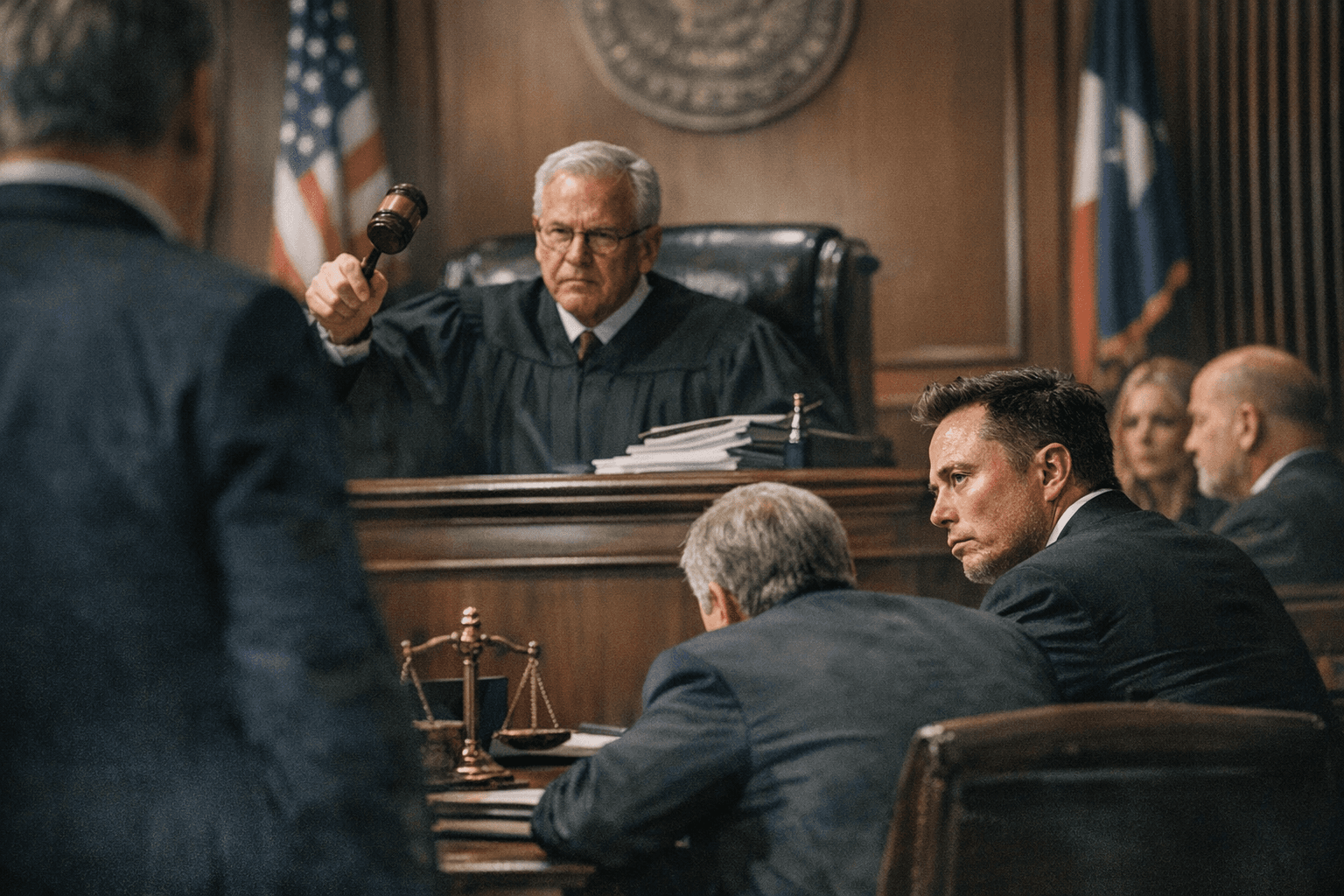
X Corp. lost its bid to hold a coalition of major advertisers legally accountable for what it called a coordinated advertising boycott, after Judge Jane Boyle of the U.S. District Court for the Northern District of Texas wrote simply: "X has not stated an antitrust injury."
Boyle dismissed X Corp.'s antitrust lawsuit accusing the World Federation of Advertisers and major companies including Mars, CVS Health and Colgate-Palmolive of illegally boycotting Elon Musk's social media company, finding X failed to show it had suffered any harm under federal antitrust laws. The dismissal, entered March 26, 2026, was with prejudice, meaning X can never refile it.
The ruling came in a lawsuit brought by Musk's X Corp. in 2024, when he alleged that the Belgian-based World Federation of Advertisers and its now defunct brand safety initiative, the Global Alliance for Responsible Media, sparked a "massive advertiser boycott" that cost the company billions in ad revenue. Musk also sued energy companies Ørsted and Shell, food giants Mars, Nestle and Tyson, healthcare company CVS, pharmaceutical firm Abbott, Colgate-Palmolive, toy maker Lego and social platform Pinterest.
The lawsuit claimed the advertisers acted against their own economic self-interests in a conspiracy that violated U.S. antitrust law. Boyle, however, wrote in her order that "the very nature of the alleged conspiracy does not state an antitrust claim, and the court therefore has no qualm dismissing with prejudice."
The judge went further, writing that "X has not alleged that the boycott against it allows or is intended to allow a competing social media company to corner the supply market for online advertising space," and that any construction of X's antitrust claim "is not 'injury of the type the antitrust laws were intended to prevent.'"
CVS and the other defendants had denied any wrongdoing and urged Boyle to dismiss the lawsuit. They argued X failed to show they acted in unison rather than making individual business decisions about when and where to spend ad dollars. Musk had ushered in sweeping changes to the platform after purchasing it, including reinstating the accounts of controversial figures and lifting some content restrictions. Within a year of his acquisition, advertising revenue had fallen by more than half as some firms paused or reduced their promotions on the site. In court filings, the companies said advertisers independently chose rival platforms due to concerns about X's commitment to brand safety following Musk's 2022 takeover, during which he fired employees they said had kept the site "welcoming to users and accommodating to family-friendly brands."
The World Federation of Advertisers shuttered GARM in August 2024, days after Musk sued. The trade organization had repeatedly said GARM's brand safety standards were voluntary, and that members were free to accept or reject those standards.
X and the World Federation of Advertisers did not immediately respond to requests for comment. Musk's $134 billion suit against OpenAI and Microsoft Corp. goes to trial April 27.
This article was produced by Prism’s automated news system from verified source data, official records, and press releases, then run through automated quality and moderation checks before publishing. The system is built and supervised by the people who set the standards it runs under. Read our full AI policy.
Did this article answer your question?

