Judge hears first challenge to Trump’s mail-in voting restrictions
A Washington judge weighed whether Trump can rewrite mail voting rules by executive order, as Democrats warned millions could be shut out.

A federal judge in Washington weighed whether Donald Trump can reshape how Americans cast mail ballots by executive order, a clash that could determine how election rules are set before the 2026 midterms. U.S. District Judge Carl Nichols, a Trump appointee, heard the first major challenge to the president’s March 31 order, with Democratic leaders Chuck Schumer, Hakeem Jeffries and the Democratic National Committee arguing it is unconstitutional and could disenfranchise millions of eligible voters.
The order, Executive Order 14399, directs the Department of Homeland Security, working through U.S. Citizenship and Immigration Services and the Social Security Administration, to compile and transmit a state-by-state citizenship list at least 60 days before regularly scheduled federal elections. It also tells the U.S. Postal Service to propose a rule restricting election mail ballots to voters on state-provided lists and requires states to preserve election-related records for five years. The White House said the federal government has an “unavoidable duty” to prevent violations of federal election law, but the challengers say the Constitution leaves election administration to states and Congress, not the president.
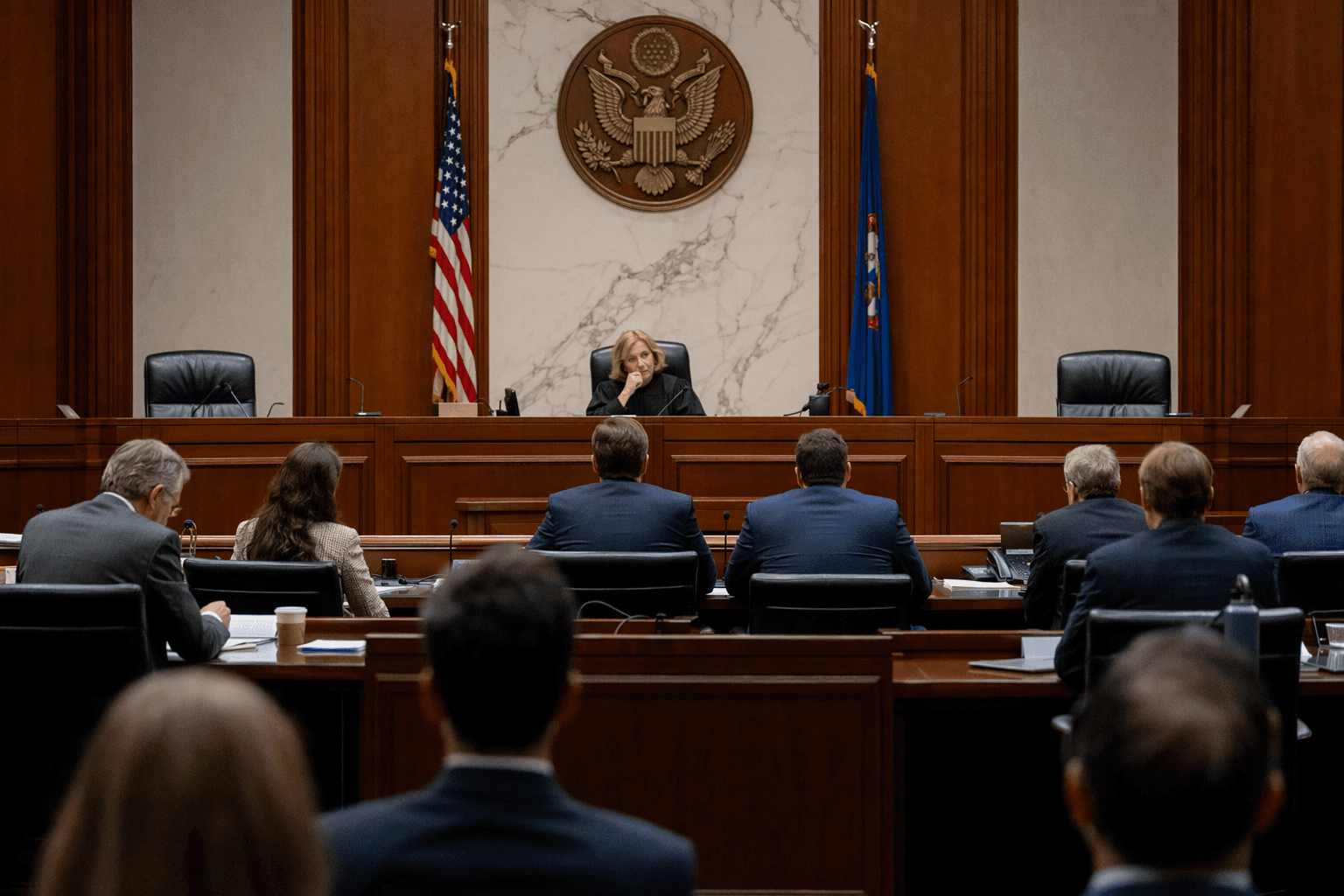
Nichols pressed both sides on the timing, noting the court faced a tight schedule and asking why he should not address the issue before the cusp of election season. The Justice Department said the case was premature because the order has not been implemented, and Steven Monteith, a Postal Service official, told the court that USPS had not published a proposed rule and had made no final decisions about how to carry it out.
The case is part of a broader fight over Trump’s election powers. The Brennan Center for Justice said the March 31 order is Trump’s second elections-related executive order in his second term, and that three courts blocked his earlier 2025 election order. The center and allied groups filed a separate lawsuit on April 2 on behalf of the League of Women Voters of Massachusetts, the League of Women Voters, the Association of Americans Resident Overseas, U.S. Vote Foundation, OCA – Asian Pacific American Advocates and Delta Sigma Theta Sorority, Inc.
The stakes extend well beyond the courtroom. Issue One estimated that 48 million people used mail-in voting in 2024, and voting-rights advocates warn that new verification burdens could confuse voters and make it harder for eligible Americans to return ballots on time. If Nichols blocks the order, it would be another judicial limit on a presidential effort to impose stricter national voting rules without Congress.
This article was produced by Prism’s automated news system from verified source data, official records, and press releases, then run through automated quality and moderation checks before publishing. The system is built and supervised by the people who set the standards it runs under. Read our full AI policy.
Did this article answer your question?

