Judge orders Kennedy Center to remove Trump’s name from building
A federal judge said only Congress can rename the Kennedy Center, ordering Trump’s name stripped from the façade within two weeks.
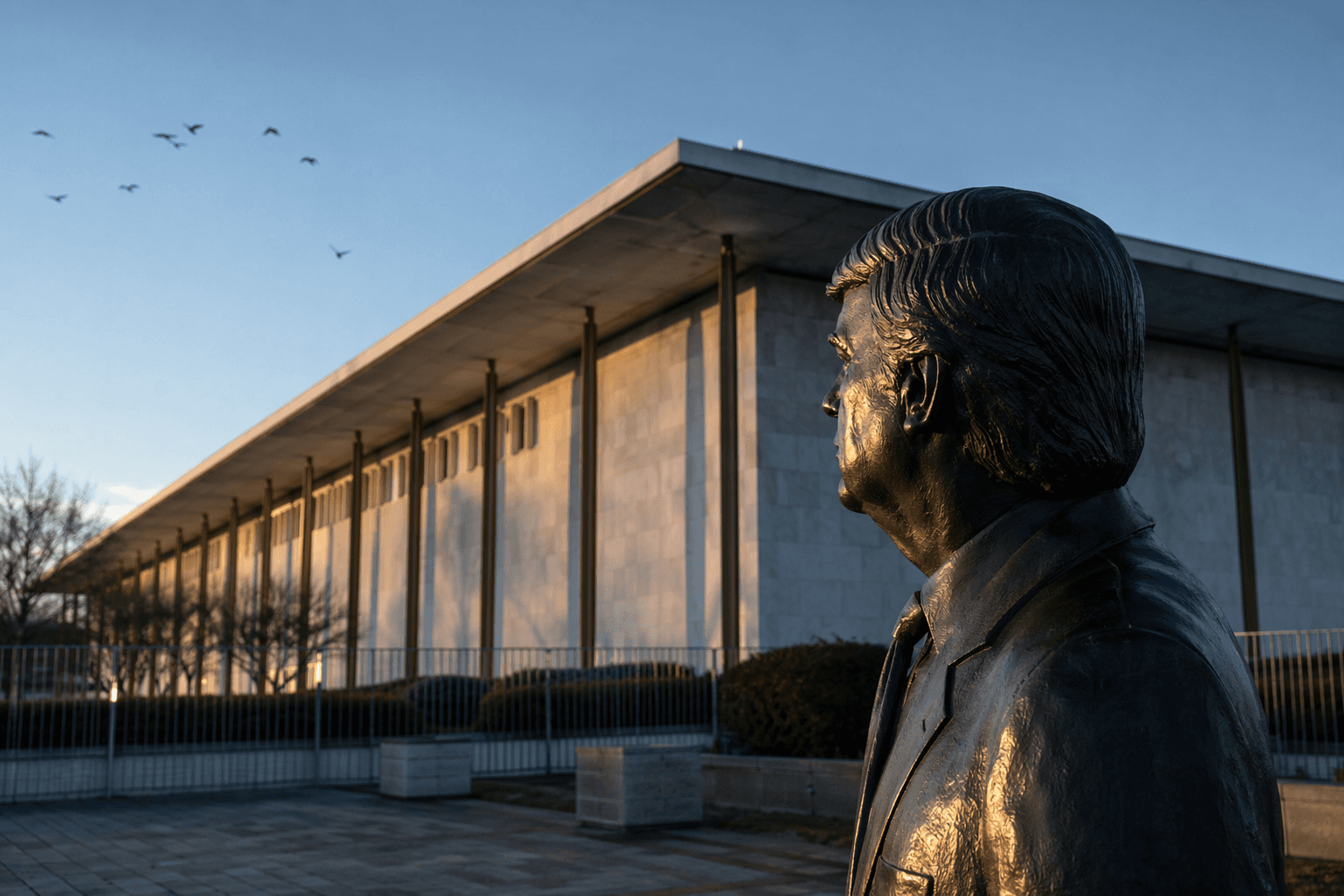
A federal judge has ordered the Kennedy Center to remove Donald Trump’s name from its building and official materials, saying the board lacked authority to rebrand a national cultural institution that Congress named for John F. Kennedy. The ruling lands in a fight that has become as much about political power and symbolic control as about theater and renovation plans.
U.S. District Judge Christopher Cooper ruled on May 29, 2026, that the Kennedy Center Board of Trustees acted unlawfully when it added Trump’s name to the institution’s title and façade. Cooper ordered the name removed from the building, digital signage and official materials within two weeks, and said the center’s organic statute makes clear the venue is named for President Kennedy and can be renamed only by Congress. He also temporarily blocked the center from closing for a planned two-year renovation, saying the shutdown decision rested on an “insufficient, one-sided presentation of information” and was “ill-informed and seemingly preordained.”
The case was brought by Rep. Joyce Beatty of Ohio, an ex officio board member, after the center moved rapidly to elevate Trump’s role. On February 12, 2025, the board elected Trump as chair, replacing David M. Rubenstein, terminated Deborah F. Rutter’s contract and named Richard Grenell interim president. The board later added 14 new trustees, bringing total membership to 31. In March 2026, the board unanimously approved a major renovation and said the center would close for about two years after an Independence Day celebration, while also saying Trump had secured $257 million from Congress for the project.
The naming dispute has exposed how much leverage comes with a federally created institution that draws millions of visitors each year and stages more than 2,000 performances, events and exhibits. The center’s own website now calls it the “Trump Kennedy Center,” even as it still describes the venue as America’s living memorial to President Kennedy. That tension sits at the center of the lawsuit: whether a board can treat a public cultural landmark as a political canvas, or whether Congress retains the final word.
Trump responded on Truth Social by attacking the judge, calling the facility “structurally dangerous,” and saying he would seek to transfer control of the center to Congress. He later suggested Congress should take responsibility for running the Kennedy Center unless he is “free to do what I do better than anyone else.” The center said it remained confident on appeal and defended the renaming as recognition of Trump’s “historic contributions.”
The ruling gives the Kennedy Center dispute a significance beyond Washington’s arts scene. The building on the Potomac is not just a performance hall; it is a federally rooted memorial that dates to the National Cultural Center Act of September 2, 1958, and opened in 1971 as the John F. Kennedy Center for the Performing Arts. Cooper’s order raises the stakes for other federally linked spaces where political branding, congressional authority and public memory now collide.
This article was produced by Prism’s automated news system from verified source data, official records, and press releases, then run through automated quality and moderation checks before publishing. The system is built and supervised by the people who set the standards it runs under. Read our full AI policy.
Know something we missed? Have a correction or additional information?
Submit a Tip