Judge orders pregnant Ghanaian woman, son out of Dulles airport detention
A pregnant Ghanaian mother and her 4-year-old son were ordered out of Dulles detention after more than a week in a windowless room, raising fresh questions about airport custody.

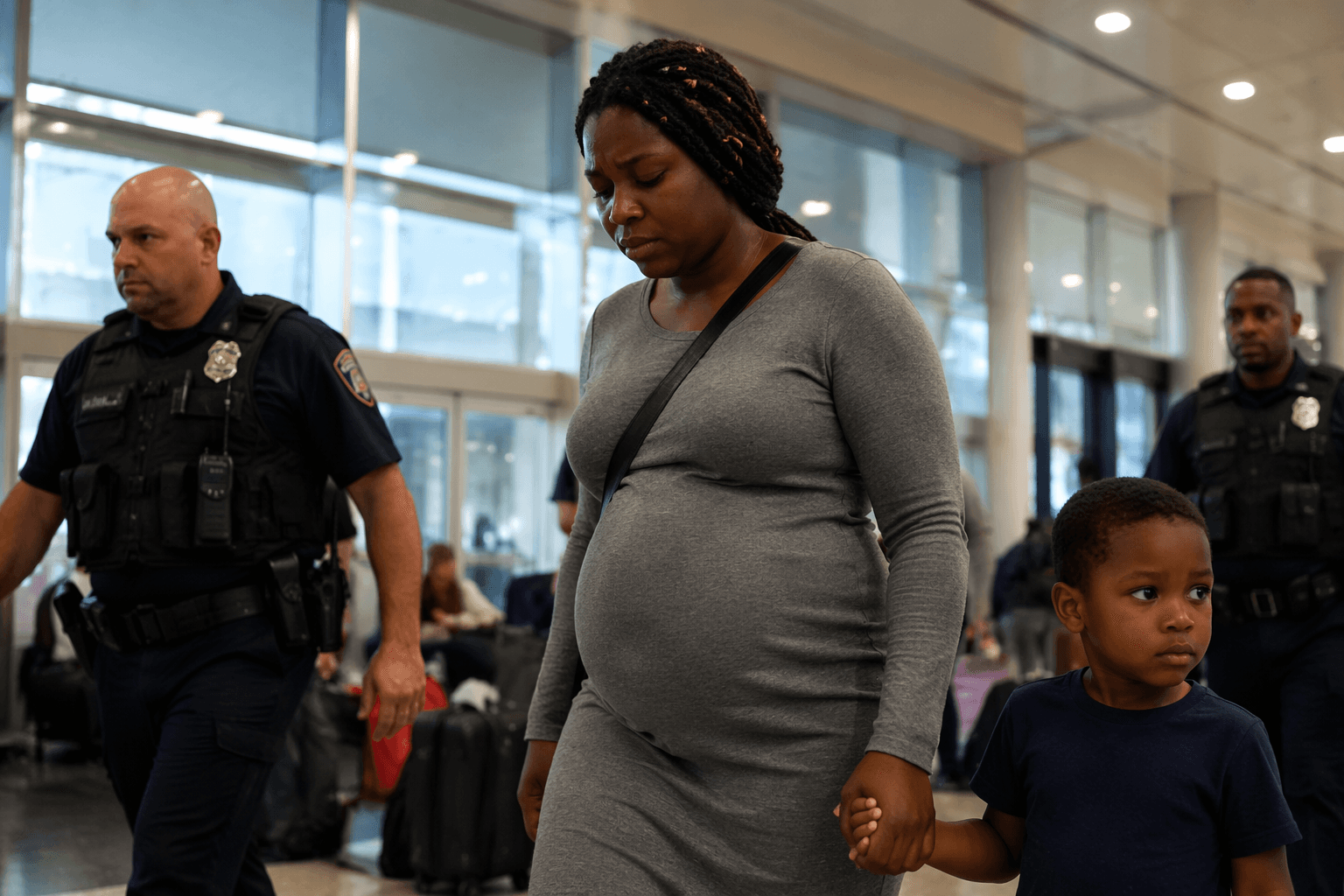
A federal judge ordered Anabella Gyasi and her 4-year-old son out of a D.C.-area airport detention room after they spent more than a week confined at Washington Dulles International Airport, where lawyers said the family had been locked inside a windowless space with only a bed, toilet and sink.
Gyasi, 38, arrived at Dulles on May 19 with her son from Ghana on valid tourist visas so the child could be taken to the United States for medical treatment. The boy was scheduled to be evaluated at Akron Children’s Hospital in Ohio on May 30 to determine whether he was old enough for surgery on physical deformities affecting both hands.
Instead of being allowed to continue to Ohio, Gyasi was held by U.S. Customs and Border Protection after officers questioned her about whether she feared persecution in Ghana. She said she did, citing concern that her son could face harm because of his disability. CBP then treated her as an asylum applicant and canceled her tourist visa.
The American Civil Liberties Union of Virginia said the family had been kept in a nonpublic airport room for 24 hours a day, a setting lawyers argued violated long-standing protections for pregnant women and children. The group filed an emergency habeas petition on May 26 in the U.S. District Court for the Eastern District of Virginia in Alexandria, saying the child should have been transferred out of detention within 72 hours under a court settlement.
Health concerns sharpened the urgency of the case. Lawyers said Gyasi was nearly 20 weeks pregnant and had been hospitalized twice since arriving in the United States because of vaginal bleeding and lightheadedness. After each hospital visit, they said, she was returned to the airport detention room. Lawyers also said doctors worried she was not eating enough and was under severe stress.
The Department of Homeland Security rejected the mistreatment allegations, saying everyone in CBP custody has access to appropriate care, including medical evaluation by a doctor, medication and food.
The case has become a flashpoint over how the United States handles vulnerable migrants at ports of entry, where normal safeguards appear to have broken down. The ACLU said a CBP policy issued last month requires physical custody of asylum-seeking people at ports of entry, even as older protections for pregnant women and children remain in place. The petition also said CBP has turned airport spaces not designed for detention into prison cells because it lacks long-term facilities at airports.
A court hearing was set for Friday, May 29, with the Ohio medical appointment still on the calendar for Saturday, May 30. The judge’s order forced a reckoning over how long a family can be kept in airport custody before humanitarian and legal limits take over.
This article was produced by Prism’s automated news system from verified source data, official records, and press releases, then run through automated quality and moderation checks before publishing. The system is built and supervised by the people who set the standards it runs under. Read our full AI policy.
Did this article answer your question?