Judge presses DOJ on speed of possible Google ad tech breakup
In closing arguments this week, a federal judge challenged prosecutors over how quickly a forced breakup of Google’s ad tech businesses could be carried out, signaling concern that court appeals could delay relief for years. The exchange raises new questions about whether courts will order structural fixes or opt for faster behavioral measures to restore competition in the digital advertising market.
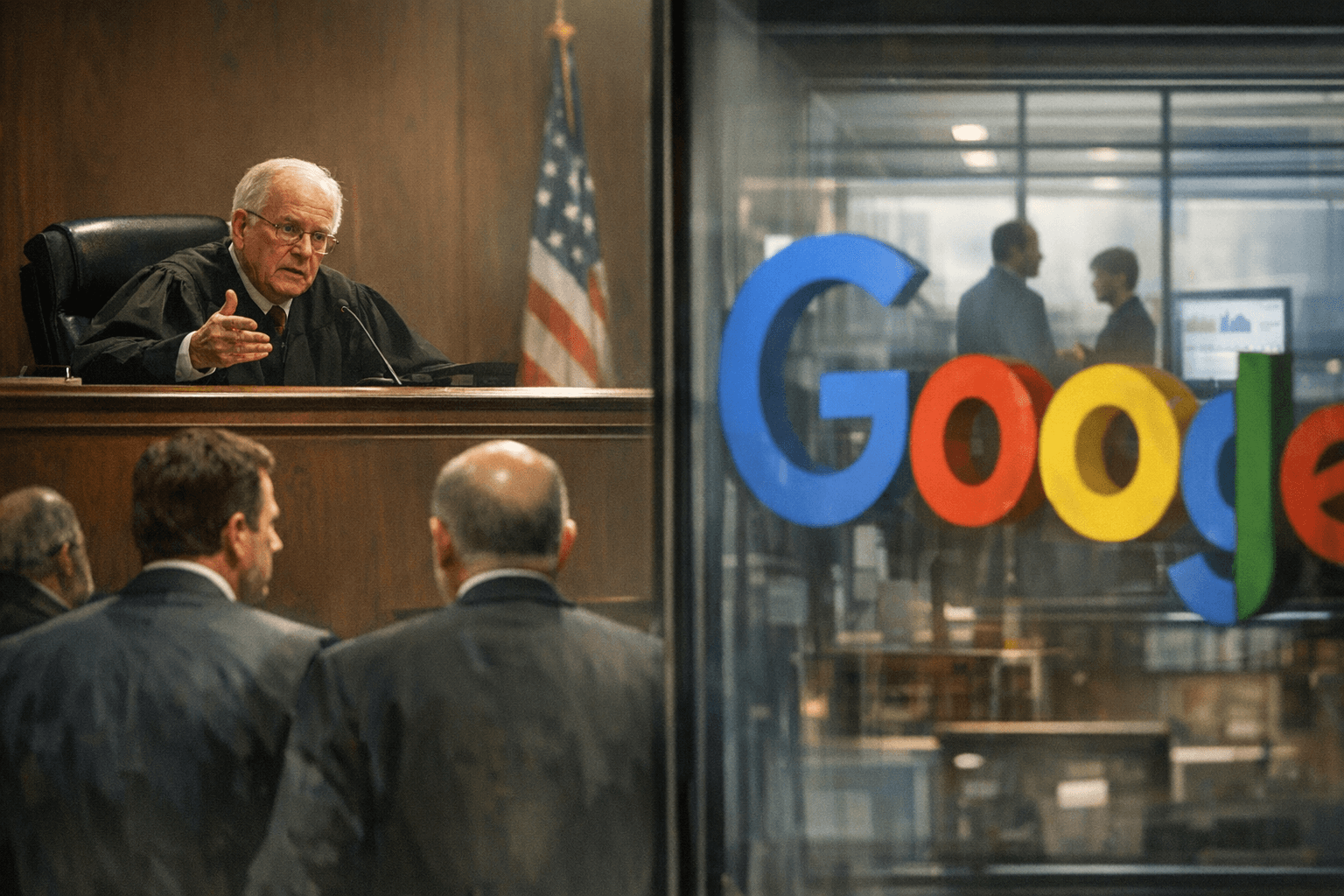
U.S. District Judge Leonie Brinkema spent much of the remedies phase hearing this week pressing Department of Justice lawyers on the timeline for a structural remedy against Google, repeatedly asking how quickly a forced divestiture of assets such as the Ad Exchange and related ad tech businesses could be implemented. The judge warned that any forced divestiture would almost certainly prompt an appeal and that "time is of the essence," underscoring doubts about the enforceability and practical benefit of a breakup if it could be delayed for years.
The remedies hearings on November 22 and 23 followed the April 2025 liability ruling in which the court found that Google illegally maintained monopolies in key parts of the online ad stack. The DOJ told the court that structural fixes are necessary to restore competition and to undo entrenched advantages that the government says have harmed advertisers, publishers and rivals in the ad tech ecosystem. Prosecutors argued that without divestiture, competitive dynamics would remain skewed and incremental changes would not deliver meaningful relief.
Google countered that a divestiture would be extreme, technically complex and disruptive to the digital advertising market. The company urged the court to adopt behavioral remedies that would impose rules on how Google operates its ad tech services without carving off business units. Google said such measures would be faster to implement and less likely to create market turmoil, an argument that drew evident interest from the judge as she probed the likely duration and practicalities of a breakup.
Brinkema’s focus on timing suggests she is weighing enforceability alongside remedy design, considering whether faster, interim or behavioral steps could provide relief while litigation and possible appeals unfold. Legal experts following the case say the question is pivotal. A structural remedy accompanied by protracted appeals could leave market conditions untouched for years, while behavioral remedies can be ineffective if they are hard to monitor or lack teeth.
The stakes extend beyond Google and the DOJ. Publishers that rely on ad revenue, advertisers that seek efficient markets, and smaller ad tech firms that contend they have been disadvantaged by Google's integrated systems are watching for a remedy that both restores competition and is practicable to enforce. Regulators and courts across the globe are also observing how U.S. antitrust enforcement handles complex, highly technical digital markets.
A final remedial ruling in the case is expected at a later date, after the court considers post hearing submissions. Whatever Brinkema decides, the remedy will likely prompt appeals and possibly further litigation, testing the ability of courts to fashion antitrust solutions that can be implemented quickly enough to change market behavior in real time. The outcome could reshape the business of online advertising and influence how courts approach structural fixes in fast moving technology sectors.
This article was produced by Prism’s automated news system from verified source data, official records, and press releases, then run through automated quality and moderation checks before publishing. The system is built and supervised by the people who set the standards it runs under. Read our full AI policy.
Did this article answer your question?