Judge to Sentence Purdue Pharma to Forfeit $225 Million in Opioid Case
Purdue Pharma was set to forfeit $225 million, a step that could unlock billions for opioid victims and governments. For many families, though, the money still falls short of real accountability.
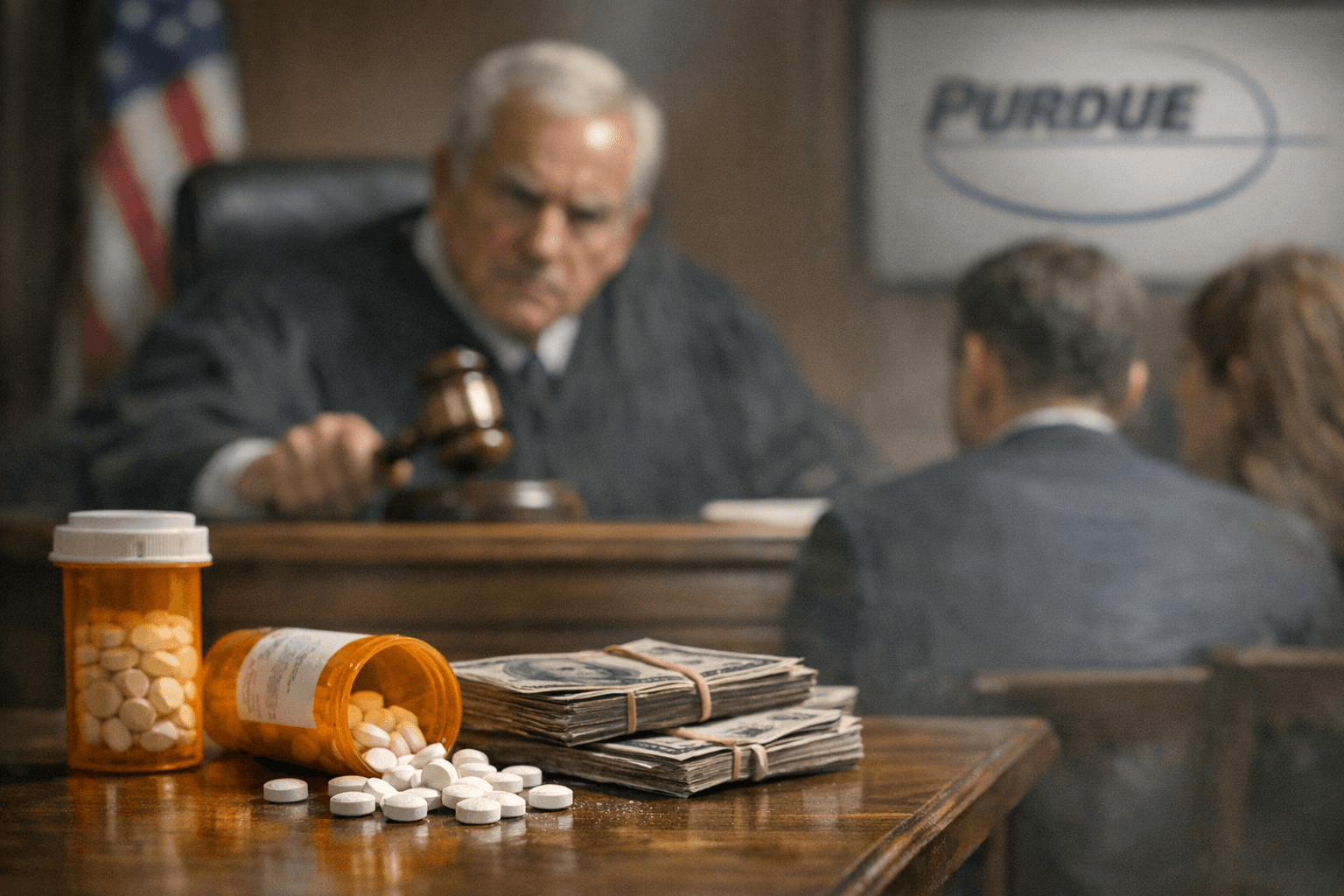
The judge’s decision on Purdue Pharma’s $225 million forfeiture may help turn a long-delayed settlement into cash for states, tribes and some victims, but it does not settle the larger question haunting the opioid case: whether money can stand in for accountability.
The sentencing hearing in U.S. District Court in Newark, New Jersey, before Judge Madeline Cox Arleo, was postponed to April 28, 2026 at 3:00 p.m. Eastern after victims asked for a chance to attend in person. Once the court imposes sentence, the broader settlement could become effective as soon as May 1, opening the way for payments tied to one of the nation’s most consequential corporate liability fights over the overdose crisis.
Purdue pleaded guilty in November 2020 to three felony counts, including one count of dual-object conspiracy to defraud the United States and to violate the Food, Drug, and Cosmetic Act, and two counts of conspiracy to violate the federal Anti-Kickback Statute. In its plea, the company admitted conduct from May 2007 through at least March 2017, saying it conspired to defraud the United States by impeding the lawful function of the Drug Enforcement Administration.
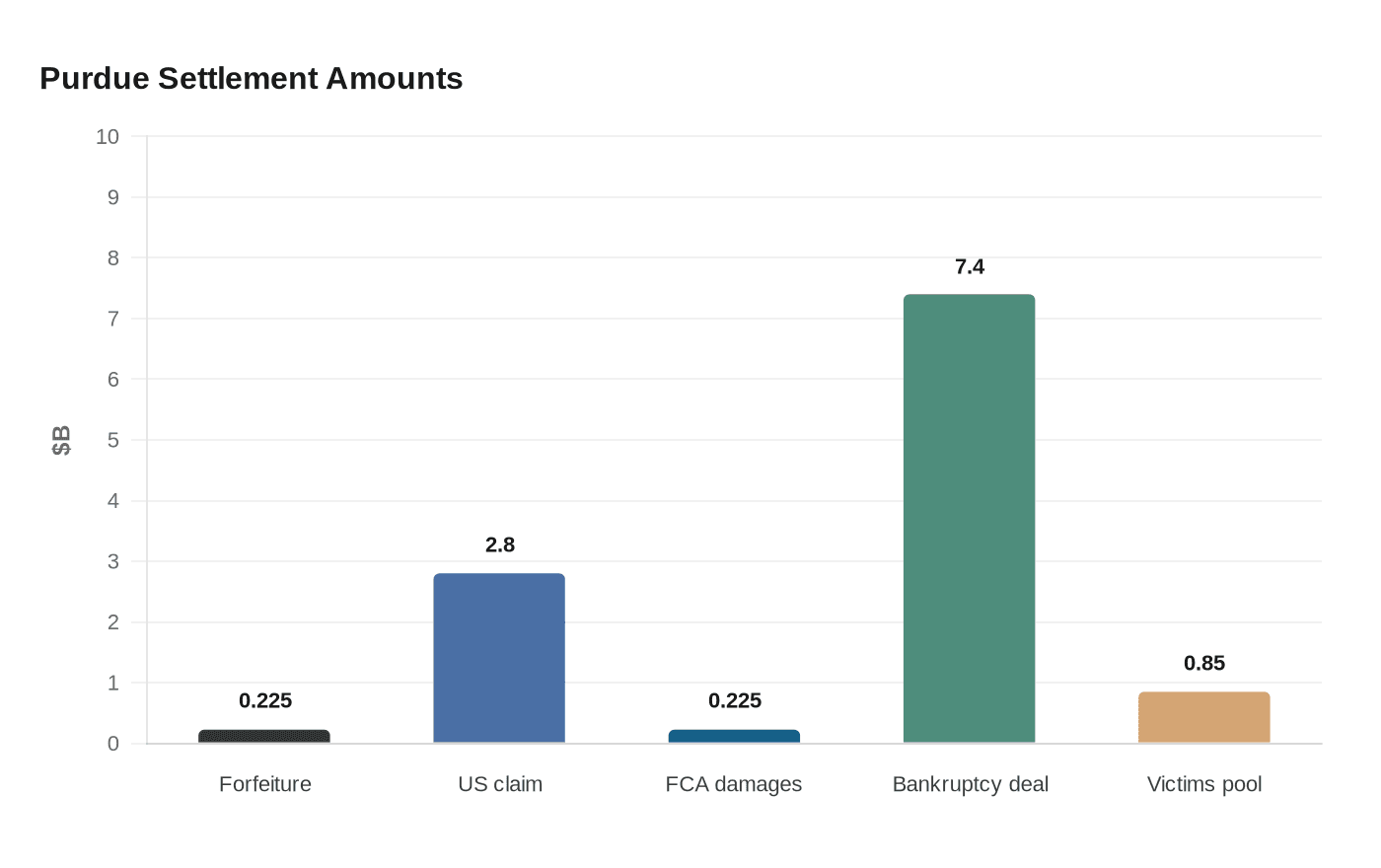
The criminal case is only one part of a sprawling settlement structure. The Justice Department says the United States has an allowed bankruptcy claim for $2.8 billion in civil settlement recovery, while the Sackler family separately agreed to pay $225 million in civil False Claims Act damages. The larger bankruptcy deal, described as $7.4 billion in principle, would send most of the money to state, local and Native American tribal governments for opioid abatement, with a pool for individual victims described in some court and reporting summaries as roughly $850 million.
New York Attorney General Letitia James said 55 attorneys general, representing all eligible states and U.S. territories, joined the settlement. The New York Attorney General’s Office said the agreement would end Sackler control of Purdue and bar the family from selling opioids in the United States.
The settlement followed a major Supreme Court setback for the Sacklers on June 27, 2024, when the court ruled the Bankruptcy Code does not authorize nonconsensual third-party releases like the one they had sought. That ruling forced a new path toward resolution, but not a clean one.
Purdue had already faced major punishment once before. In 2007, a Purdue affiliate pleaded guilty to misbranding OxyContin and paid more than $600 million in criminal and civil penalties. Even now, families who lost loved ones to overdose continue to push for criminal charges against Sackler family members, a sign that the settlement may move money, but it leaves the deepest demand for blame and punishment unresolved.
This article was produced by Prism’s automated news system from verified source data, official records, and press releases, then run through automated quality and moderation checks before publishing. The system is built and supervised by the people who set the standards it runs under. Read our full AI policy.
Did this article answer your question?

