Justice Department Indicts Southern Poverty Law Center in Fraud Case
A Montgomery grand jury handed up 11 counts against the SPLC, accusing it of hiding more than $3 million in donor money inside a decade-long informant scheme.
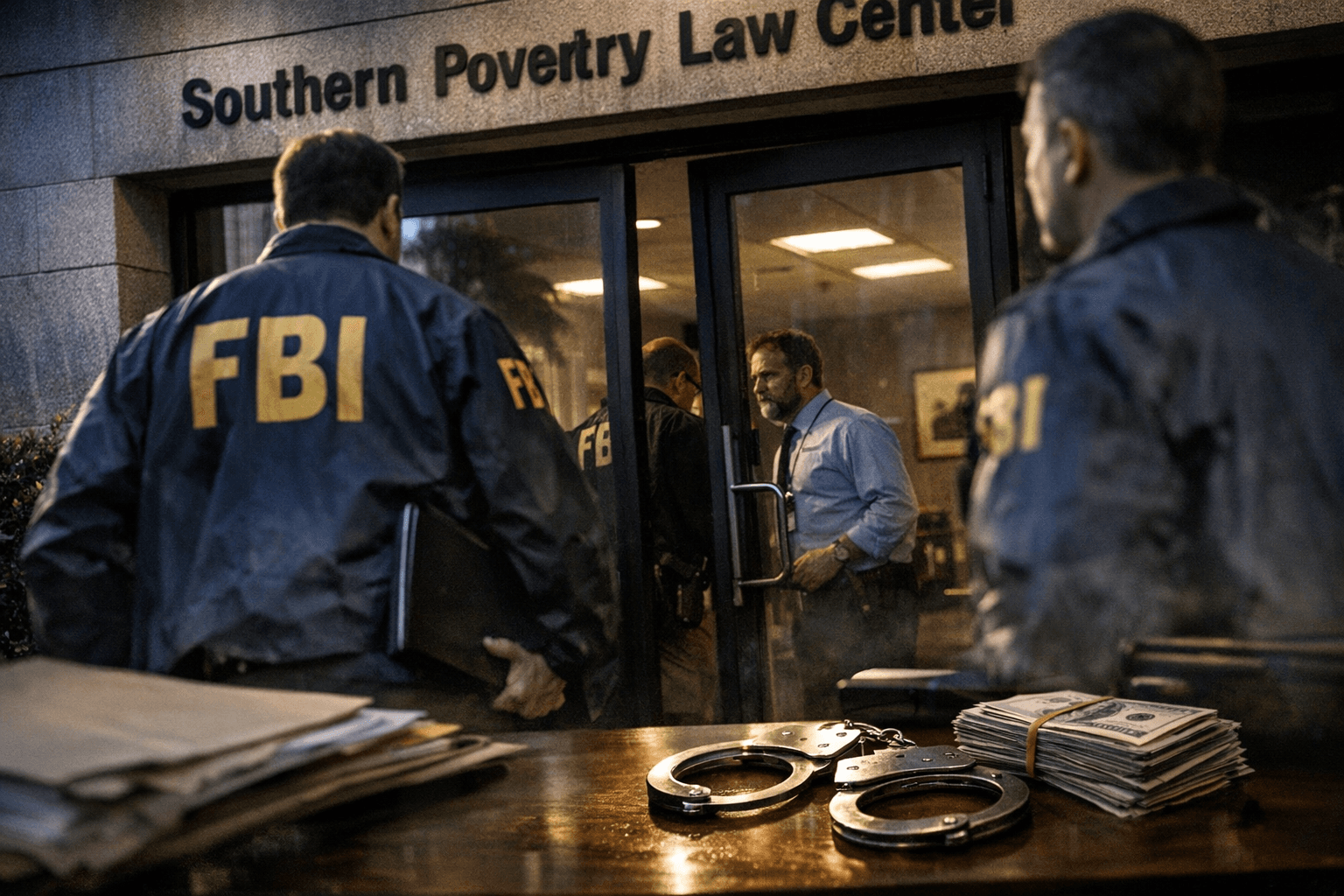
Federal prosecutors in Alabama accused the Southern Poverty Law Center of secretly moving more than $3 million in donated funds to people tied to the Ku Klux Klan, Aryan Nations and the National Socialist Party of America, in an 11-count indictment returned by a Montgomery grand jury. The charges announced Tuesday, April 21, 2026, include wire fraud, false statements to a federally insured bank and conspiracy to commit concealment money laundering. The U.S. Attorney’s Office for the Middle District of Alabama also filed two forfeiture actions aimed at recovering the alleged proceeds, with help from the FBI and IRS Criminal Investigation.
The SPLC is based in Montgomery, Alabama, and was founded in 1971 as a tax-exempt nonprofit that says its mission is to be a catalyst for racial justice and to dismantle white supremacy. Prosecutors said the alleged payments stretched from 2014 to 2023, but the indictment also points back decades, saying the informant program at the center of the case began in the 1980s. Bryan Fair, the SPLC’s chief executive, said the organization will vigorously defend itself and said the dispute appears to center on its earlier use of paid confidential informants to watch violent extremist groups and share information with law enforcement. “It was used to monitor threats of violence,” Fair said. “There is no question that what we learned from informants saved lives.”
The legal fight is likely to turn on what prosecutors can prove about intent and concealment. For wire fraud, they would have to show a scheme to defraud that used interstate communications. For the bank fraud count, they would need to prove false statements were made to a federally insured bank and that those statements were material. For the laundering conspiracy, prosecutors must show an agreement to disguise the source, ownership or control of money linked to unlawful activity. In practical terms, the case asks whether donor money pitched as anti-hate work was instead secretly redirected in ways that were hidden from contributors and financial institutions.
The Justice Department framed the case in unusually aggressive terms. Acting Attorney General Todd Blanche accused the SPLC of “manufacturing racism to justify its existence,” while FBI Director Kash Patel said the group allegedly deceived donors and hid its operations. The SPLC has long drawn criticism from conservatives who say its hate-group designations are partisan, and the case arrives after renewed scrutiny over its 2024 “Year in Hate and Extremism” report and its characterization of Turning Point USA.
For the nonprofit world, the case reaches beyond one organization’s tactics. It tests how far a 501(c)(3) can go in secretly funding informants, what donors and banks must be told, and whether a decades-old covert program can survive under modern fraud and money-laundering law. The next phase will hinge on records, witnesses and whether prosecutors can prove that secrecy crossed the line from advocacy into fraud.
This article was produced by Prism’s automated news system from verified source data, official records, and press releases, then run through automated quality and moderation checks before publishing. The system is built and supervised by the people who set the standards it runs under. Read our full AI policy.
Did this article answer your question?

