Judiciary seeks control of courthouses, cites $8.3 billion repair backlog
The Administrative Office of the U.S. Courts asks Congress for "real property authority" after identifying an $8.3 billion backlog that it says creates safety and security risks.
The Administrative Office of the U.S. Courts on Feb. 24 formally asked Congress for "real property authority," saying federal courthouses nationwide face a "deepening state of crisis" with a backlog of $8.3 billion in critical repairs. The move would give the judiciary direct control over the buildings it occupies, a responsibility long held by the General Services Administration.
Judge Robert J. Conrad, Jr., the AO/USC director, framed the request as urgent. "Federal courthouses are in crisis. Without immediate action, the problems will continue to worsen," he said. He added that the proposed authority would change how the courts coordinate on maintenance and funding. "Real property authority will empower the Judiciary to coordinate directly with Congress on critical courthouse needs. It will ensure that the Judiciary can control and maintain the buildings it occupies to safely fulfill its constitutional mission more effectively."
The AO/USC materials identify failing basic systems, roofs, elevators, lighting, doors and windows, and warn that emergency repairs for storm and water damage can take years to complete. The office links the backlog to safety hazards, health issues, security vulnerabilities and rising long-term costs, arguing that decades of underfunding and inadequate oversight have left many facilities in precarious condition.
Officials met with General Services Administration leaders to notify them of the request and emphasized that any transfer of responsibilities would be "gradual and orderly." The AO/USC says congressional legislation is needed to grant the judiciary the practical authority to manage and fund upkeep directly rather than relying on the executive branch agency that has historically served as its landlord.
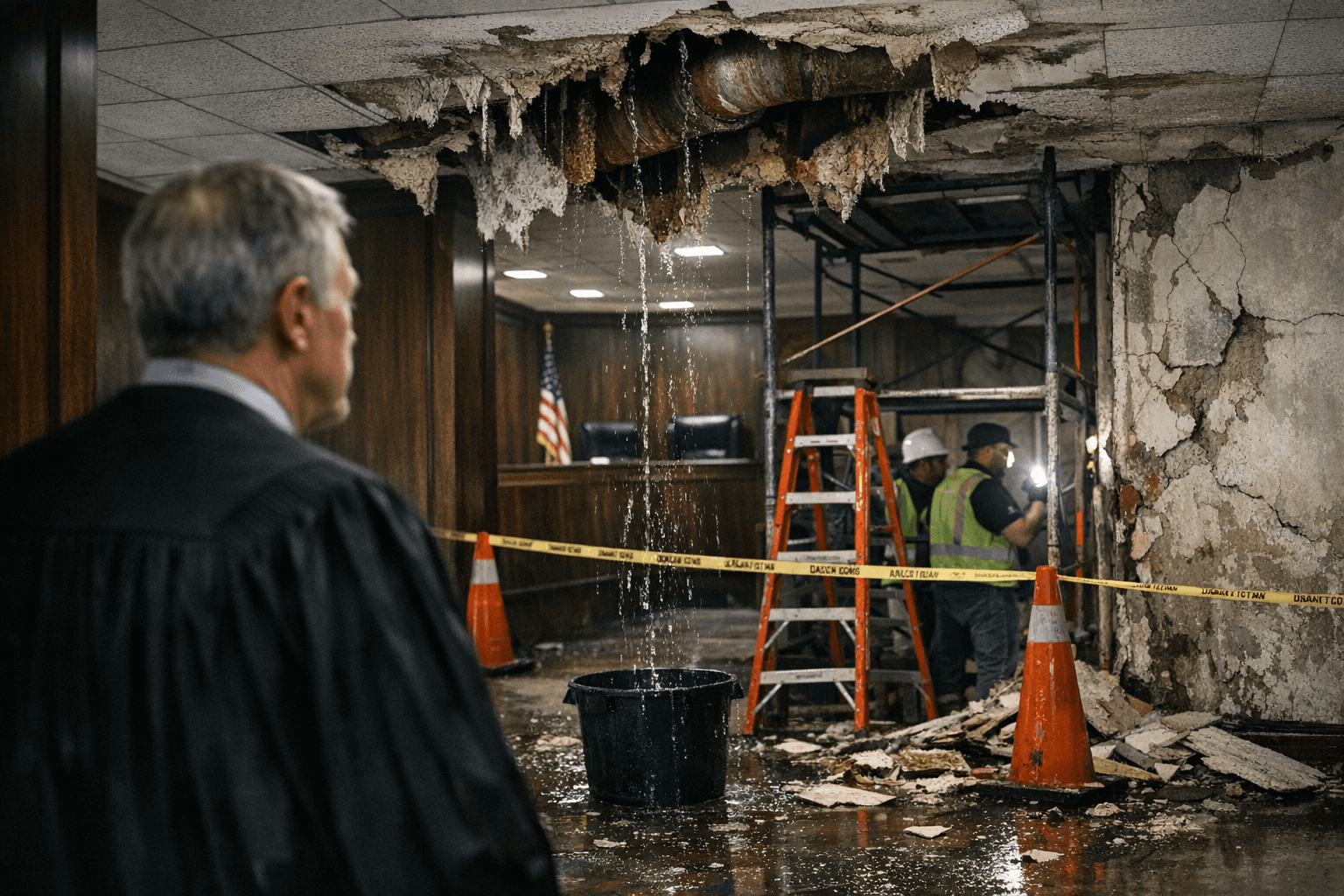
If Congress grants the authority, the judiciary would assume responsibilities now administered by GSA, including prioritizing repairs, contracting for maintenance and budgeting for capital projects. Proponents argue that putting control in the hands of court administrators will speed repairs and better align facility decisions with judicial operations and security needs. Critics will point to the cost and complexity of running a nationwide property portfolio and the potential for a major new federal funding line that Congress would need to create and oversee.
The request raises constitutional and administrative questions about the separation of powers and how best to secure and maintain buildings where the judiciary performs its functions. AO/USC frames the change as necessary for the courts to "safely fulfill its constitutional mission," but the specifics of any legislative proposal, including cost estimates, transition timelines and which facilities would be prioritized, were not provided in the materials released with the request.
For now, the AO/USC has sent a PDF to Congress outlining its case and is awaiting legislative action. Lawmakers will need to weigh the backlog figure and facility examples against budget constraints and competing priorities, while court users, employees and local communities watch to see whether a shift in property control will translate into faster repairs and improved safety.
This article was produced by Prism’s automated news system from verified source data, official records, and press releases, then run through automated quality and moderation checks before publishing. The system is built and supervised by the people who set the standards it runs under. Read our full AI policy.
Did this article answer your question?

