Pentagon pulls backing for ROTOR Act as House readies vote
The Pentagon withdrew support for the ROTOR Act in a letter released Monday, citing budgetary and security risks as the House prepares to consider the bill after a crash that killed 67 people.
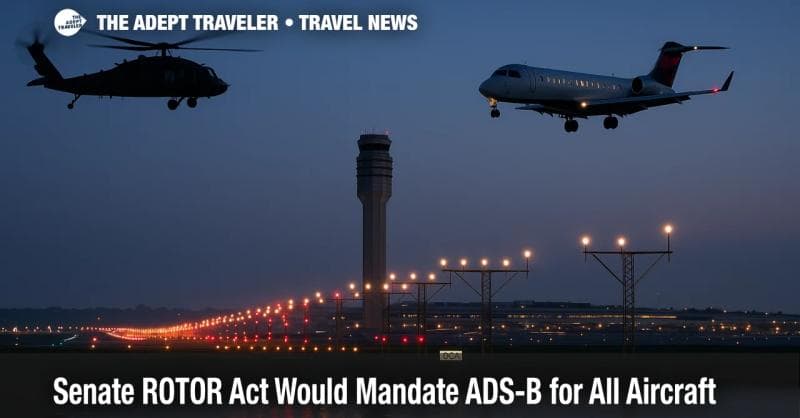
The Pentagon withdrew its earlier backing for the ROTOR Act in a letter released Monday, warning the safety bill could create "significant unresolved budgetary burdens and operational security risks affecting national defense activities," as lawmakers move to press the measure toward a House vote following a devastating January 2025 collision that killed 67 people.
The ROTOR Act would require military and commercial aircraft to equip fleets with automatic dependent surveillance-broadcast, or ADS-B, by the end of 2031 and would expand oversight of commercial jet and helicopter traffic and flight routes near airports. Sponsors in the Senate included Commerce Committee chair Ted Cruz and the committee’s top Democrat, Maria Cantwell. The Senate passed the bill unanimously in December.
The change in the Pentagon’s position comes amid conflicting reports about House timing: one account said the House is expected to vote on Tuesday, while another said the bill was set to be taken up on Monday. The letter’s release coincided with those legislative movements and heightened debate over how to balance civilian aviation safety and military operational needs.
The ROTOR Act was drafted in the wake of the January 2025 midair collision over Washington airspace, when an American Airlines regional jet and an Army Black Hawk helicopter collided in crowded airspace, killing 67 people. The National Transportation Safety Board concluded that the use of ADS-B could have given the passenger plane pilot an alert 59 seconds before the collision and the helicopter crew 48 seconds before. The Black Hawk was not broadcasting ADS-B at the time of the crash.
Advocates for the bill, including major aviation unions and many families of those killed, have urged swift House action, saying ADS-B equipage and tighter oversight could prevent similar tragedies. Supporters point to the NTSB timing as evidence that simple, widely used tracking technology could provide crucial warning time.

Pentagon officials, however, argued in the letter that the legislation as written raises unanswered questions about costs and security tradeoffs for defense operations. The letter’s phrasing, "significant unresolved budgetary burdens and operational security risks affecting national defense activities", underscored the department’s concern that universal ADS-B requirements might expose sensitive military missions or impose unforeseen financial obligations on defense planners.
The bill does include an explicit carve-out: it would require the military to use ADS-B on routine training flights but would exempt "sensitive military missions" from the requirement. That provision was designed to balance safety gains against the classified and operational needs of the armed services, but the Pentagon’s letter suggests the department sees further risk or cost beyond that carve-out.
With the House poised to act, the dispute sets up a stark policy choice between families and labor groups pressing for urgent safety measures and Pentagon officials warning of consequences for national defense. Lawmakers who shepherded the bill through the Senate now must weigh whether to revise statutory language to address the Pentagon’s cost and security concerns or to press ahead amid sustained pressure from victims’ relatives and aviation labor.
As the ROTOR Act reaches the House, key questions remain unresolved: whether Congress will amend the bill to satisfy the Pentagon’s objections, whether military leaders can quantify the budgetary and security impacts cited in the letter, and how quickly the House will move given competing accounts of its schedule.
This article was produced by Prism’s automated news system from verified source data, official records, and press releases, then run through automated quality and moderation checks before publishing. The system is built and supervised by the people who set the standards it runs under. Read our full AI policy.
Did this article answer your question?

