Jury Finds Live Nation and Ticketmaster Illegally Maintained Monopoly Power
A Manhattan jury found Live Nation and Ticketmaster kept monopoly power, and even a $1.72 per-ticket overcharge could ripple across millions of sales.
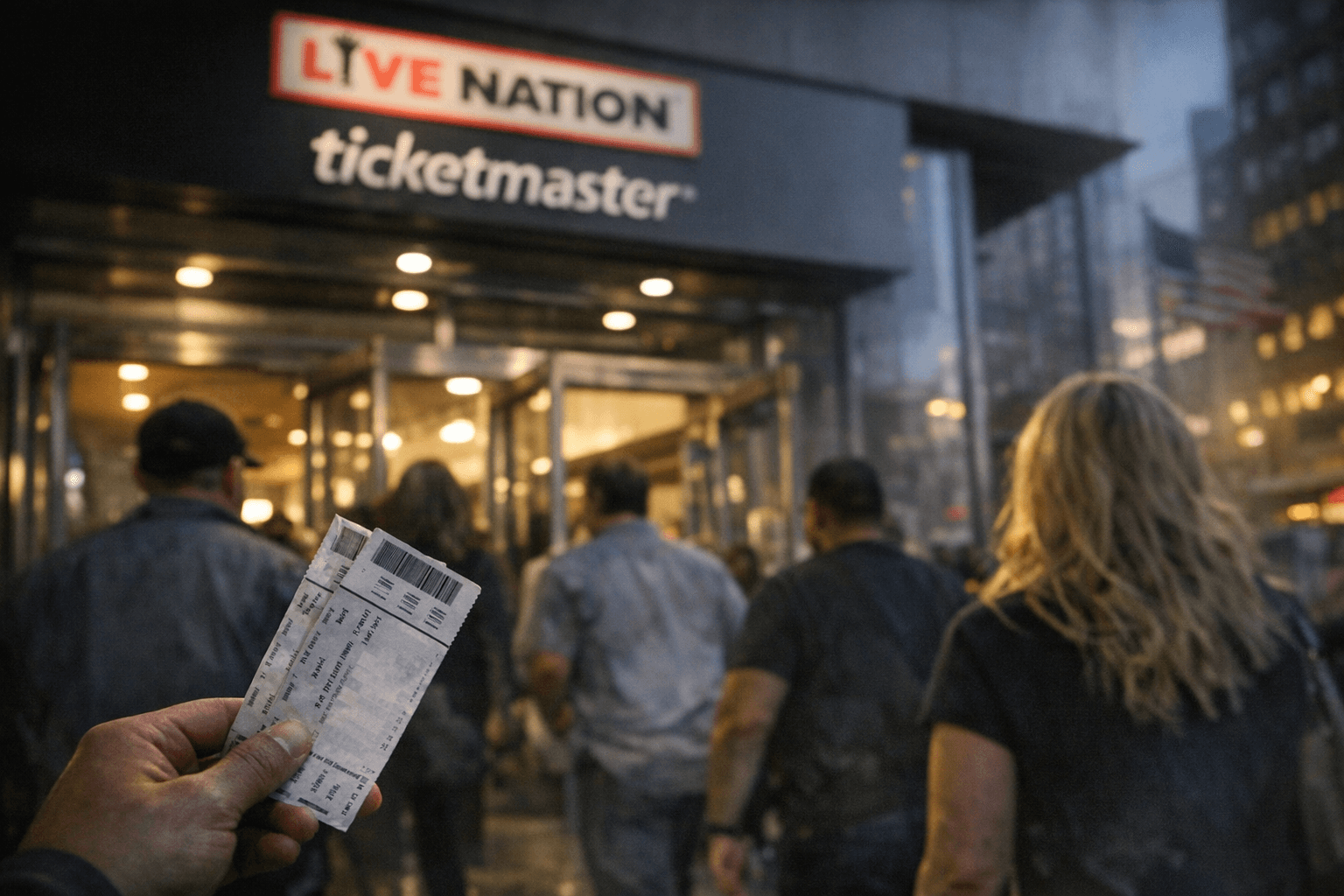
A federal jury in Manhattan found that Live Nation Entertainment and its Ticketmaster unit illegally maintained monopoly power in the ticketing market, delivering a verdict that turns a $1.72 overcharge on each ticket into evidence of something much larger: market control that can shape prices, access and service across the live-events economy.
The jury’s finding came after roughly five to seven weeks of testimony in Manhattan federal court and after jurors began deliberating on Friday before reaching a decision on Wednesday. The case was brought in 2024 by the Justice Department and a coalition of state attorneys general, who argued that Live Nation controlled ticketing, concert booking, venues and promotions in ways that pushed fans to pay higher fees, gave artists fewer touring options and pressured venues into using Ticketmaster. California Attorney General Rob Bonta called the verdict a “historic and resounding victory for artists, fans, and the venues that support them.”
The dollar figure at the center of the verdict is small on its face, but antitrust cases often turn on that kind of per-transaction harm. A charge of $1.72 per ticket may look minor to a single buyer, yet across millions of tickets it becomes a measurable drain on consumers and a sign that competition may not be setting prices. That is the larger economic story now facing Live Nation, whose dominance has been challenged as a system that can quietly raise fees while narrowing the choices available to artists, venues and fans.
The dispute traces back to the 2010 Live Nation-Ticketmaster merger, which fused major pieces of the live-music business under one roof. Scrutiny deepened after the 2022 Taylor Swift ticketing controversy, when outrage over access and pricing put Ticketmaster’s role in the market back under a national spotlight. The Justice Department had already reached a separate settlement with Live Nation in March 2026, but most state attorneys general rejected that deal and pressed ahead to trial.
U.S. District Judge Arun Subramanian will decide remedies in a later proceeding, and those could reach beyond fines to structural changes, including divestitures or even a breakup. Live Nation has denied being a monopoly and argued that it competes fiercely with rivals, but the verdict gives regulators a fresh legal basis to argue that restoring competition could lower prices, expand options and reopen venue access in a market that touches nearly every major concert tour in the United States.
Know something we missed? Have a correction or additional information?
Submit a Tip