Justice Department appeals limits on federal immigration tactics in Minneapolis
The Justice Department appealed a judge’s preliminary injunction curbing federal agents’ arrests and use of crowd-control munitions in Minneapolis; the move raises constitutional and operational stakes.
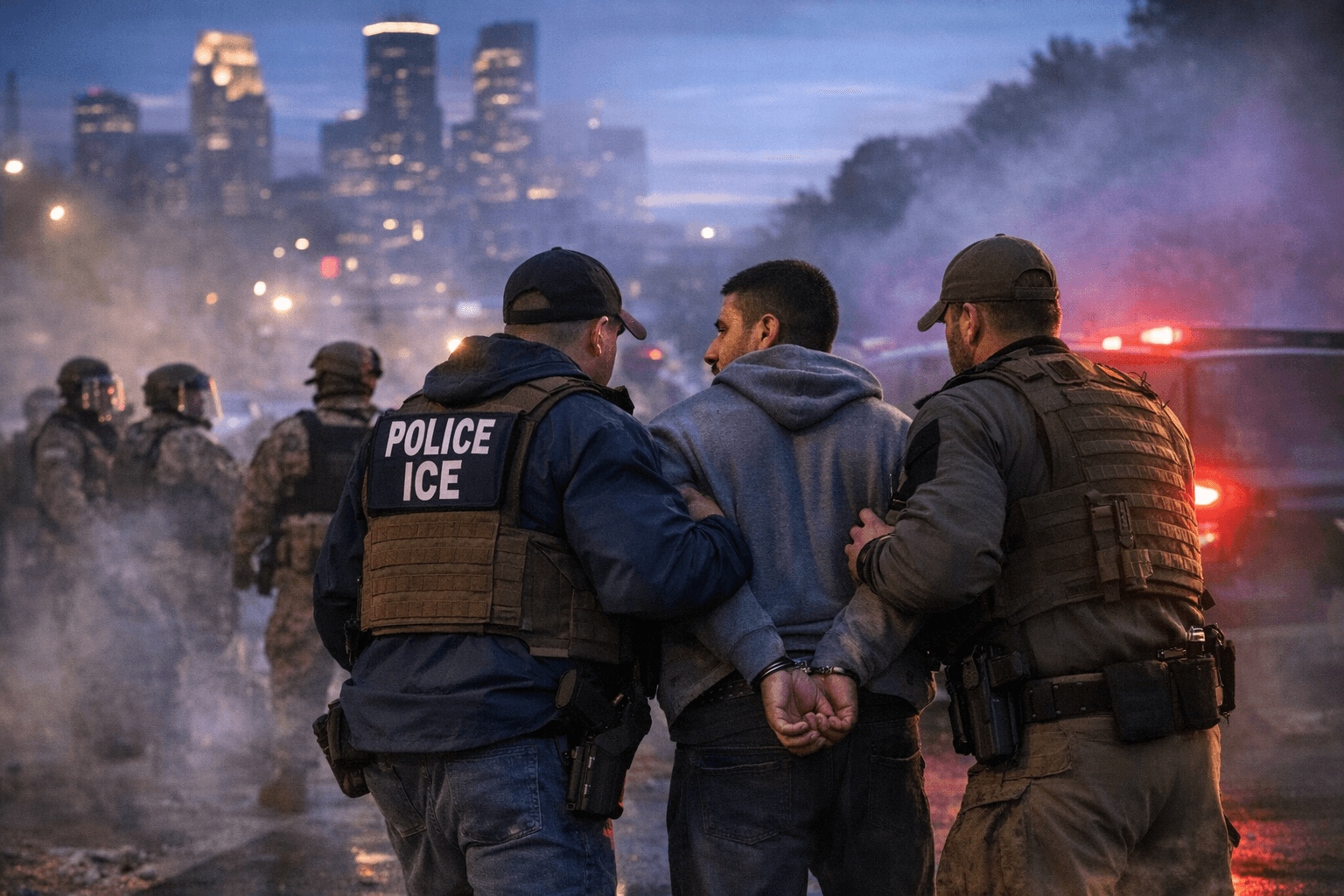
The Justice Department filed a notice of appeal on Jan. 19 to the U.S. Court of Appeals for the Eighth Circuit challenging a preliminary injunction that sharply constrains how federal immigration agents may act in Minneapolis and elsewhere in Minnesota. The injunction, issued by U.S. District Judge Katherine Menendez on Jan. 16–17, bars officers from detaining peaceful protesters or bystanders who are merely observing or recording enforcement operations, and from using pepper spray, tear gas or other crowd-control munitions against people who are not suspected of interfering with law enforcement.
The order also restricts stops and detentions of drivers and passengers unless officers have reasonable articulable suspicion that those people are forcibly interfering with operations. Plaintiffs in the underlying suit, six protesters and observers who filed on Dec. 17, 2025, allege repeated constitutional violations during immigration enforcement, including infringements of First and Tenth Amendment rights and warrantless arrests. Plaintiffs cited a Dec. 5 incident in which a federal agent allegedly entered a south Minneapolis restaurant without a warrant and told a general manager, "We don't need one," when pressed.
The litigation followed a series of confrontations that intensified after an ICE officer fatally shot Renee Good, 37, on Jan. 7, 2026. The shooting prompted waves of protests across the Twin Cities and broadened scrutiny of a recent federal deployment that the administration described as an effort to ramp up deportations. Officials have deployed what has been described as thousands of federal agents to the area; one estimate placed the number at roughly 3,000.
In its brief filing on Jan. 19, Justice Department lawyers said they would appeal Menendez’s injunction. DOJ further argued in filings that the plaintiffs’ Tenth Amendment and related claims "have not a shred of legal support" and that their motion should be denied. The full appellate brief was not immediately available.
Department of Homeland Security officials have defended their tactics. DHS spokeswoman Tricia McLaughlin said, "D.H.S. is taking appropriate and constitutional measures to uphold the rule of law and protect our officers and the public from dangerous rioters." DHS leadership has publicly criticized the injunction; Secretary Kristi Noem called the judge’s order "a little ridiculous" and said it "didn’t change anything for how we're operating on the ground, because it's basically telling us to do what we've already been doing."
The legal tussle underscores broader tensions over the federal role in domestic policing. Judge Menendez has previously limited the use of pepper spray and nonlethal munitions by federal agents in Minnesota, and her preliminary injunction represents a judicial check on operational discretion pending further litigation. A successful appeal for DOJ could restore broader latitude for federal agents; a victory for plaintiffs could set a precedent constraining federal crowd-control tactics where protests intersect with immigration enforcement.
Beyond immediate constitutional questions, the dispute has economic and civic implications for Minneapolis. Large-scale federal deployments and sustained protests disrupt local commerce, impose costs on municipal services and complicate labor and housing markets in immigrant communities. The Justice Department is also probing other incidents, including a possible violation of the Freedom of Access to Clinic Entrances Act at a St. Paul church, and a disputed home-entry incident involving Chongly Scott Thao, which keeps the legal and political spotlight trained on federal enforcement tactics as the appeal moves to the Eighth Circuit.
This article was produced by Prism’s automated news system from verified source data, official records, and press releases, then run through automated quality and moderation checks before publishing. The system is built and supervised by the people who set the standards it runs under. Read our full AI policy.
Did this article answer your question?

