Justice Department Asks Supreme Court to Strip 350,000 Haitians of Protected Status
The Biden-era humanitarian shield for Haitian migrants faces its most serious legal threat yet as the administration escalates its challenge to the Supreme Court.
-1920w.png&w=1920&q=75)
The Justice Department has asked the Supreme Court to intervene on an emergency basis to end Temporary Protected Status for more than 350,000 Haitians living in the United States, escalating what has become one of the most consequential immigration battles of the current administration.
The emergency appeal, filed Wednesday, asks the nation's highest court to override lower court rulings that had thus far blocked the administration's efforts to terminate TPS protections for the Haitian community. The move signals that the administration is unwilling to wait for the normal appellate process to run its course, a decision that reflects both the political urgency attached to immigration enforcement and the administration's confidence that the current Supreme Court bench may be receptive to its arguments.
Temporary Protected Status is a humanitarian designation that shields nationals of countries experiencing ongoing armed conflict, environmental disasters, or other extraordinary conditions from deportation. Haiti, battered by successive earthquakes, chronic political instability, and the devastating aftermath of President Jovenel Moïse's 2021 assassination, has been a designated TPS country for years. The designation allows recipients to live and work legally in the United States for defined periods, which are periodically reviewed and renewed.
The scale of what is now at stake is difficult to overstate. More than 350,000 people, many of whom have built lives, businesses, and families in the United States over years or even decades, face the prospect of losing their legal standing virtually overnight if the Supreme Court grants the administration's request. Many TPS holders own property, employ American workers, pay taxes, and have U.S.-born children who are citizens by birth.
For Haiti itself, a forced return of such a large population would create an enormous strain on a country already unable to provide basic security to its existing residents. Port-au-Prince and surrounding areas remain gripped by gang violence so severe that international aid organizations have repeatedly warned of humanitarian catastrophe. The United Nations and several Caribbean nations have expressed concern that mass deportations could destabilize an already fragile regional situation further.
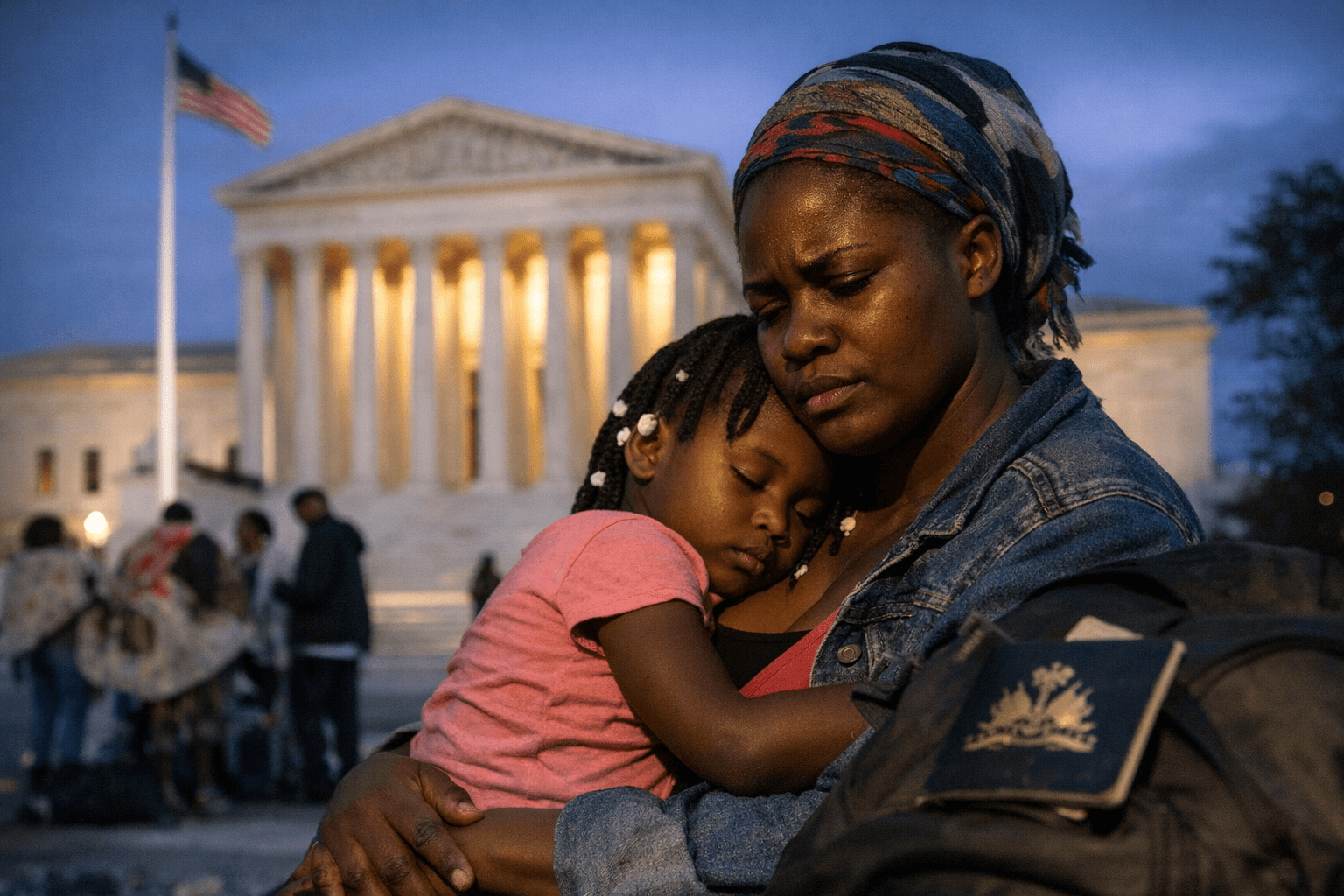
The legal battle has wound through the federal courts since the administration first moved to terminate the Haitian TPS designation. Lower courts found sufficient legal grounds to pause the termination, citing both procedural concerns and the humanitarian consequences of immediate removal. By seeking emergency Supreme Court intervention, the Justice Department is arguing that those lower court rulings improperly substituted judicial judgment for executive authority over immigration policy.
The geopolitical implications extend well beyond Haiti. TPS designations also cover nationals of Venezuela, El Salvador, Ukraine, and several other countries, and a Supreme Court ruling permitting swift termination of Haitian protections would likely be cited as precedent in efforts to dismantle those programs as well. Advocacy organizations representing affected communities have warned that a broad ruling could effectively dismantle the TPS framework as a meaningful form of protection.
The Supreme Court must now decide whether to take up the emergency appeal, a decision that could come within days given the administration's urgency framing. A grant of certiorari, or even a stay of the lower court orders while the case proceeds, would immediately put hundreds of thousands of people in legal jeopardy.
This article was produced by Prism’s automated news system from verified source data, official records, and press releases, then run through automated quality and moderation checks before publishing. The system is built and supervised by the people who set the standards it runs under. Read our full AI policy.
Did this article answer your question?

