Justice Department orders fraud prosecutors in every U.S. attorney's office
Washington is putting a fraud prosecutor in every U.S. attorney’s office as its new national unit targets taxpayer schemes, from health care to benefits fraud.

The Justice Department is putting a fraud prosecutor in every U.S. attorney’s office, a step that could pull local federal prosecutors into a Washington-led campaign against schemes tied to taxpayer dollars. In a memo, Assistant Attorney General Colin McDonald said the detail is meant to help “execute a nationwide strategy to eliminate fraud in every district.”
The order lands inside a broader overhaul that began when Acting Attorney General Todd Blanche created the National Fraud Enforcement Division on April 7, 2026. Justice Department leaders have said the new division will coordinate with agencies that administer benefit programs and work with federal, tribal, state, territorial and local law enforcement to detect and prosecute fraud. The department has described the effort as focused on healthcare fraud, tax fraud, benefits fraud and corporate fraud, a mix that reaches well beyond any single district’s case load.
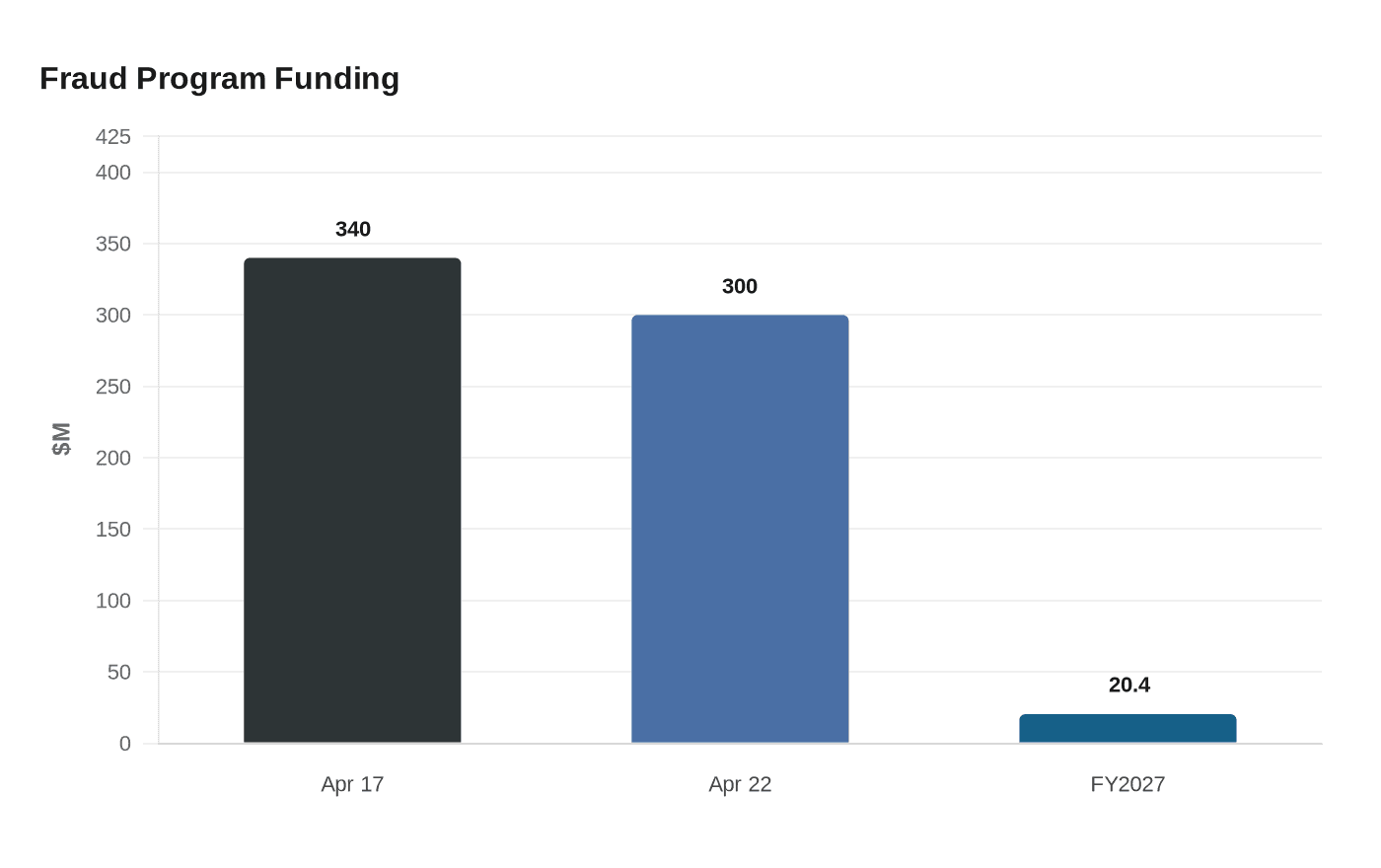
The scale of the push is already showing up in the budget. Department materials say the National Fraud Enforcement Division is seeking $20.4 million and 140 positions in fiscal 2027, including 100 attorneys. That staffing request suggests the department is building a standing fraud apparatus in Washington, not just issuing a temporary directive to the field.
Justice officials are also highlighting early results. On April 17, the department said actions tied to the new division represented more than $340 million in taxpayer-fraud cases in its first week. Five days later, the department announced $300 million in funding for a Special Attorneys Program meant to help prosecutors work on fraud and other crimes nationwide. The money would support lawyers serving as Special Attorneys within the National Fraud Enforcement Division or the Criminal Division, as well as Special Assistant U.S. Attorneys in U.S. attorney’s offices.
The model marks a significant shift in how white-collar enforcement is being organized. Rather than leaving fraud cases to develop only within individual districts, the department is building a central structure in Washington and threading local prosecutors into it. That could produce faster coordination and a more consistent national focus on taxpayer-loss cases. It could also raise a harder question: whether the new bureaucracy will sharpen local enforcement or simply add another federal layer between district offices and the cases in front of them.
This article was produced by Prism’s automated news system from verified source data, official records, and press releases, then run through automated quality and moderation checks before publishing. The system is built and supervised by the people who set the standards it runs under. Read our full AI policy.
Did this article answer your question?

