Justice Department reclassifies state-licensed medical marijuana as less dangerous drug
Federal officials moved state-licensed medical marijuana to Schedule III, keeping it illegal but opening the door to easier research and possible tax relief for licensed operators.

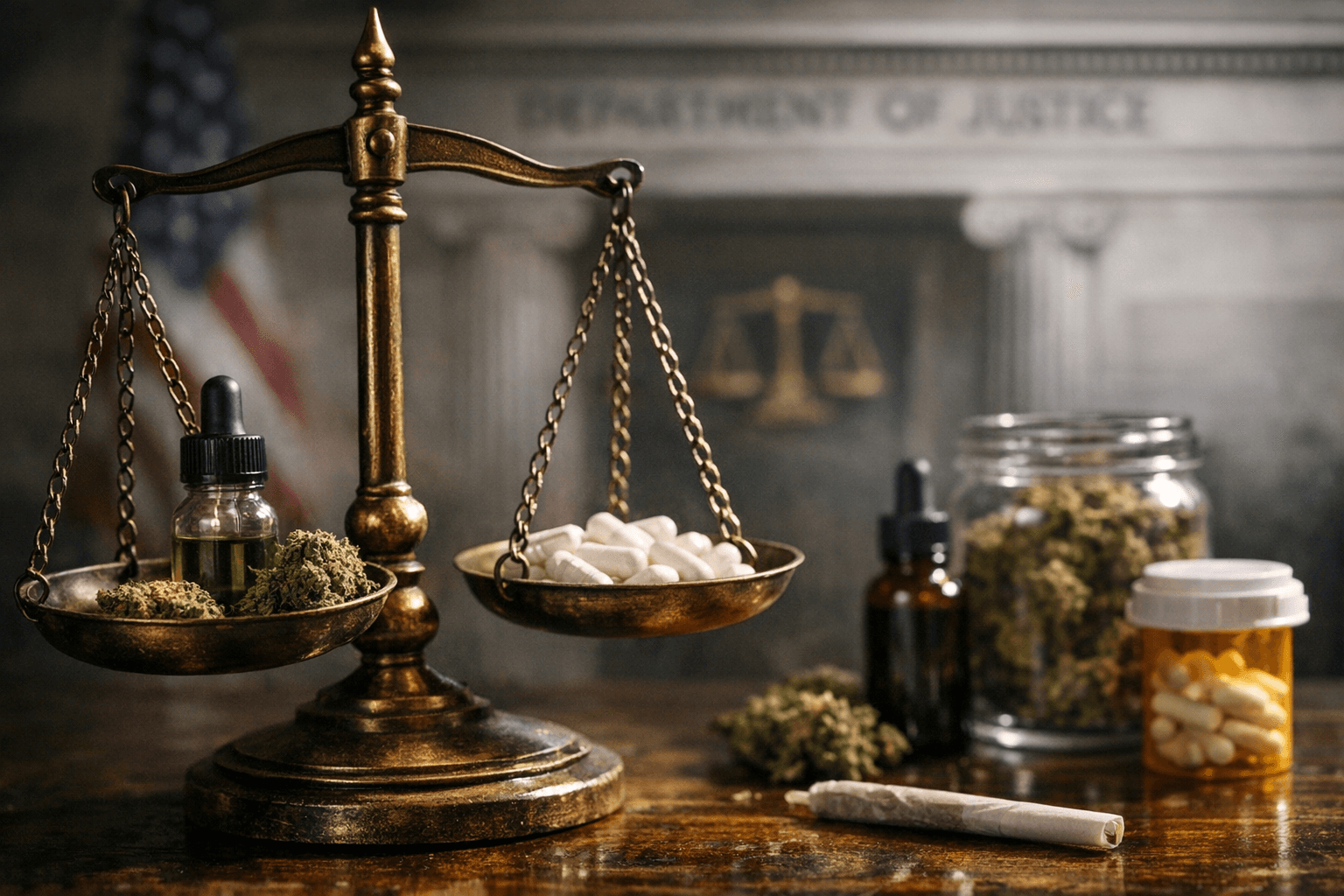
The Justice Department on Thursday moved state-licensed medical marijuana into Schedule III, a long-sought federal downgrade that keeps cannabis illegal under federal law but could make research easier and improve tax treatment for licensed operators.
Acting Attorney General Todd Blanche signed the order on April 23, 2026. The change places marijuana in the same federal category as some pain medications, ketamine and testosterone, and it applies to FDA-approved marijuana products as well as medicinal marijuana products covered by a qualifying state-issued license. It does not legalize marijuana for medical or recreational use under U.S. law, does not remove cannabis from the federal controlled substances list and does not permit unregulated sales similar to tobacco or alcohol.
The department said the move recognizes the longstanding regulation of medical marijuana by state governments and is meant to carry out the United States’ obligations under the Single Convention on Narcotic Drugs. That framing matters because it signals a narrower administrative shift rather than a full rewrite of federal cannabis policy. The practical effect remains bounded by the fact that marijuana stayed on the controlled substances list, even as it moved out of Schedule I, the most restrictive category.
The reclassification capped a federal review that had already been moving for years. In October 2022, President Joseph R. Biden asked the Secretary of Health and Human Services and the attorney general to begin an expedited review of marijuana scheduling. In May 2024, the Drug Enforcement Administration proposed transferring marijuana from Schedule I to Schedule III, citing the view of the Department of Health and Human Services that marijuana has a currently accepted medical use. Marijuana has been treated as a Schedule I drug since the Controlled Substances Act took effect in 1970.
The biggest near-term impact is likely to come in two places: research and taxes. Schedule III drugs are more loosely regulated than Schedule I drugs, which should make it easier for researchers to study cannabis and for licensed cannabis businesses to push for more favorable tax treatment. Doctors and patients using state-licensed medical marijuana are likely to see slower, more limited changes at the point of care, because state licensing still defines which products are covered and federal illegality remains in place. For pharmacies and product manufacturers, the first practical benefits will depend on how federal agencies translate the order into day-to-day rules, a question that will determine whether this is a narrow adjustment or the beginning of broader federal normalization.
Know something we missed? Have a correction or additional information?
Submit a Tip