Mamdani weighs delaying pension payments amid New York City budget crisis
Mamdani is weighing a pension-payment delay that could ease New York City’s deficit now while shifting costs into future budgets, after gaps widened to roughly $12 billion.
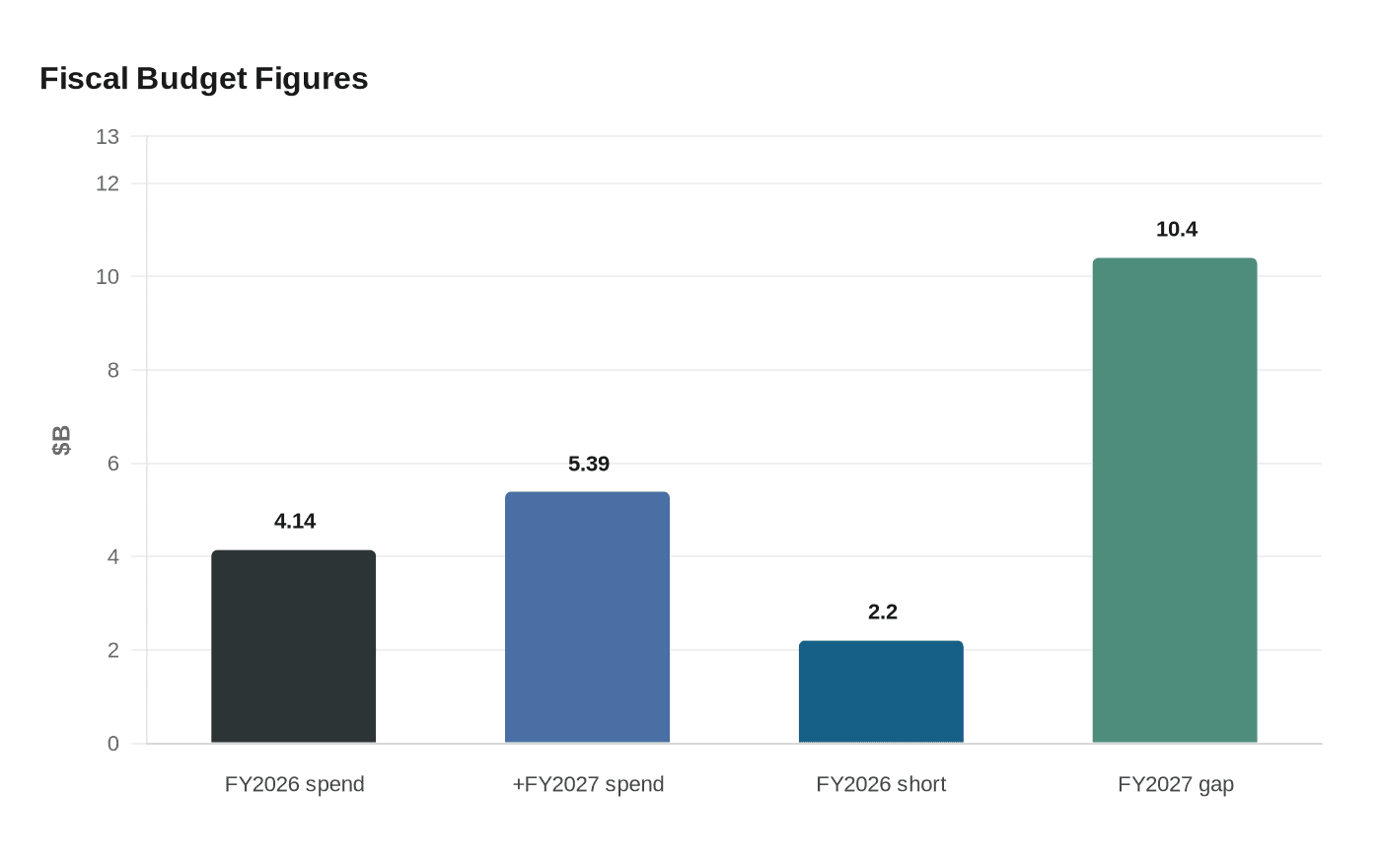
Delaying New York City’s pension payments would buy immediate cash relief, but it would also shift risk onto future taxpayers, retirees and city services if the city uses the move to close today’s gap. Mayor Zohran Mamdani is exploring that option as his administration says it inherited a fiscal crisis and identified projected gaps of roughly $12 billion across fiscal 2026 and fiscal 2027.
Mamdani laid out the stakes in his Feb. 17, 2026 preliminary budget, saying the city faced two basic paths: find new recurring revenue, including higher taxes on millionaires and profitable corporations, or turn to more painful stopgaps such as property-tax increases and reserve drawdowns. Comptroller Mark Levine said the budget increased net spending estimates by $4.14 billion in fiscal 2026 and $5.39 billion in fiscal 2027, while relying on $2.56 billion in reserve drawdowns from sources including the Revenue Stabilization Fund, the city’s rainy-day fund and the Retiree Health Benefits Trust. Levine also projected a $2.2 billion fiscal 2026 shortfall and a $10.4 billion fiscal 2027 gap.
The pension question lands in one of the city’s most sensitive budget arenas. New York has five retirement systems, the New York City Employees’ Retirement System, the Teachers’ Retirement System, the Board of Education Retirement System, the Police Pension Fund and the Fire Pension Fund. The city’s Independent Budget Office says scheduled contributions under the current system rise each year to a peak of about $7.2 billion in fiscal 2032, then drop sharply in fiscal 2033 to a credit of $961.3 million. That “contribution cliff” could ease pressure on one future budget while complicating planning and raising fairness questions for the next administration.
Albany has already wrestled with similar ideas. In February 2025, Gov. Kathy Hochul proposed a 20-year “Fresh Start” re-amortization of New York City pension liabilities and changes to how investment gains and losses are smoothed, but those changes were not included in the enacted 2026 state budget. The issue remains unresolved, leaving city officials with no new authority to reshape the pension bill.
The City Council has pushed back hard on the mayor’s broader fiscal approach, arguing that reserve funds should be used only as a last resort and warning against property-tax increases. Council members have also criticized Mamdani’s assumptions as too pessimistic, pressing instead for spending cuts and revised estimates.
The pressure is not limited to pensions. City-funded rental voucher costs are projected to nearly double by 2030 to more than $3.1 billion, narrowing the room for other priorities in Mamdani’s affordability agenda, including universal childcare and free buses. That leaves the pension proposal looking less like a clean fix than a test of whether New York is confronting a one-time budget bridge or a deeper structural imbalance.
This article was produced by Prism’s automated news system from verified source data, official records, and press releases, then run through automated quality and moderation checks before publishing. The system is built and supervised by the people who set the standards it runs under. Read our full AI policy.
Did this article answer your question?

