Kaiser Permanente Workers Ratify Contract with 21.5% Raises, AI Limits
Six unions' 4,000+ Kaiser pharmacy and lab workers won 21.5% raises and binding limits on AI clinical decisions — a contract that could reshape how health systems deploy automation.

The prescription a Kaiser Permanente patient in Los Angeles waits hours for, or the blood panel result that takes an extra day to return, often traces back to a single pressure point: the pharmacy counter or the lab bench, and who is staffed behind it. That staffing question sat at the center of months of contentious bargaining between Kaiser and a coalition of six Southern California unions. On March 28, more than 4,000 pharmacy workers, lab technicians and other frontline personnel voted to ratify a four-year agreement that addresses both the pay driving workforce attrition and the technology being deployed to compensate for it.
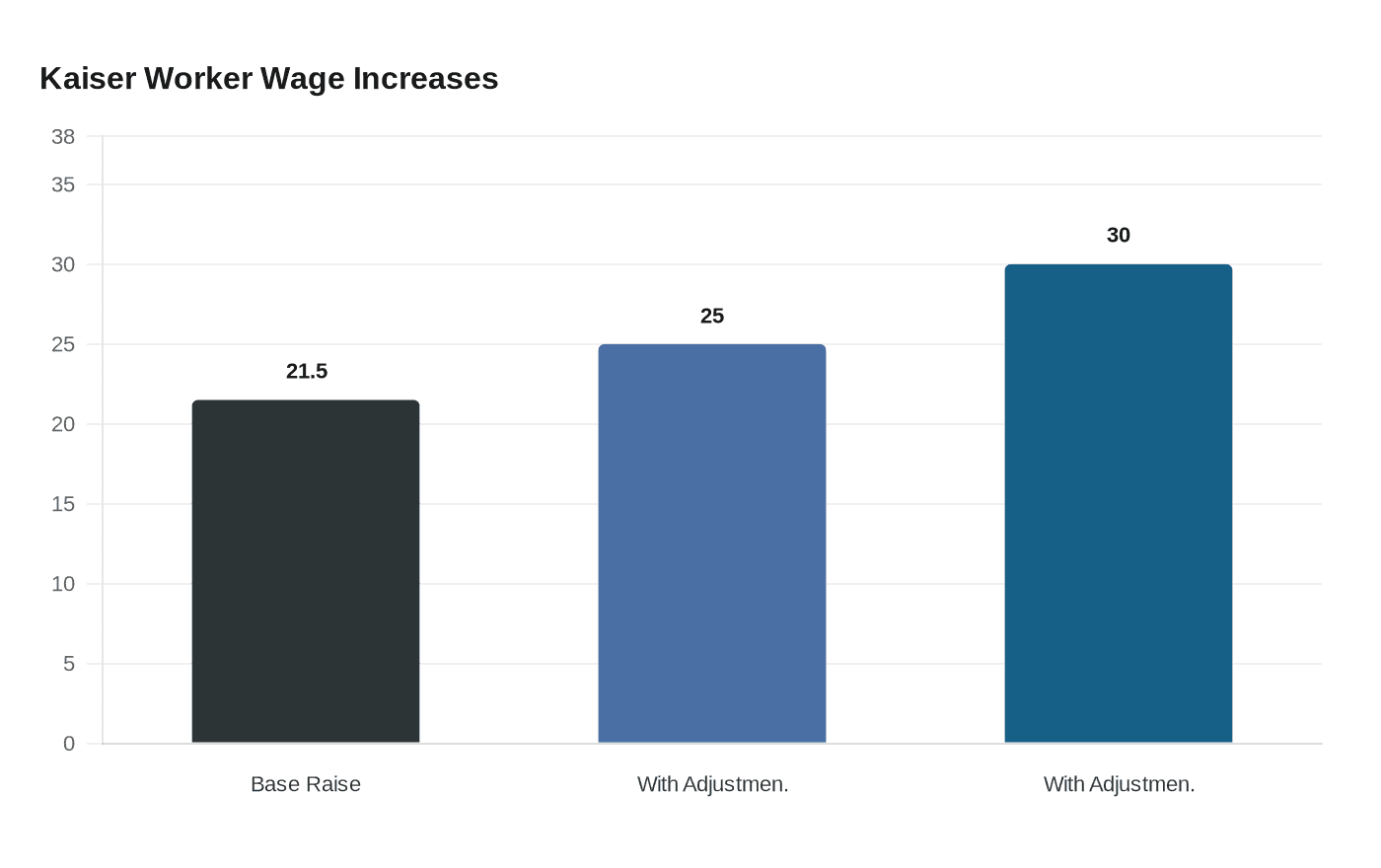
The headline number is 21.5% in across-the-board wage increases over the life of the contract, but for a significant share of the membership, the effective raise is larger. Additional local market adjustments, negotiated by the UNAC/UHCP coalition and allied UFCW locals, push the total compensation gain for many workers to between 25% and 30%. The agreement also locks in pension protections and directs new funding toward training and education, covering Kaiser facilities across San Diego, Los Angeles and Orange County, and extending commitments that earlier bargaining rounds had secured for thousands of unionized Kaiser health professionals across California and Hawaii.
But the contract language that hospital administrators and health sector analysts are likely to scrutinize most closely has nothing to do with wages. It concerns artificial intelligence.
Kaiser, like virtually every major integrated health system, has been expanding its use of AI tools for triage, diagnostics and scheduling. The ratified agreement explicitly limits how far that expansion can go without union involvement. Under the new terms, Kaiser cannot use AI to automatically override or replace certain clinical decisions made by frontline workers. Before any AI system can be deployed in a care pathway, human oversight must be built in and workers must receive training. The contract stops short of a blanket prohibition on AI adoption, but it places a procedural gate in front of deployments that affect clinical judgment, establishing what amounts to a co-governance framework for technology introduction at the point of care.
"With significant wage increases, more funding for training and education, and new language on AI and the use of technology, we'll be better able to care for our patients at work and our families at home," a union spokesperson said in a statement summarizing the bargaining committee's position.
The unions framed the ratification as the culmination of a deliberate pressure campaign that included selective work stoppages over the past year. Labor leaders argued that rolling walkouts and sustained bargaining by the UNAC/UHCP coalition and UFCW locals measurably improved Kaiser's final offer on both compensation and the technology protections.
The operational consequences for Kaiser are immediate. Wage increases of this magnitude will raise labor costs across Southern and Central California facilities, requiring absorption through budget negotiations and operational offsets. On the staffing side, union representatives contend that better pay and training investment will reduce the burnout cycle that has driven turnover in pharmacy and lab departments, with direct downstream effects on prescription turnaround times and test result delivery for patients.
For the broader health sector, the AI provisions may prove the most durable outcome of this bargaining round. No major health system has yet faced a binding labor agreement that structurally limits AI deployment in clinical workflows. If Kaiser's framework holds without disrupting operational efficiency, other large systems negotiating with unionized workforces will face pressure to adopt similar terms. With workforce supply constraints showing no sign of easing and hospital investment in AI accelerating, the question of who governs the machine at the bedside has become a collective bargaining issue.
This article was produced by Prism’s automated news system from verified source data, official records, and press releases, then run through automated quality and moderation checks before publishing. The system is built and supervised by the people who set the standards it runs under. Read our full AI policy.
Did this article answer your question?
%3Amax_bytes(150000)%3Astrip_icc()%2FCertificate-of-deposit-2301f2164ceb4e91b100cb92aa6f868a.jpg&w=1920&q=75)