Kaua‘i residents invited to Mauna Kea stewardship workshop Feb. 3
Kaua‘i residents were invited to a Mauna Kea stewardship workshop to share manaʻo that will help shape a Comprehensive Management Plan and local access policies.
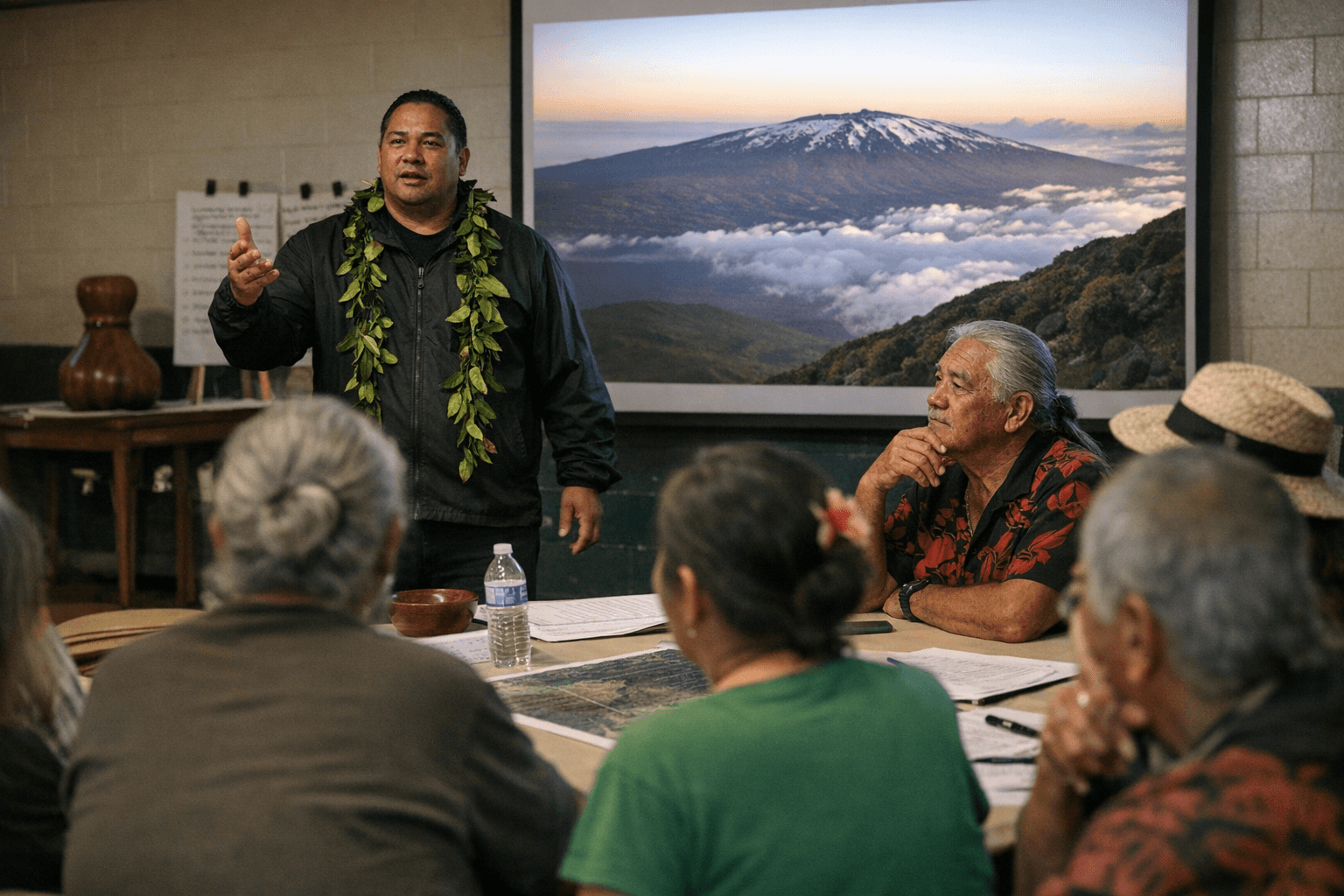
Residents, kūpuna, cultural practitioners, scientists and educators gathered at Kaua‘i Community College’s OCET 105 to weigh in on stewardship questions for Mauna Kea during a community workshop held Feb. 3. The session, organized by the Mauna Kea Stewardship and Oversight Authority in partnership with Kua o Wākea, ran from 5:00 to 7:00 p.m. and was one stop in a planned 10-workshop statewide series that began Jan. 15.
Participation was free and organizers encouraged preregistration to plan for venue space, materials and refreshments. The Mauna Kea Stewardship and Oversight Authority offered a YouTube Live option for remote attendees and invited anyone who could not attend in person to complete a community survey. Kauai workshop materials and discussions focused on informing a Comprehensive Management Plan, drafting an Aspirational Statement, questions of access to the mauna, and application of Kānāwai or Kanawai, followed by open question-and-answer sessions.
“In keeping with our commitment to a mutual stewardship model, these upcoming workshops offer opportunities to share manaʻo about the future of Mauna Kea, learn more about the Management Planning process, and help shape priorities, access, and appropriate uses,” a stewardship group release said, as printed by KauaiNow. Noenoe Wong-Wilson, 1st Vice Chair of the Mauna Kea Stewardship and Oversight Authority, described the process as listening-driven: “Through these workshops, we are upholding our kuleana to listen deeply and to invite our communities to help shape the future stewardship of Mauna Kea,” Wong-Wilson said. “This process is grounded in ʻike Hawaiʻi and collective responsibility, ensuring that decisions for the mauna honor its cultural, spiritual, and environmental significance for generations to come.” The authority’s executive director, John De Fries, said the group looks forward to “engaging with residents in meaningful dialogue” and urged wide participation.
The authority was created by state law in 2022 to transition management of the mauna from the University of Hawai‘i to a new stewardship model grounded in cultural responsibility, environmental protection, education and community engagement. Reporting from Maui Now describes the authority as an 11-member body composed of Native Hawaiian cultural practitioners, community members, scientists, educators and government representatives; another outlet described a volunteer board of 12 members. Sources differ on the precise board size.
For Kaua‘i residents, the workshop represents a concrete opportunity to influence how access, conservation and cultural practice are balanced in the mauna’s long-term management. Previous rounds of community engagement have led to tangible policy actions in other public processes, including funding land stewardship organizations and targeted enforcement actions around visitor behavior. The input gathered at the Kaua‘i session will be used to refine the Comprehensive Management Plan and the authority’s strategic framework as the statewide series continues.
What comes next for readers: the MKSOA will fold community comments into next drafts of stewardship documents, livestreams and surveys remain open for those who did not attend, and the statewide outreach will guide how access and protections for Mauna Kea are written into long-term policy.
Sources:
Know something we missed? Have a correction or additional information?
Submit a Tip