Kennedy Center keeps Trump name hidden behind tarps after removal
Tarps still covered the Kennedy Center’s facade a week after Trump’s name came down, turning a court-ordered removal into a public test of transparency.

The Kennedy Center pulled Donald Trump’s name from its front facade, but the change was not left in plain view. A week after the tarp first went up on June 12, 2026, the covering was still hiding the spot where the lettering had been, leaving only part of the building’s original name visible and drawing fresh scrutiny to how the institution handled a politically charged branding fight in public.
Kennedy Center spokesperson Roma Daravi said the tarps were there to repair the marble facade, but she did not say when they would come down. In a court filing, Kennedy Center lawyers said the institution was in “full compliance” with the order by removing signage that purported to rename the building after Trump. The Justice Department’s request to pause that ruling was denied on June 12, the same day workers began taking down the letters.
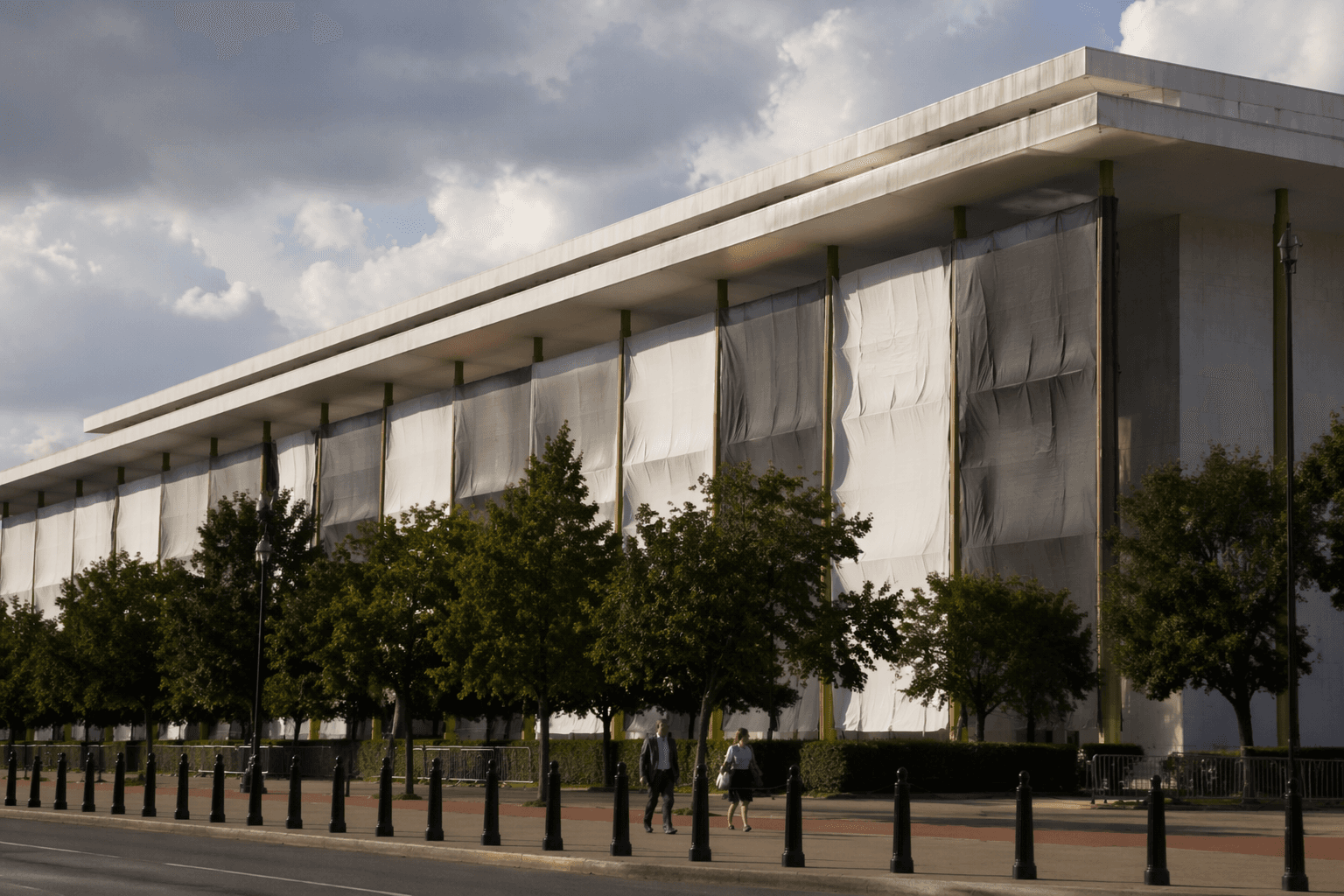
U.S. District Judge Christopher R. Cooper ordered Trump’s name removed from the facade on May 29 and gave the center 14 days to comply. His ruling also blocked a planned two-year closure for renovations, a separate flashpoint in the case. The Kennedy Center had asked for a brief extension, saying thunderstorms over Washington delayed the work. By June 19, however, the tarp was still in place, and the covered facade had become part of the story itself.
The dispute reached beyond one building sign. Congress created the John F. Kennedy Center for the Performing Arts as a memorial to John F. Kennedy in Public Law 88-260, and the effort to attach Trump’s name to it became part of a broader battle over whether a Trump-aligned board could reshape the institution’s identity and public access. Joyce Beatty, an Ohio Democrat and ex officio board member, filed the original lawsuit in December 2025 challenging the name change. Cooper’s ruling also vacated the board’s March 16, 2026 vote to shut the center for two years, and a later order required the center to provide details about construction plans and how it would handle programming and public access after July 5, 2026.
The tarps quickly became a symbol of the fight over governance, optics and public trust. Jamie Raskin called them “a literal coverup,” while Mike Levin called the scene petty and embarrassing. Beatty mocked the covering on X, asking, “Who do they think they’re fooling?” With media crews and onlookers gathering outside the venue, the hidden facade underlined how a decision about a nameplate had turned into a national argument over who gets to define a public cultural institution.
This article was produced by Prism’s automated news system from verified source data, official records, and press releases, then run through automated quality and moderation checks before publishing. The system is built and supervised by the people who set the standards it runs under. Read our full AI policy.
Know something we missed? Have a correction or additional information?
Submit a Tip