Kenya suspends US Ebola quarantine plan amid protests and court order
A U.S.-backed Ebola quarantine plan in Nanyuki collapsed into deadly protests and a court shutdown, exposing deep fears over sovereignty, secrecy and trust.
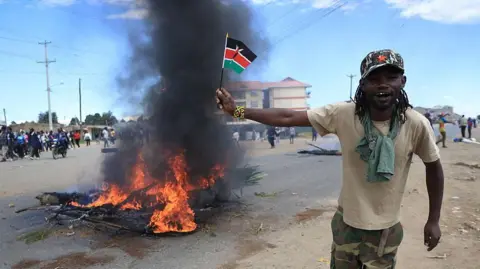
A U.S.-backed plan to place a 50-bed Ebola quarantine and isolation unit at Laikipia Airbase in Nanyuki collapsed into a sovereignty crisis, after protests turned deadly and a Kenyan court froze the arrangement. The facility was meant to house asymptomatic U.S. citizens exposed to Ebola, but many Kenyans saw a foreign health risk being parked on Kenyan soil, even though the country had recorded no Ebola cases.
The backlash sharpened as the Ebola outbreak that prompted the plan spread in eastern Democratic Republic of Congo and Uganda. The World Health Organization declared it a Public Health Emergency of International Concern, and U.S. Centers for Disease Control and Prevention guidance said that as of May 16, 2026, Congo had reported 246 suspected cases and 80 deaths. Health experts warned the outbreak was driven by the rare Bundibugyo strain, for which there is no approved vaccine or specific treatment, and said the situation was worsened by humanitarian crisis, insecurity and cross-border movement.

Kenyan doctors’ groups and the Law Society of Kenya opposed the proposal, arguing that it could import Ebola into Kenya and that the deal lacked transparency. President William Ruto defended the arrangement on June 1, calling it a mutual agreement with a long-standing partner and saying Kenya had accepted U.S. support after a request from Donald Trump. Health Cabinet Secretary Aden Duale also said the center was part of broader preparedness efforts and not exclusively for U.S. nationals, while Kenyan outlets reported that American medics would work alongside Kenyan teams.
The High Court in Nairobi moved first to stop the plan, issuing conservatory orders on May 29 and barring the government from facilitating the admission of Ebola-exposed or infected people under the arrangement. The court also ordered the respondents to disclose the details of the proposed facility and later extended the suspension. Reuters reported that U.S. military aircraft continued flying staff and equipment into the area despite the order.
On June 1, hundreds marched in Nanyuki, blocked roads and burned tires. The protest turned lethal when two people were shot dead, and one organizer said both died of gunshot wounds after police opened fire, though police said they were not aware of the deaths. The episode left the government confronting more than a health dispute: it became a test of public trust, state transparency and how far external health security plans can go before local consent breaks down.
This article was produced by Prism’s automated news system from verified source data, official records, and press releases, then run through automated quality and moderation checks before publishing. The system is built and supervised by the people who set the standards it runs under. Read our full AI policy.
Did this article answer your question?


