Kenya suspends US plan for Ebola unit at air base
A Kenyan court froze a U.S. plan to quarantine Ebola-exposed Americans at Laikipia Air Base. The dispute highlights a break from the U.S. practice of treating Ebola at home.

A Kenyan court halted a U.S. plan to place an Ebola quarantine unit at Laikipia Air Base, stopping an arrangement that would have sent exposed Americans to central Kenya and kept the facility under full American control. The temporary suspension came as the dispute sharpened over whether Washington was shifting a domestic biosecurity burden onto a foreign military site.
Judge Patricia Nyaundi barred Kenya from admitting anyone exposed to or infected by Ebola under the agreement until the legal challenge is resolved. The next hearing is set for June 2. The petition, brought by the Katiba Institute, argued that the secretive establishment of the facility raised grave constitutional concerns over life, health, public participation and parliamentary oversight.
U.S. officials said the planned site was a 50-bed unit at Laikipia Air Base, staffed by members of the U.S. Public Health Service and operated entirely by Americans. More than 30 trained personnel left Washington on Wednesday night to help staff the facility. The State Department said it would commit $13.5 million toward Kenya’s Ebola preparedness efforts.
The plan immediately met resistance from Kenyan health workers. The Kenya Medical Practitioners, Pharmacists and Dentists Union issued a 48-hour strike alert and described Kenya as a “containment colony” and a “dumping ground” for exposed U.S. citizens. The backlash reflected deeper unease that the facility would serve American needs inside Kenyan territory without Kenyan public health officers involved.
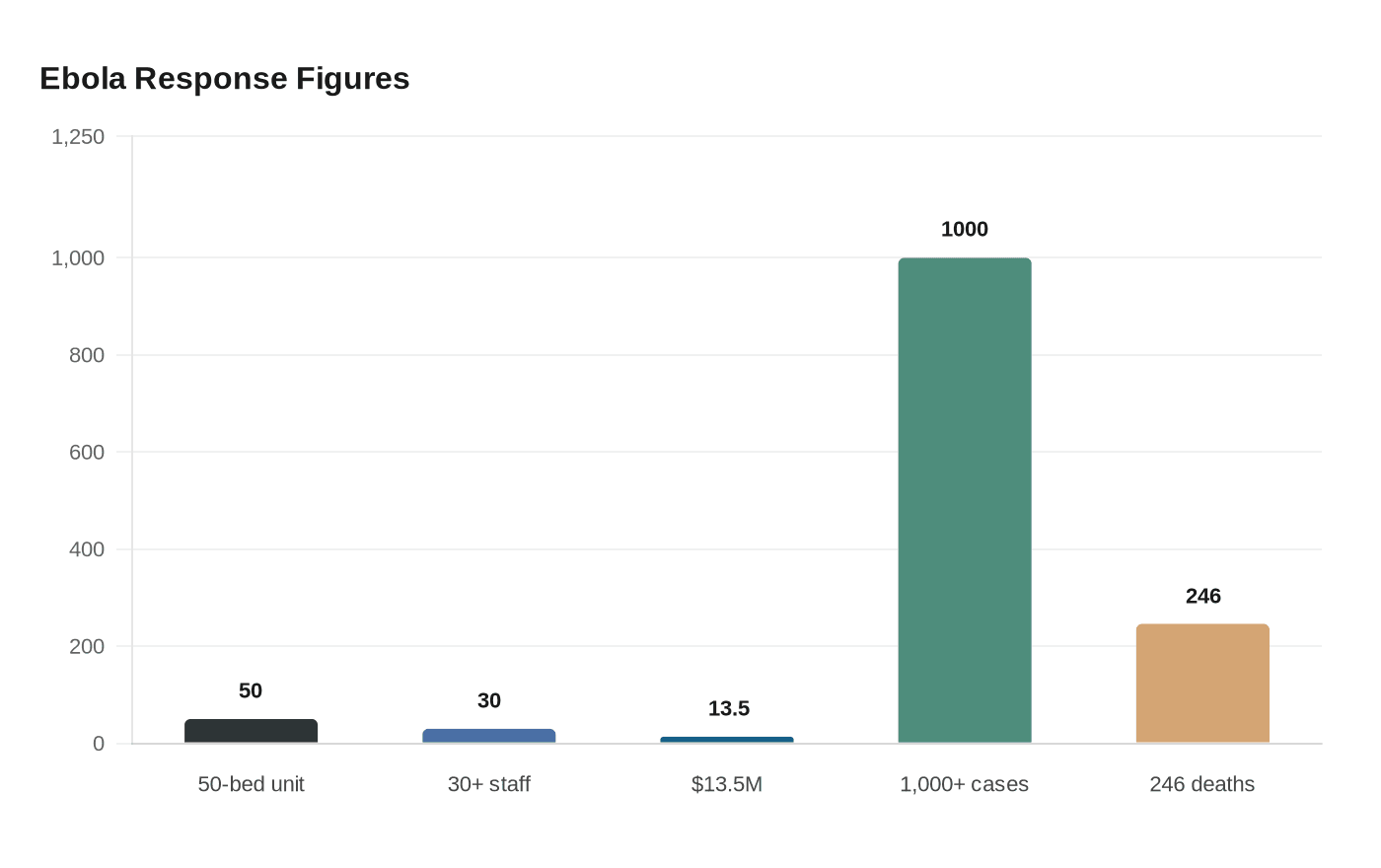
The timing of the dispute has intensified scrutiny. The World Health Organization declared the Ebola outbreak in the Democratic Republic of the Congo and Uganda a public health emergency of international concern in May 2026, saying the Bundibugyo strain has no approved vaccine or specific treatment. Reuters reported more than 1,000 suspected and confirmed cases and 246 deaths as of May 29, 2026.
The U.S. response also marked a sharp break from the 2014-2016 West Africa Ebola epidemic, when infected Americans were treated on U.S. soil. Nebraska Medicine says its 10-bed Biocontainment Unit treated its first Ebola patient in September 2014, and Emory University says the first Ebola patient in the United States arrived on Aug. 2, 2014. Under the Kenya plan, Americans exposed to Ebola would be quarantined there if asymptomatic, but if they became symptomatic they would be evacuated to a third country rather than brought back to the United States. For critics, that shift raises a blunt question about whether the administration is abandoning the preparedness systems it once relied on, for political reasons, logistical reasons, or both.
This article was produced by Prism’s automated news system from verified source data, official records, and press releases, then run through automated quality and moderation checks before publishing. The system is built and supervised by the people who set the standards it runs under. Read our full AI policy.
Did this article answer your question?