Kevin O'Leary halves Utah data center plan amid backlash
Kevin O’Leary dropped 19,430 acres from his Utah data-center plan after residents and lawmakers forced a rethink of the project’s scale.

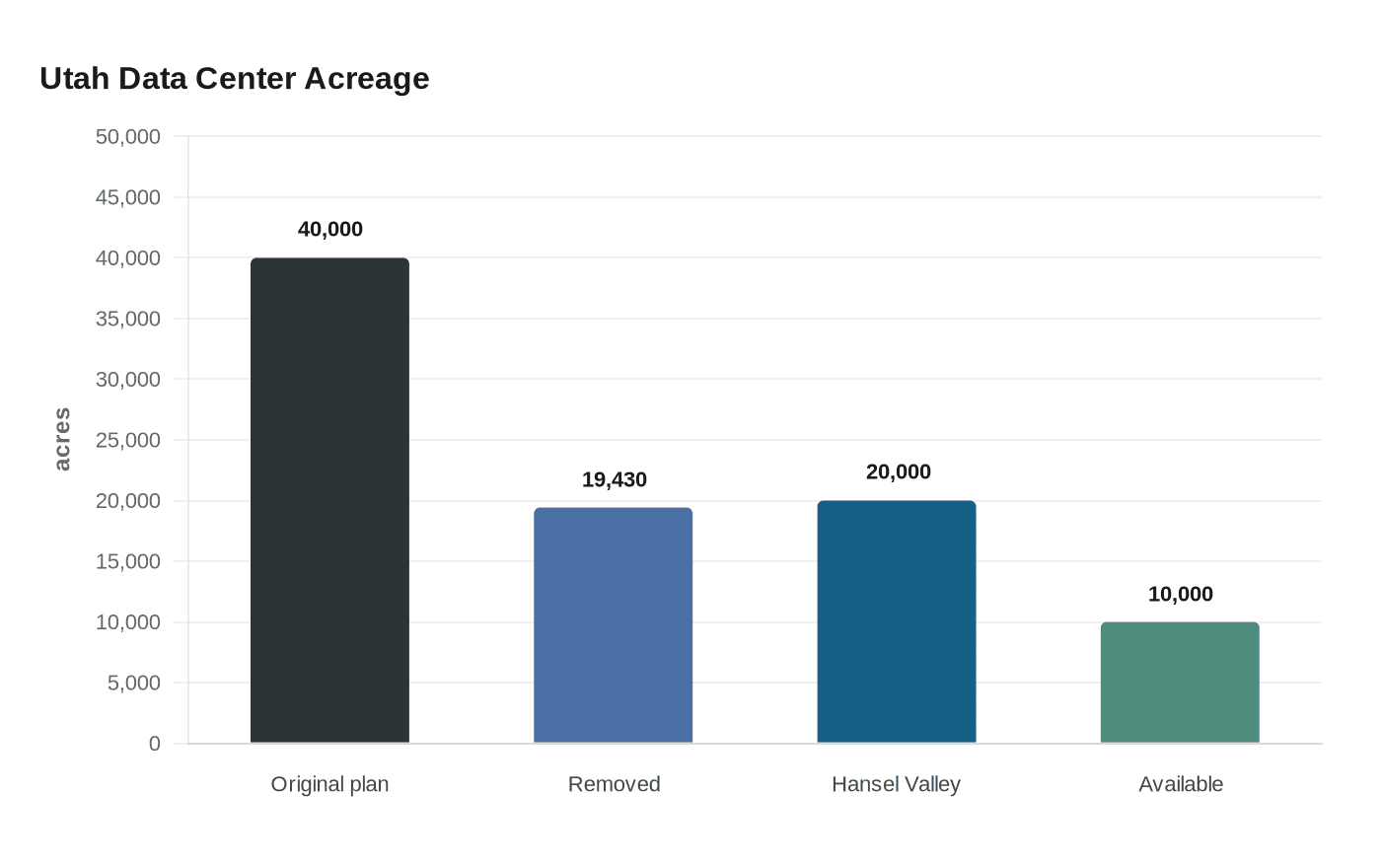
Kevin O’Leary cut his planned Utah data-center footprint nearly in half after weeks of backlash over how much land, water and power the project could consume. In a Thursday letter to Utah Senate President J. Stuart Adams, O’Leary said he would remove 19,430 acres from the proposal, trimming the original 40,000-acre plan and leaving only the Hansel Valley portion of about 20,000 acres.
The revised map removes two proposed project areas, including a parcel in the Locomotive Springs area and another roughly 620 acres abutting I-84. O’Leary Digital chief executive Paul Palandjian said the change would effectively address many of the concerns raised in Box Elder County and would leave about 10,000 acres available for the data center and power-generation facilities, with another roughly 10,000 acres preserved.
That retreat followed a sharp political response from Adams, who on June 1 called for a 75% reduction in the project’s footprint, from 40,000 acres to about 10,000 acres. He also pressed for stronger environmental protections, greater transparency, water conservation measures, heat-capture technology and formal protections for wildlife and agricultural land. Adams said any excess water should be treated and dedicated to the Great Salt Lake, even though the water now used in the area does not flow there.
Utah Gov. Spencer Cox added to the pressure by signing an executive order on May 29, 2026, that set a statewide framework for large data-center projects. The order emphasized water resources, air quality, utility ratepayers, wildlife impacts, public engagement and transparency, underscoring how quickly the proposal had become a statewide political issue. Cox has also signaled that Utah may need a stronger policy framework, or even a special session, as data-center proposals grow larger and more controversial.

The fight over O’Leary’s project has tapped into a broader Western debate over what communities are willing to exchange for tech investment. The campus has been linked to a potential 7.5-gigawatt buildout, a scale that has raised alarms about electricity demand and land use even as the developers have said the work would happen in phases. In a June 2 interview, O’Leary said the biggest misinformation was the idea that the campus would be built all at once, and said the company planned to engage more with Utah residents.
He also defended the project’s environmental planning, saying the company aimed to use the best available technology for air, water use, heat, noise and pollution. But the politics surrounding the Utah site suggest that in the West, data-center expansion now faces a stricter test: not just whether the land is available, but whether neighbors will accept the tradeoffs.
This article was produced by Prism’s automated news system from verified source data, official records, and press releases, then run through automated quality and moderation checks before publishing. The system is built and supervised by the people who set the standards it runs under. Read our full AI policy.
Know something we missed? Have a correction or additional information?
Submit a Tip