Key reef-building corals functionally extinct after 2023 heat wave
A Jan. 13 report finds summer 2023 marine heat killed most elkhorn and staghorn corals, reducing habitat and coastal protection for Monroe County communities.

A January 13, 2026 report synthesizing research by Florida International University and the NOAA-led Mission: Iconic Reefs program concluded that a severe marine heat wave in summer 2023 produced a functional collapse, effectively a local extinction, of two foundational reef-building corals, elkhorn and staghorn, across much of the Florida Reef tract, including areas adjacent to the Florida Keys. Survey teams found essentially no surviving colonies of these species in sampled locations after the event.
Those losses remove critical three-dimensional structure on reefs that supports juvenile and adult fish, crustaceans and other invertebrates. For Monroe County, where reefs underpin both recreational and commercial fishing, snorkeling and dive tourism, the ecological collapse translates into shorter food chains and smaller habitat niches that typically sustain local fisheries. The report also highlights diminished natural shoreline protection; reef structure historically slows wave energy and helps buffer low-lying Keys neighborhoods from erosion and storm surge.
The research synthesis traces the cause to prolonged elevated sea surface temperatures in summer 2023 that exceeded physiological thresholds for Acropora palmata and Acropora cervicornis, the scientific names for elkhorn and staghorn. Field teams from FIU and Mission: Iconic Reefs conducted post-heat-wave surveys and documented near-total mortality at historically occupied sites. The result is a rapid decline in structural complexity that can take decades to rebuild even under active restoration.
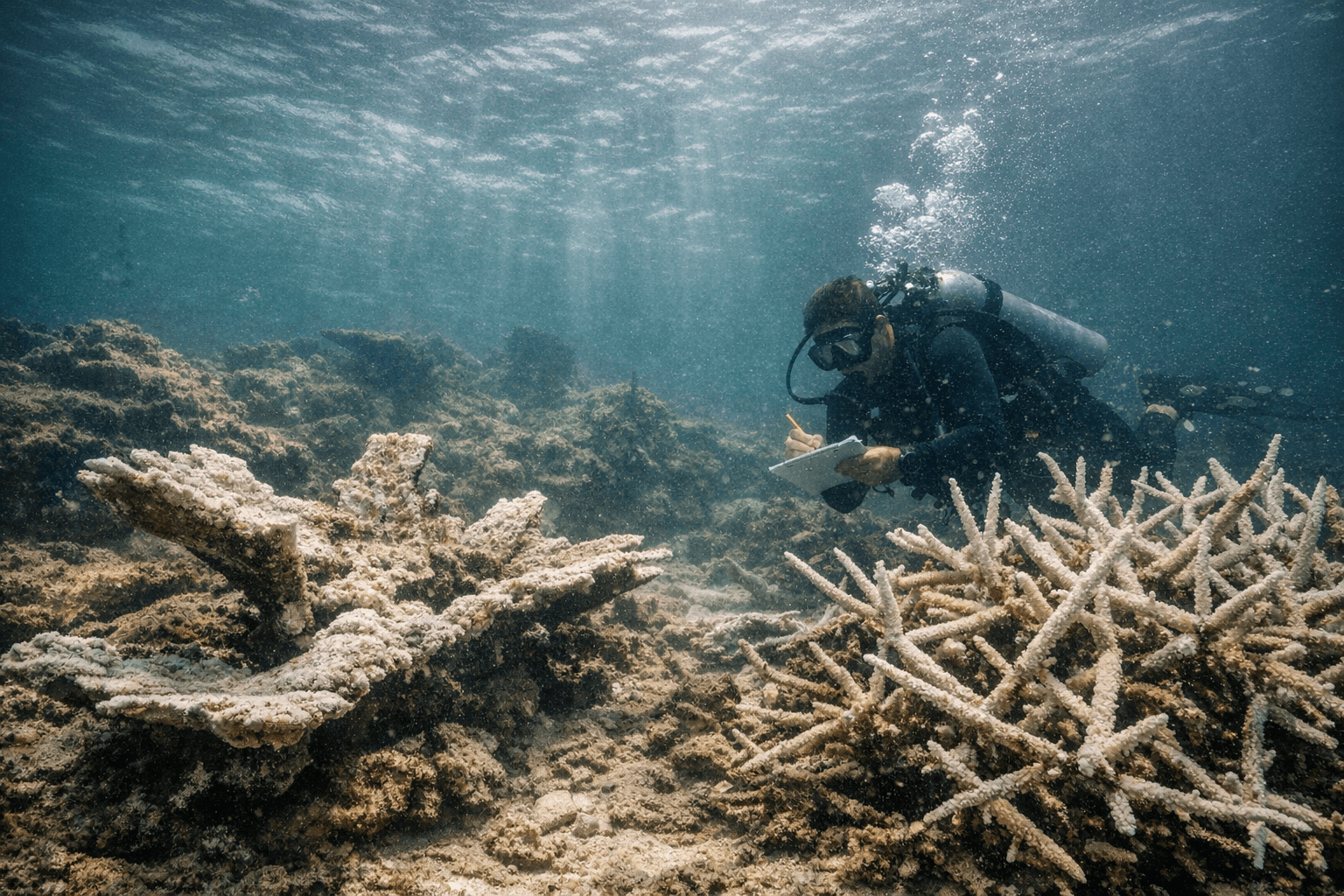
Economically, the immediate consequences are likely to be felt in decreased catches for reef-dependent fisheries and in a downgraded visitor experience for snorkeling and diving operations, which are integral to Monroe County’s tourism economy. Reduced reef cover can lower biomass of reef fish species targeted by anglers and can make shallow Keys shorelines more vulnerable to erosion, potentially increasing costs for property owners and public infrastructure maintenance.
Scientists outlined next steps that aim to salvage what remains and guide restoration planning. Research priorities include investigating why a few colonies, if any, persisted by studying genetics and thermal tolerance, testing selective breeding and symbiont manipulation to identify heat-tolerant strains, and prioritizing targeted restoration projects where local conditions and survival prospects are highest. The teams emphasize the need for long-term monitoring and sustained funding to track recovery and scale interventions.
Local managers and residents should expect restoration efforts to increase in the coming years, with a focus on strategic sites and experimental approaches. For Monroe County, the loss of elkhorn and staghorn underlines a shift in coastal risk and marine resource dynamics that will shape fisheries, tourism and shoreline resilience for years to come. Read the primary research paper and supplementary materials at the Science journal website: science.org.
Sources:
Know something we missed? Have a correction or additional information?
Submit a Tip

