Kidney Donation Program Connects Living Donors With First Responders Nationwide
About 11,000 first responders live with end-stage kidney disease. A Toledo nonprofit's community-directed model has already saved dozens of lives by routing altruistic donors straight to police and firefighters.

When a stranger donated a kidney specifically to benefit a police officer, the logistics required more than goodwill. Kidneys for Communities coordinated the match through its community-directed model, partnering with the Police Benevolent Association of the City of New York and the NYPD to identify a recipient and clear a path to transplant. Officer Quinones became the first police officer to receive a living kidney donation through the "Kidneys for First Responders" program, and he described what the anonymous act meant in terms of mutual obligation rather than charity.
"I might never know the donor, but their appreciation of my commitment to serve is a beacon of hope empowering me to do even more to make a difference in the lives of others," Quinones said.
That dynamic, a stranger's gratitude for public service expressed as a directed organ donation, is the foundation of what the Toledo, Ohio-based nonprofit has built over nearly three years. Its community-directed donation model connects donors who want to give specifically to first responders with the roughly 11,000 officers, firefighters, and EMS workers the National Institute of Diabetes and Digestive and Kidney Diseases estimates are living with end-stage kidney disease. The program operates at no charge to recipients, and the nonprofit covers donor travel and lodging expenses.
More than 100,000 Americans are currently waiting for a kidney. The standard transplant waitlist is blind to professional identity; Kidneys for Communities' model is not. By working through membership-based organizations including the New York City Police Benevolent Association, the National Association of Police Organizations, the National Fallen Firefighters Foundation, and most major law enforcement and firefighter unions, the group routes donors with a specific affinity for first responders directly toward recipients in those communities.
"Our community-based program has already helped save the lives of dozens of police, firefighters, EMS workers and others nationwide," said CEO Atul Agnihotri. "But our list of people in need of a kidney continues to grow, and we are looking for more potential donors to step up so we can find a suitable match."
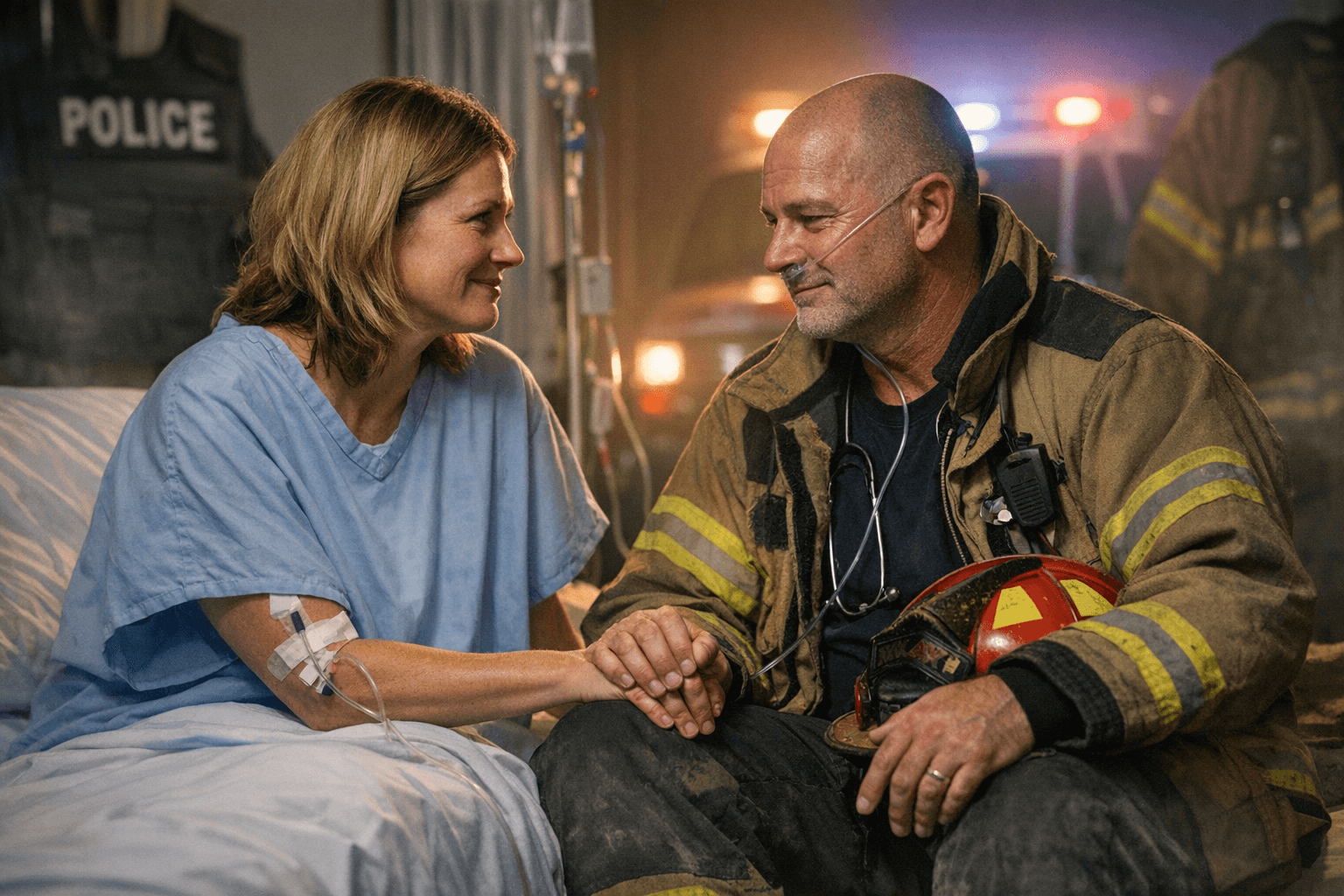
The reach has extended across national borders. Nick Clayson, a mechanic with the Calgary Fire Department and member of International Association of Fire Fighters Local 255 in Calgary, Alberta, received an email about the program in April 2024. After losing a friend to kidney failure, he became a living donor for a recipient in the United States. His experience directly challenges the most persistent barrier to living donation: fear of permanent physical consequences.
"There's a stigma around donation. People think it's life-altering in a negative way, but for me, it was 10 weeks off work, then back to full duty. No major life changes. Just the knowledge that I helped save lives," Clayson said.
Agnihotri framed the risk-benefit calculation plainly: "The risks are low, and the impact is enormous."
Kidneys for Communities has also partnered with the National Fallen Firefighters Foundation and The Knox Company through the "Expand Your Legacy" campaign to create a direct pipeline for firefighters and their families seeking transplants. Lucas Gorelick, an EMT and college student, represents another entry point into that pipeline: he looked into organ donation specifically because he wanted to make a difference in the life of another first responder. With the national waiting list still growing and 11,000 first responders in end-stage kidney failure, the program's case is straightforward: the infrastructure to make a cross-country, community-directed donation is already in place.
Know something we missed? Have a correction or additional information?
Submit a Tip