Killings in Honduras's Bajo Aguan highlight gang fight over palm farms
A suspected gang boss was detained after 19 palm workers were killed in Rigores, exposing how land control and drug routes collide in Bajo Aguán.

Police in Honduras arrested Carlos Molina, known as El Gato Negro, as the suspected mastermind behind the killings of 19 workers at a palm plantation in Rigores, a village in the restive Bajo Aguán region. Security Minister Gerzon Velasquez said Molina is accused of planning and supplying material support for the attack, which authorities say was carried out by at least six people who have not been apprehended. The case has sharpened attention on a region where violence is not just criminal but territorial, tied to who controls the land, the harvest and the routes used by armed groups.
Rigores sits inside one of Honduras’s most volatile agricultural frontiers, where palm farms have become both economic assets and strategic prizes. The Bajo Aguán’s conflict stretches back to land reforms in the 1970s, when peasant cooperatives were formed, and then deepened after later legal changes in the 1990s opened the door for more land to pass into agro-industrial hands. Human rights monitors have described the area as a place where state absence, land dispossession and criminal violence reinforce one another, leaving workers and campesino communities exposed to intimidation and attack.
The plantation killings were not an isolated eruption. Authorities said they took place on the same day five Honduran police officers were killed near the border with Guatemala, underscoring how organized violence has spread across both rural and border zones. Lawmakers have since approved reforms that would bring the military into public security tasks, create a new anti-organized crime unit and open the door to designating gangs and drug cartels as terrorist groups. The national homicide rate remains 24 killings per 100,000 inhabitants, a reminder that the state is still trying to regain basic control in too many corners of the country.
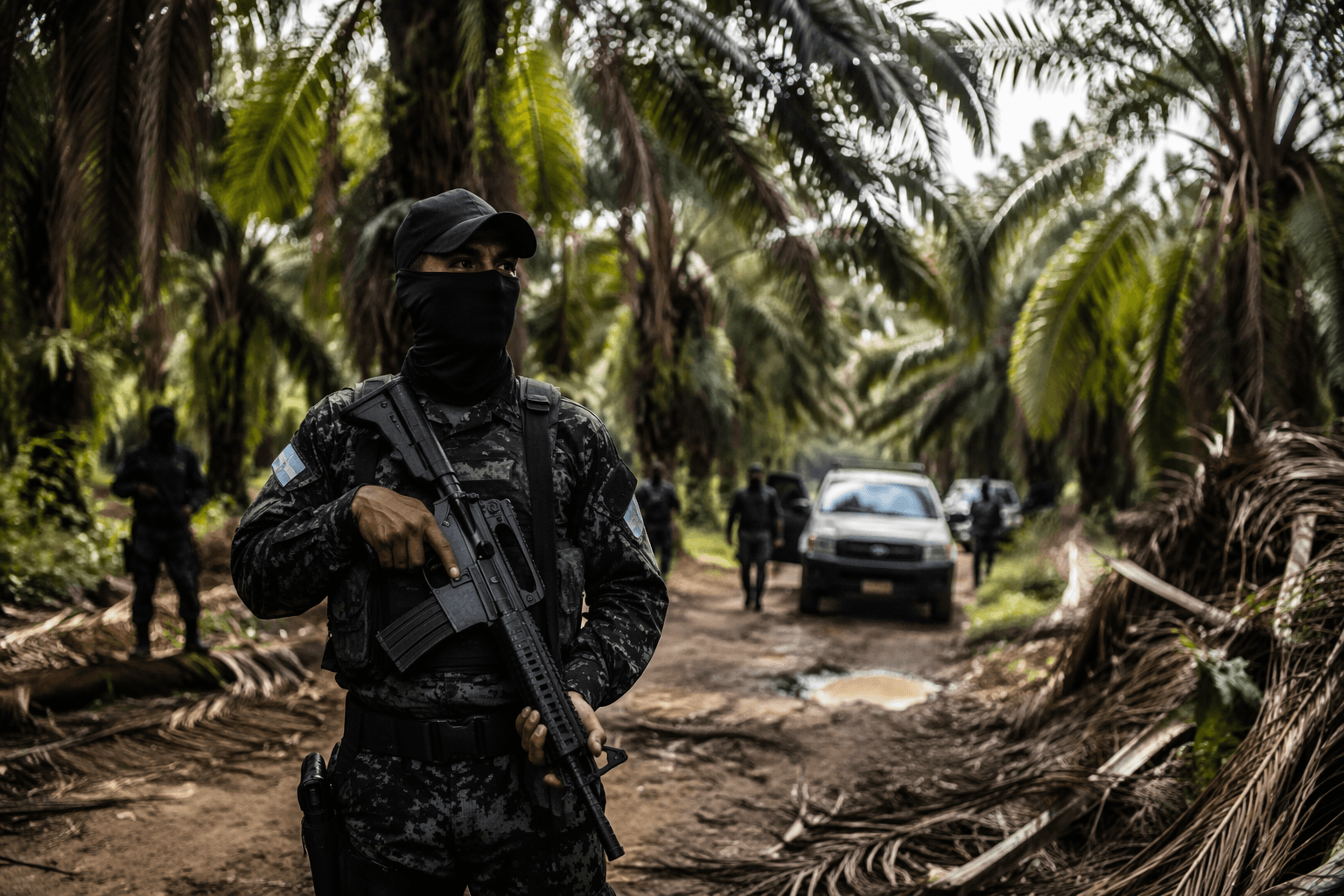
The arrest may give officials a visible case to point to, but it does not resolve the deeper struggle over the Bajo Aguán. With one suspect in custody and the alleged gunmen still at large, the central dispute remains intact: palm farms in a region where land is wealth, access is power and drug corridors add another layer of risk. Until the property fights, armed impunity and criminal economies are confronted together, Rigores and the wider Bajo Aguán will remain vulnerable to the next massacre.
This article was produced by Prism’s automated news system from verified source data, official records, and press releases, then run through automated quality and moderation checks before publishing. The system is built and supervised by the people who set the standards it runs under. Read our full AI policy.
Did this article answer your question?


