King Charles III visits Washington amid fraught U.S.-Britain ties
King Charles III arrived in Washington for a state visit that tested a relationship already strained by war, tariffs and diplomacy. The pageantry echoed past royal trips that came during sharper transatlantic tension.
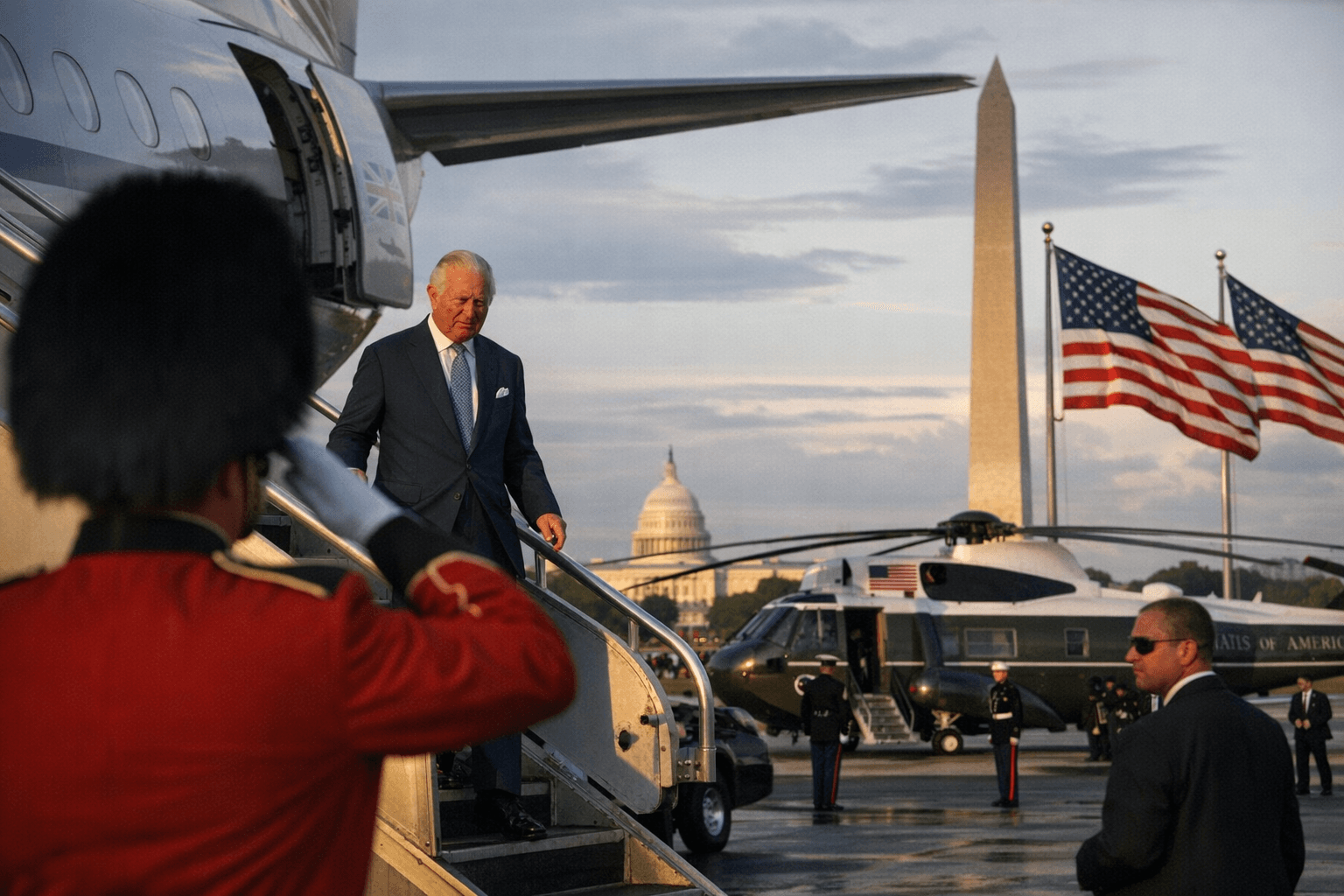
King Charles III and Queen Camilla arrived in Washington as the symbolism of a state visit collided with hard politics, making the trip a stress test for a relationship that has been strained by the Iran war, tariffs, NATO disputes and the U.K. digital services tax. The four-day visit, from April 27 through April 30, was the first official state visit of President Donald Trump’s second term and the first by a British monarch to the United States since 2007.
The White House planned the ceremony to look unmistakably regal. Charles and Camilla were to be welcomed with tea in the Green Room, a state arrival ceremony on the South Lawn, a 21-gun salute and remarks from Trump on the South Lawn. The military display included a pass in review by 300 U.S. service members, with nearly 500 members of the armed forces from all six branches present. Charles was also scheduled to address a joint meeting of Congress, which would make him only the second British monarch to do so, following Queen Elizabeth II.
The historical backdrop gave the visit added weight. Queen Elizabeth II and Prince Philip stayed at the White House for four days in October 1957, in the second time a British monarch had slept there. That visit, which was tied in part to the 350th anniversary of Jamestown, Virginia, came less than two years after the Suez Crisis began on July 26, 1956, when Gamal Abdel Nasser nationalized the Suez Canal Company. Britain and France lost most of their influence in the Middle East after that rupture, underscoring how royal diplomacy has often been used to soften periods of real strategic strain.
Elizabeth later returned to Washington to address a joint meeting of Congress on May 16, 1991, when roughly 800 people attended and she drew a standing ovation. Charles’s appearance carried similar symbolism, but with a more uncertain political edge. The alliance has been described as being at one of its lowest points in 70 years, and some British lawmakers had urged that the visit be postponed or canceled.
Buckingham Palace said the visit would go ahead despite security concerns after a shooting in Washington over the weekend before the trip. The itinerary also included New York and Virginia, including a wreath-laying in New York to honor those killed on 9/11. For all the ceremony, the message of the week was clearer than the pageantry: the old alliance still matters, but it is being tested in public.
Sources:
Know something we missed? Have a correction or additional information?
Submit a Tip