Thailand Seeks Russia, China Ties as Iran War Hits Trade
Thailand’s foreign minister said the Iran war should never have happened as Bangkok turned to Oman, China and ASEAN to shield trade routes and food supplies.
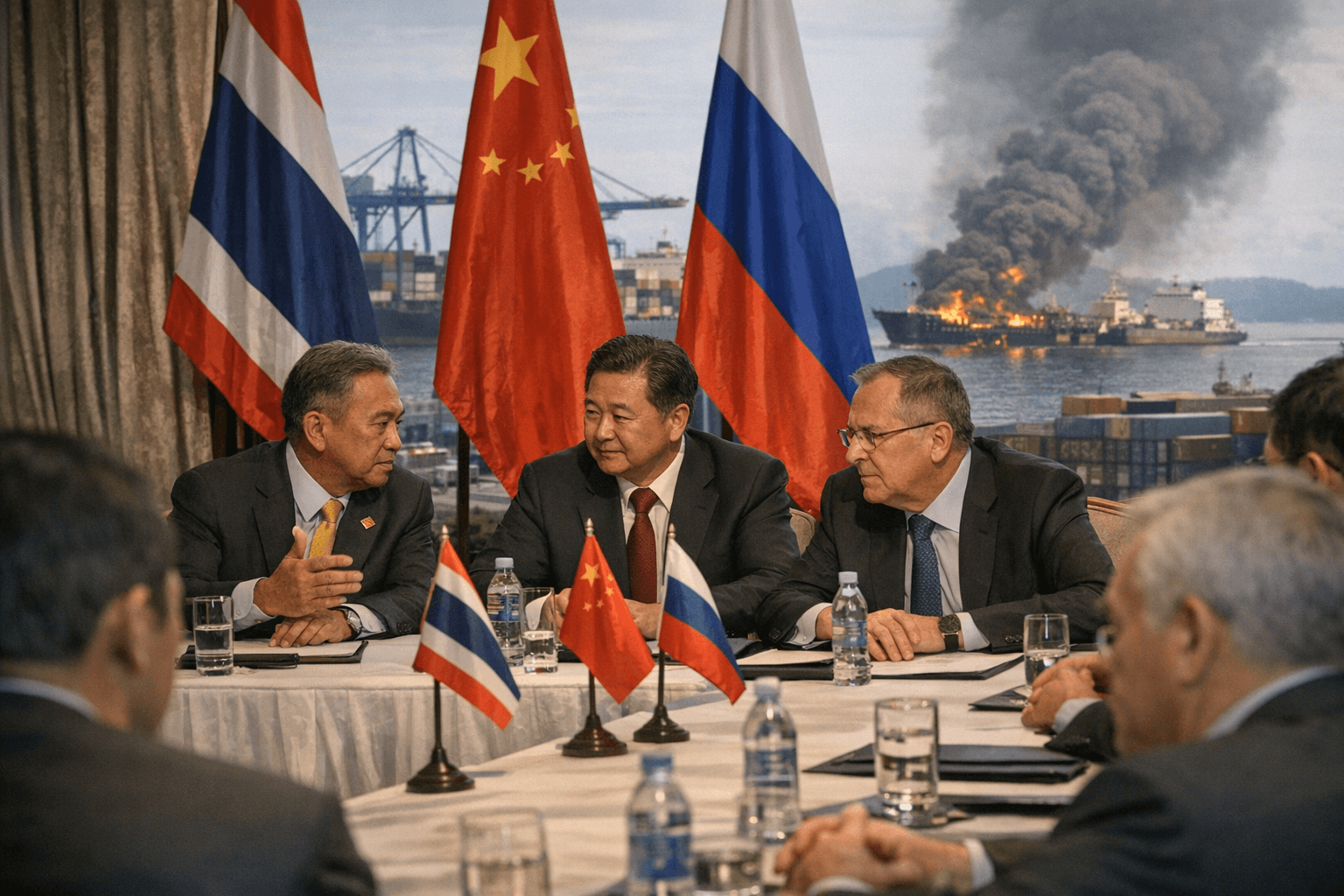
Thailand is moving fast to protect its trade lifelines as the Iran war ripples through shipping lanes, fuel supplies and food security. Deputy Prime Minister and Foreign Minister Sihasak Phuangketkeow said, “This war should not have taken place,” while pointing to Thailand’s growing outreach to Russia and China as the country confronts economic strain.
Bangkok’s concern is not abstract. The Thai cargo vessel Mayuree Naree was attacked in the Strait of Hormuz, putting 20 crew members directly in the path of the conflict and exposing how vulnerable Thai commerce is to any disruption in the Middle East. Thailand’s foreign ministry welcomed the U.S.-Iran ceasefire agreement reached on April 8 and said it hoped for a sustained truce and lasting peace, but officials have also been working to reduce the risk that the conflict will linger as a drag on trade and fuel imports.
Sihasak was scheduled to travel to Oman on April 15 and 16 to personally thank Omani authorities for helping coordinate the safe return of the 20 crew members. Oman’s role highlighted how smaller regional actors are becoming essential intermediaries as the war pushes countries to seek practical channels for diplomacy, not just statements of concern.
Thailand has also been leaning into ASEAN. On April 13, Sihasak attended the Second Special ASEAN Foreign Ministers’ Meeting on the Situation in the Middle East by videoconference. Thai reporting said Bangkok wanted a new special ASEAN foreign ministers’ meeting to focus on the fallout from the Iran war, especially risks to energy, shipping and food security. That agenda reflects a wider worry in Bangkok that a conflict centered far from Southeast Asia could still lift costs at home and deepen pressure on households already facing a strained economy.
At the same time, Thai officials have been reaching beyond the traditional Western diplomatic circuit. Thai media reported that Sihasak asked China to help in talks with Iran to secure energy transport routes through the Strait of Hormuz, a signal that Bangkok is hedging by courting major powers that can influence the crisis. The move, alongside the government’s broader approach to Russia and China, shows how middle powers are adjusting when global shocks hit trade first and diplomacy second.
This article was produced by Prism’s automated news system from verified source data, official records, and press releases, then run through automated quality and moderation checks before publishing. The system is built and supervised by the people who set the standards it runs under. Read our full AI policy.
Did this article answer your question?