King Charles warns on executive power during Trump state visit
King Charles turned a rare Congress speech into a warning on checks and balances, and lawmakers erupted when he said executive power must answer to the law.
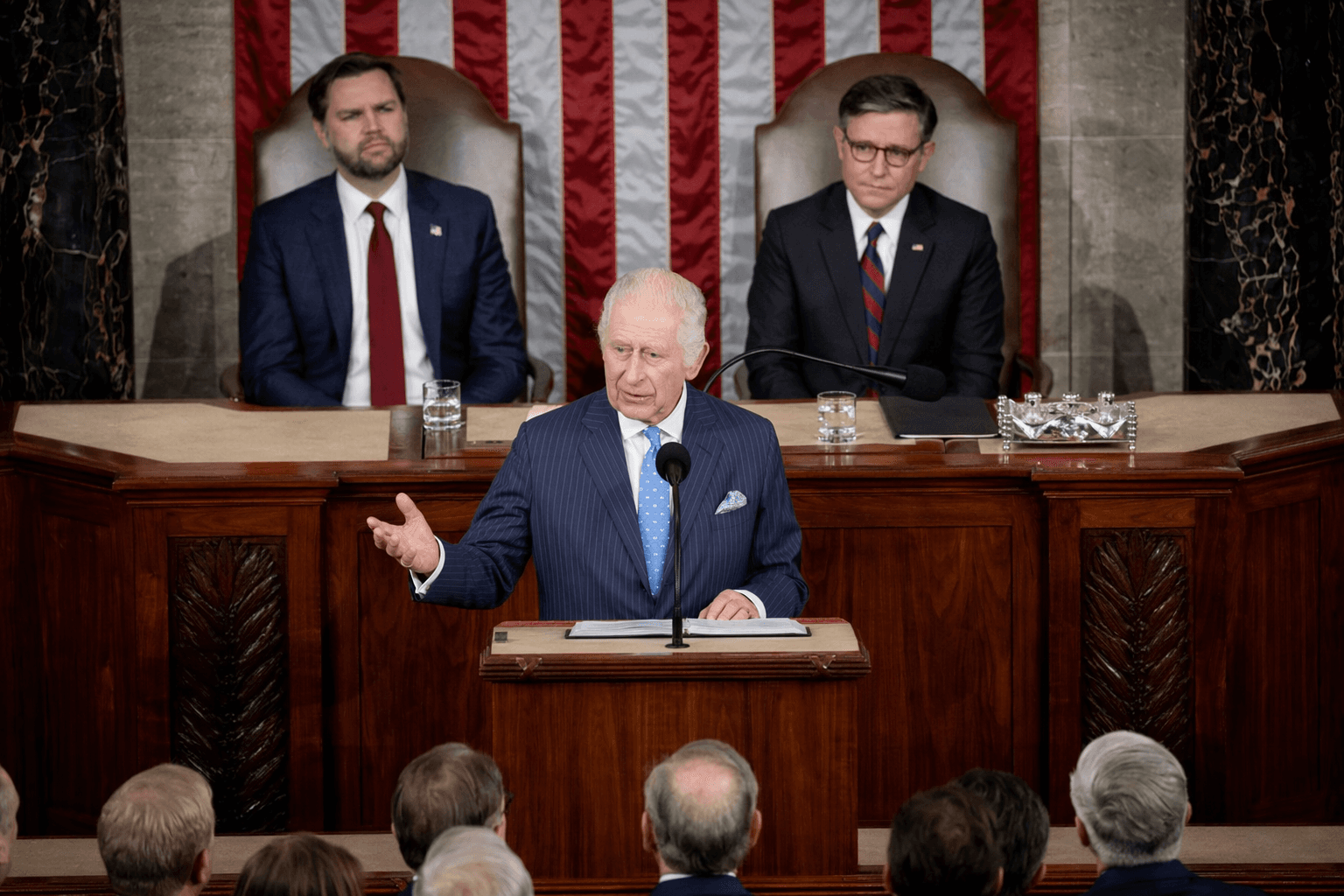
King Charles III used a rare address to Congress to deliver a warning about executive power that landed far more sharply than the royal setting suggested. Before lawmakers in the House chamber, he cast Congress as a citadel of democracy, traced American constitutional tradition back to Magna Carta, and drew loud applause when he said executive power must remain subject to checks and balances.
The moment came during a four-day state visit from April 27 through April 30, the first official state visit of Trump’s second term. Charles was only the second British monarch to address a joint meeting of Congress, following Queen Elizabeth II in 1991, and he used the session to thank Americans for welcoming him and Queen Camilla during the nation’s semi-quincentennial year.
The speech stayed wrapped in diplomacy, but its subtext was unmistakable. Charles praised the U.S.-U.K. alliance as uniquely durable, said the two nations’ destinies had been interlinked for centuries, and tied the moment to wider instability in Europe and the Middle East while insisting violence and discord would not prevail. Even as he celebrated shared history, his constitutional language pointed back to a basic warning: democratic systems depend on limits, not unchecked authority.
At the White House state dinner that followed, Charles broke the tension with a joke that Trump would be speaking French if Britain had not played its historic role in America’s past. The guest list underscored the evening’s blend of ceremony and power, with Jeff Bezos and Tim Cook among the prominent names alongside other business leaders, Supreme Court justices and cabinet officials.
Taken together, the visit showed how royal pageantry can carry a constitutional message as well as diplomatic charm. Charles offered praise to a president who thrives on spectacle, but the day’s central argument was about restraint: legitimacy depends on limits, and power still answers to law.
Sources:
Know something we missed? Have a correction or additional information?
Submit a Tip