Kīlauea Erupts With Lava Fountains Taller Than the Empire State Building
Kīlauea's summit exploded with lava fountains exceeding 1,300 feet, forcing park and highway closures as tephra rained down on nearby communities.
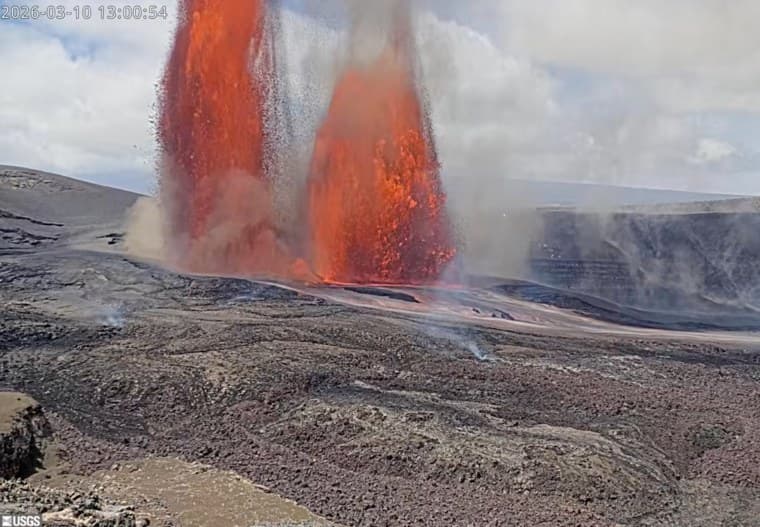
Lava fountains soaring higher than the Empire State Building tore through the sky above Kīlauea's summit Tuesday evening, as the volcano's latest episodic eruption sent arching bands of red lava more than 1,000 feet into the air, with peak heights reported above 1,300 feet, roughly the elevation of the skyscraper's top floor.
The eruption, centered at Halemaʻumaʻu crater on Hawaii's Big Island, triggered immediate closures of Hawaii Volcanoes National Park's summit and Highway 11, the main road leading to the park. The National Park Service shuttered the summit citing the danger posed by glassy volcanic fragments known as tephra, and the Hawaii County Civil Defense Agency closed Highway 11 early Tuesday afternoon for the same reason.
The U.S. Geological Survey assigned the episode its highest volcano warning level: red. The agency defines that designation as meaning "Major volcanic eruption is imminent, underway, or suspected with hazardous activity both on the ground and in the air." Lava flows had covered about one third of the floor of Halemaʻumaʻu crater, according to the USGS daily volcano status report.
Tuesday's dramatic flare-up is part of a broader eruption that began Dec. 23, 2024. The March 10 episode represents the latest in a series of surges from the summit, each capable of producing the kind of sustained fountain activity that drew widespread attention online. A USGS livestream of the eruption drew thousands of viewers.
The tephra hazard extended well beyond the park boundaries. Communities including Volcano Village and Mauna Loa Estates were warned they could be struck by the glassy volcanic fragments. The National Weather Service extended a daytime ashfall warning covering the national park and areas to the southeast and southwest, with the advisory running until 11 p.m. local time.
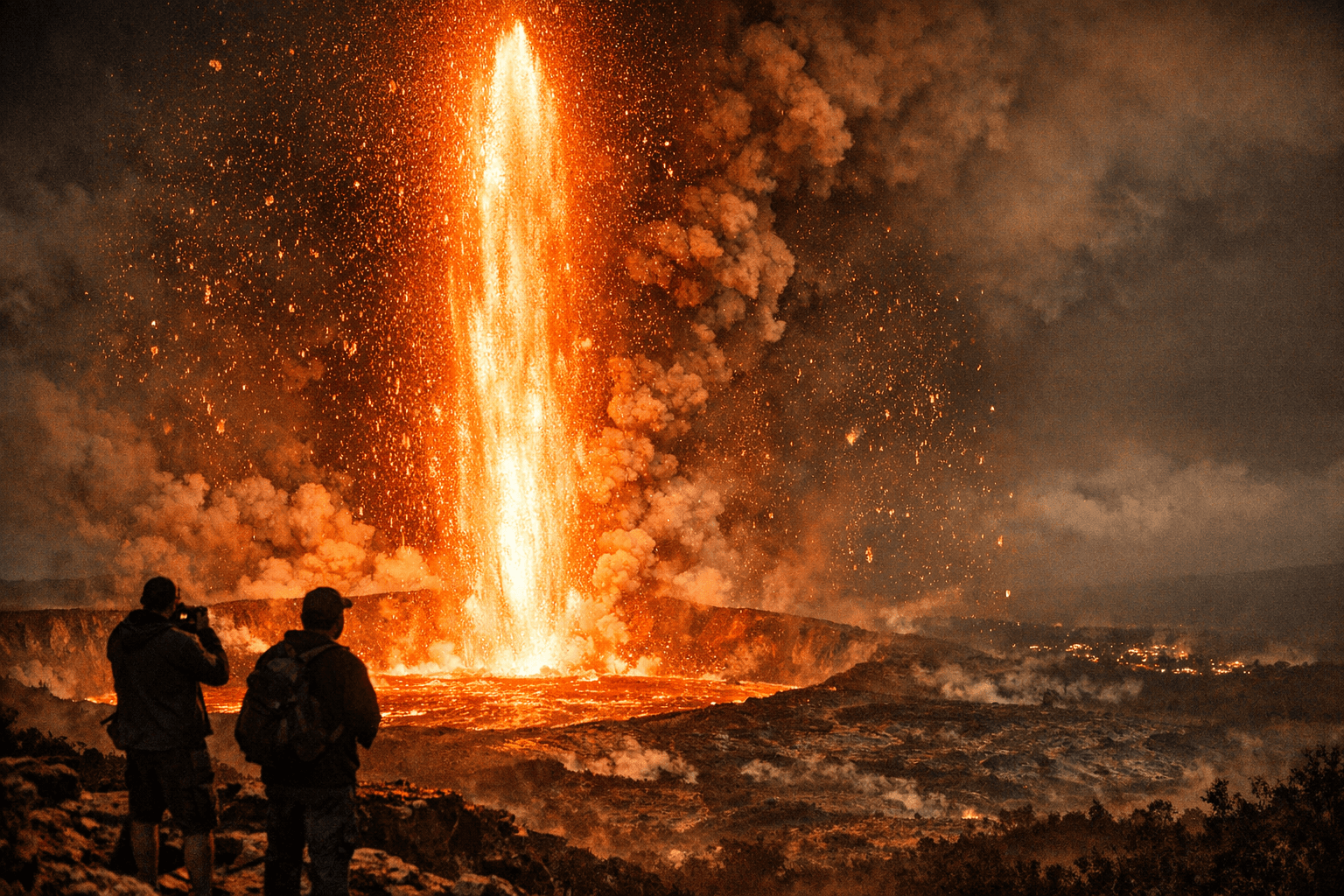
The scale of Tuesday's fountaining was striking even by Kīlauea's standards. Sustained columns of lava climbed more than 300 meters, and the volcano's full bloom was punctuated by repeated bursts of molten rock that outpaced the height of many of the world's tallest buildings. No injuries, fatalities, or structural damage were reported in the information available from official sources.
Kīlauea, one of the world's most active volcanoes, has been in near-continuous eruption for much of its recent history. The current eruptive cycle, now more than 14 months old, has gradually reshaped the floor of Halemaʻumaʻu, with lava accumulating steadily across the crater. These episodic surges, while visually spectacular and locally hazardous, are a familiar feature of the summit's behavior: periods of relative calm punctuated by fountaining episodes that can escalate rapidly.
With the red warning level in effect and the ashfall advisory covering a broad swath of the island's southeastern flank, residents near the park were urged to stay indoors, limit exposure to ash, and monitor guidance from civil defense officials. Highway 11's closure cut off the primary access route to one of Hawaii's most visited national parks, with no official reopening timeline confirmed as of Tuesday evening.
This article was produced by Prism’s automated news system from verified source data, official records, and press releases, then run through automated quality and moderation checks before publishing. The system is built and supervised by the people who set the standards it runs under. Read our full AI policy.
Did this article answer your question?

