Korea Zinc wins approval for huge Queensland solar-storage project
Korea Zinc cleared a key grid hurdle for a giant New South Wales solar-and-storage project, advancing a 2,200 MWh battery plan tied to 200 MW of solar.

Korea Zinc’s Australian energy arm has moved a step closer to building one of the country’s biggest solar-plus-storage projects, after Ark Energy secured grid-connection approval from Transgrid and the Australian Energy Market Operator for its Richmond Valley development in northern New South Wales.
The approval matters because connection is often where large renewable schemes bog down. Richmond Valley, near Myrtle Creek, about 7 km east of Rappville and 25 km south of Casino, has now cleared another major hurdle after earlier state planning approval on October 16, 2025, and federal environmental approval under the EPBC Act on December 15, 2025. The project has been in development since 2019 and sits on the Australian government’s National Renewable Energy Priority List, a sign of how strategically important it has become.
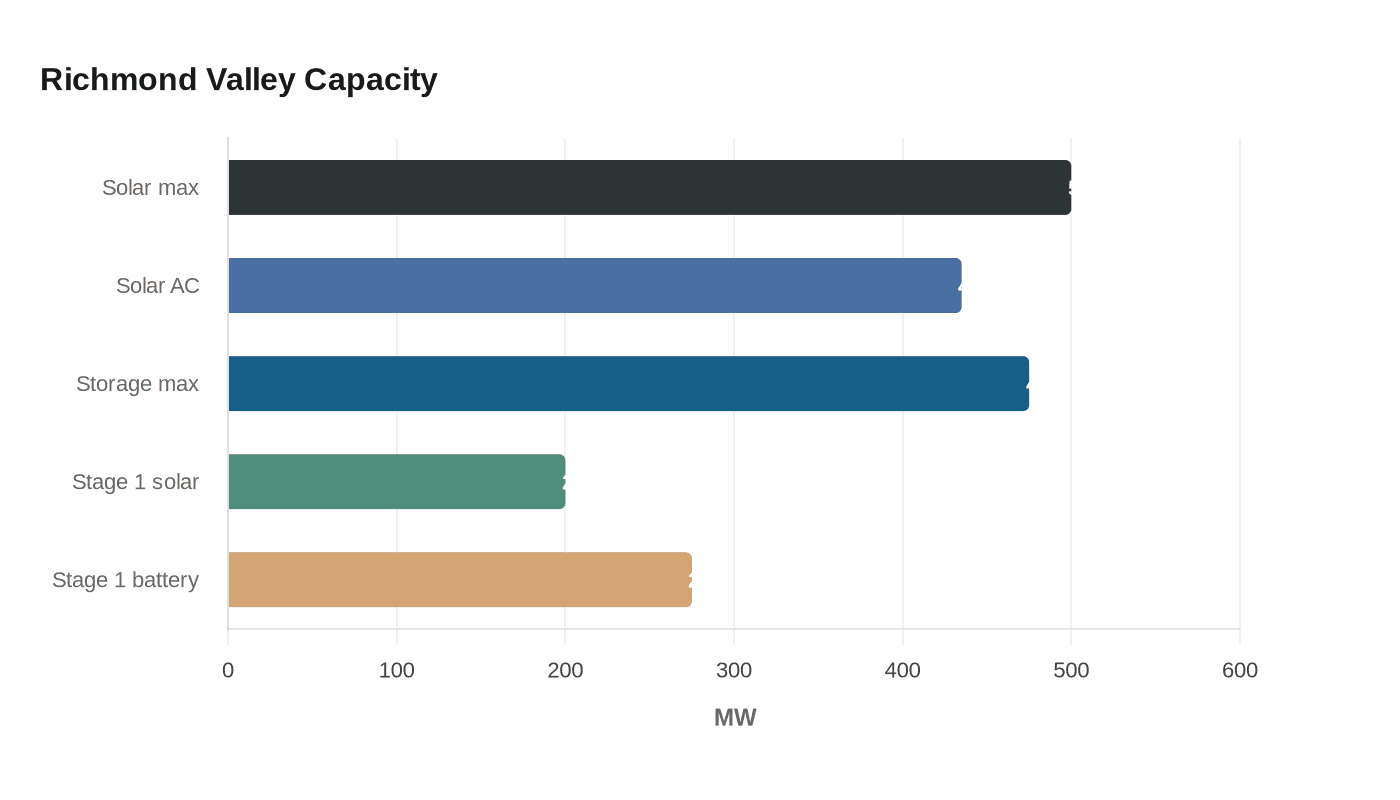
Ark Energy’s staged buildout calls for up to 500 megawatts of solar capacity, or 435 MWac, paired with up to 475 MW of long-duration lithium-iron-phosphate storage. The first stage, planned to start construction in 2026, would include a 200 MWac solar farm and a 275 MW battery capable of storing 2,200 megawatt-hours of electricity. That amount of storage has been compared to the combined batteries of roughly 26,000 Tesla Model Y vehicles, an illustration of how large the site would be once built.
For the New South Wales grid, the project is more than a single asset. State materials say the approved solar farm is expected to power around 175,000 homes each year, create more than 300 construction jobs and deliver about A$11 million in community infrastructure funding. In a system trying to replace fossil-fuel generation with cleaner supply, the battery component is the critical piece: it would allow solar power produced in daylight to be shifted to evening demand, helping smooth volatility and strengthen reliability.

The latest approval also shows how Korea Zinc is trying to broaden beyond metals processing into energy infrastructure. The company has framed the move as part of a long-term strategy to pursue differentiated growth and lift corporate and shareholder value, while industry observers see the project as part of a wider race to build renewable supply chains and storage capacity outside China. Ark Energy has already signed an early contractor involvement agreement with Elecnor Australia and a battery supply agreement with Hanwha Energy, tightening the project’s commercial footing.
Richmond Valley is still a staged development, and the final battery configuration has been described differently over time, with some reporting pointing to a larger eventual buildout. Even so, the latest grid approval marks a decisive de-risking moment. It leaves Korea Zinc closer to turning a long-planned Northern Rivers project into a major test case for firmed renewable power in Australia.
This article was produced by Prism’s automated news system from verified source data, official records, and press releases, then run through automated quality and moderation checks before publishing. The system is built and supervised by the people who set the standards it runs under. Read our full AI policy.
Did this article answer your question?

