Lab-grown engagement ring raises questions about love, value, sustainability
A 28-year-old who recently moved in with her boyfriend says their decision to buy a lab-grown engagement ring prompted her sister to declare he “doesn’t value me.”
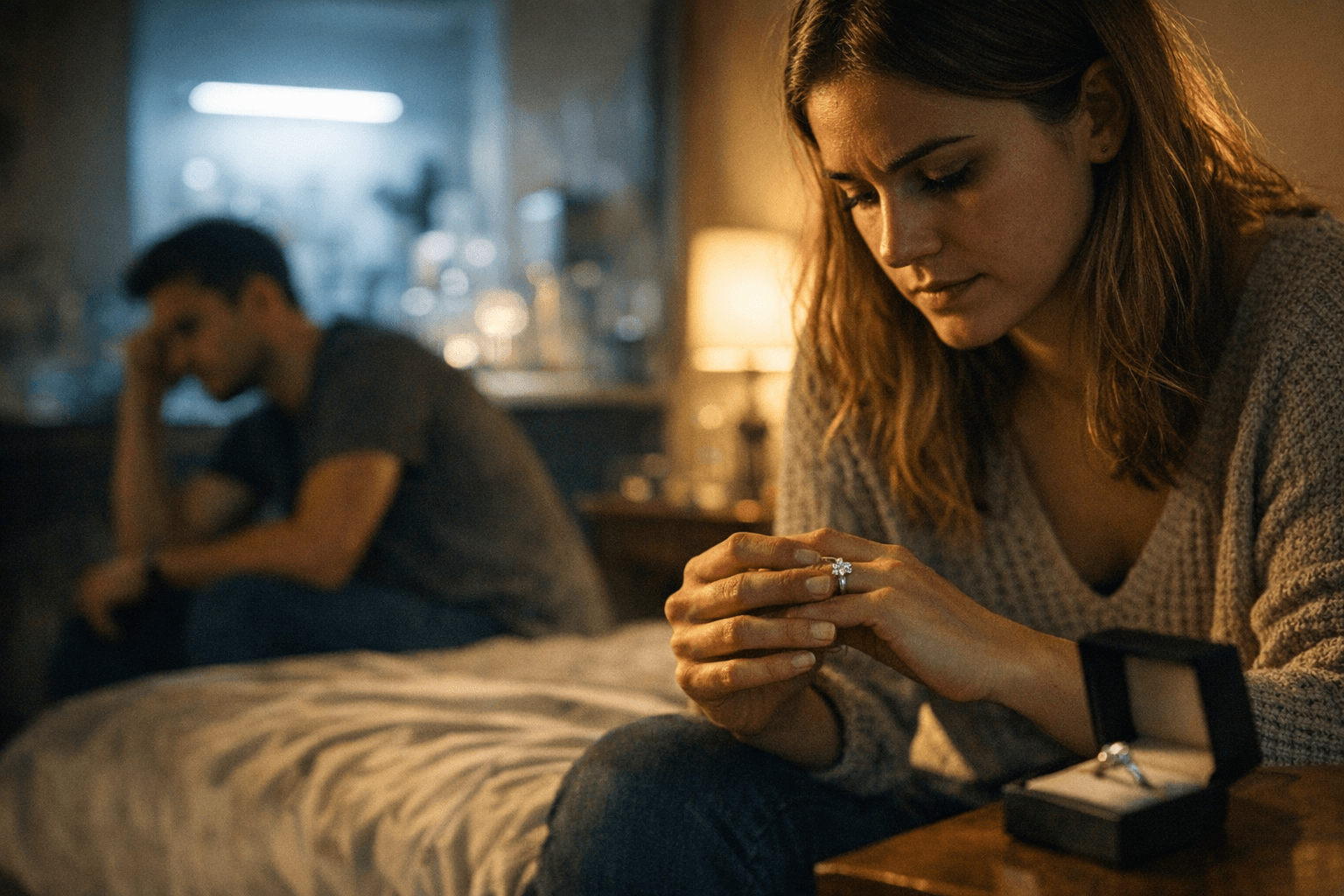
A 28-year-old reader who has been with her boyfriend for “more than two years” and says they “recently moved in together” wrote to the Boston Globe Love Letters column after the couple “decided we would get a lab‑grown engagement ring,” and reports that her sister reacted by saying “diamonds from the earth are much more rare, and you deserve something that is rare” and asking, “Didn’t he spend thousands to put up his art show? Why can’t he spend more money on a natural diamond for you?”
The exchange escalated when the sister, reportedly intoxicated, told the letter writer she was “concerned that my boyfriend doesn’t ‘value’ me. If he did, she said, he would insist on getting me a ‘real’ diamond.” The letter captures a specific domestic moment—the couple negotiating an engagement timeline, the sibling substituting material signals for emotional judgment—and the columnist signed MEREDITH responded with concrete scripts for setting boundaries, advising the reader to say, “I know you care about me very much. I know you want the best for me. But my ring choice reflects my values and wishes. Please respect my decisions and know that I’ve made them for myself,” and offering the shorter retort, “Thank you for your thoughts on this. Now let me tell you what I want.”
MEREDITH framed the dispute in broader cultural terms in the March 6, 2026 Love Letters column, writing that “lab‑grown diamonds are not redefining what a diamond is—they’re redefining what love means. They stand for: Authenticity → Real diamonds with real values. Sustainability → Love that doesn’t harm the planet. Affordability → Brilliance that fits real‑life commitments.” The column explicitly states that “On average, lab‑grown diamonds are 30–70% less expensive” and characterizes lab‑grown stones as having a “lower carbon footprint, renewable energy adoption, and eco‑conscious sparkle.”
Readers responded on the Boston Globe site with practical and personal takes. User SELDOMSOBERBAND wrote, “My wife works in the jewelry industry and we got her diamond at wholesale cost. We could easily have had a natural diamond. She chose lab grown. Any suggestion that they’re inferior is desperate marketing from those who peddle natural stones.” Commenter LUPELOVE urged assertiveness twice, first telling the letter writer it was “time to learn how to assert yourself” and later stating, “It sounds like you and your boyfriend decided together to go with a lab grown diamond (a more ethical and sustainable choice), so you need to firmly tell your sister to back off.” SURFERROSA framed the sister as the one who is not valuing the recipient, writing, “I’m concerned that your sister doesn’t ‘value’ you. If she did, I say, she would insist on getting you ‘real’ support for your decisions.”
The column ran alongside embedded retail copy—items labeled “Purecarat In,” blurbs such as “Everyday diamonds → Engagement rings aren’t the only arena” and “Maximalist love → Couples are choosing bold, oversized lab‑grown jewelry”—and page artifacts including “Advertisement,” “fb‑pixel,” and “scorecardresearch,” underscoring the commercial context in which this cultural debate plays out online.
The Love Letters piece raises claims that warrant outside verification: the numeric price range of “30–70%” and the environmental assertions about lower carbon footprint and renewable energy adoption in lab production. Those points are suitable subjects for lifecycle analyses, market pricing comparisons, and statements from both lab‑grown producers and natural‑diamond trade groups. For now, the exchange remains instructive: jewelry has long been shorthand for devotion and status, but the Boston Globe column and its readers frame the lab‑grown choice as a deliberate signal of values rather than a deficit of affection, echoing the column’s line that “there are a zillion people out there wearing massive diamonds whose spouses aren’t that nice to them. Jewelry doesn’t equal care – but I think you know that.”
Know something we missed? Have a correction or additional information?
Submit a Tip